Japan's tourism recovery is hitting a wall as summer holiday plans reflect a significant pullback in overseas travel for the first time since the post-pandemic boom. Major travel agency JTB Corp projects that Japanese citizens will undertake 2.17 million international trips during the summer holidays from mid-July through August, representing an 8.8 per cent contraction year-on-year. This reversal marks a sobering moment for Japan's tourism sector, which has been riding high on returning travel appetite over the past two years.
The downturn reflects a perfect storm of economic headwinds that have shifted consumer behaviour in a country grappling with persistent inflation and currency weakness. The yen's continued depreciation against major currencies means that every dollar, euro, or Australian dollar spent abroad now requires considerably more yen than it did a year ago. This fundamental currency disadvantage is forcing Japanese households to recalibrate their vacation budgets and make difficult choices about where and when to travel.
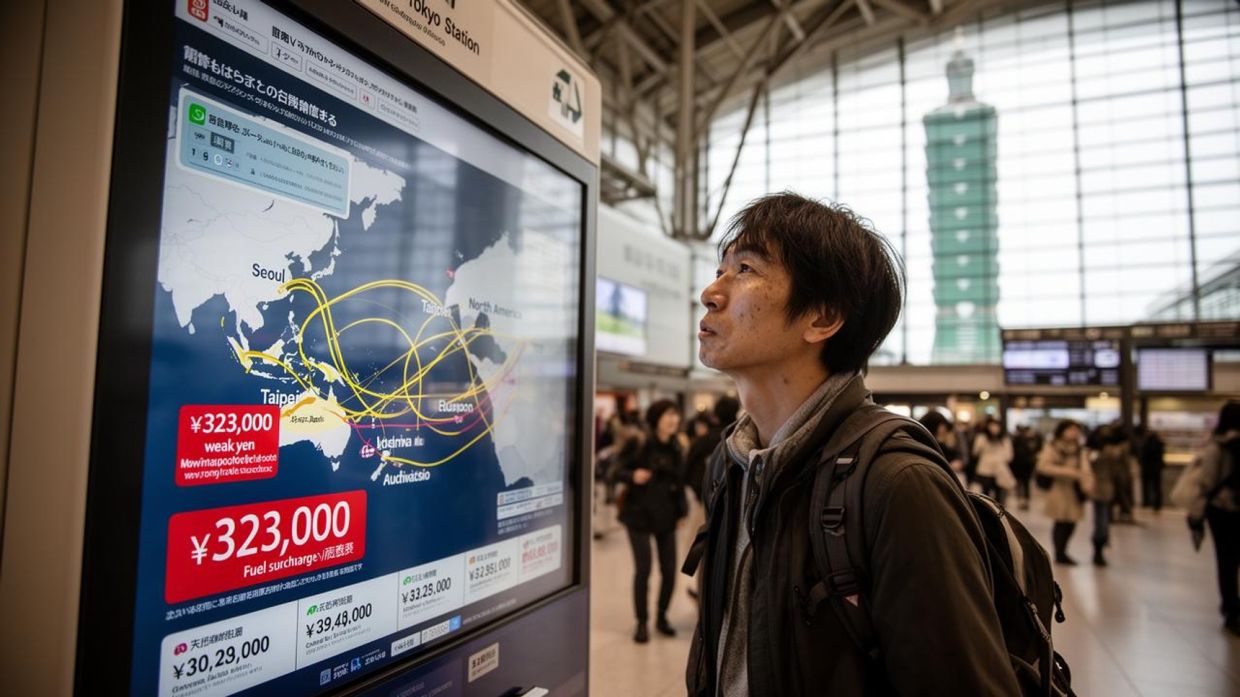
Spending per person for overseas trips is actually rising, projected to increase 6.3 per cent to 323,000 yen (approximately US$2,000), yet fewer people are willing to pay these higher prices. The mathematics of this apparent contradiction reveal the real story: those who do travel are spending more, but significantly fewer Japanese are taking trips at all. This bifurcation in the travel market suggests deepening inequality in discretionary spending power among Japanese consumers.
Aviation fuel surcharges have become an additional burden layered atop currency headwinds. The ongoing geopolitical tensions in West Asia have pushed crude oil prices higher, which airlines have passed on to passengers through fuel surcharges. Combined with the weak yen making fuel costs more expensive for Japanese carriers, these charges represent an unexpected and unavoidable cost increase that has dampened enthusiasm for long-haul international routes.
Long-distance destinations are particularly suffering as Japanese vacationers become more cost-conscious. Traditional favourites such as North America and Australia—premium destinations requiring expensive long-haul flights—are experiencing sharply reduced bookings. Instead, Japanese travellers are gravitating toward nearby regional alternatives where flight times are shorter and airfares more manageable. This geographic reshuffling has significant implications for destination countries and their tourism revenues.
Asian neighbours are capturing Japanese travel demand with South Korea emerging as the overwhelming preference at 26.2 per cent of projected outbound trips, followed by Taiwan at 16.2 per cent. These neighbouring economies offer several advantages: proximate locations reducing both flight costs and time, established tourism infrastructure catering to Japanese visitors, and strong cultural appeal. The dominance of South Korea and Taiwan underscores how regional travel patterns are shifting as price-sensitive consumers seek value.
China's performance is particularly notable and politically significant. Projected visits to China are expected to plummet to just 10.1 per cent of destinations, representing a halving of the previous year's figures. This decline coincides with diplomatic tensions between Tokyo and Beijing stemming from Prime Minister Sanae Takaichi's November remarks regarding Taiwan, demonstrating how geopolitical friction translates directly into reduced cross-border tourism flows. The connection between political rhetoric and traveller behaviour illustrates the delicate relationship between diplomatic relations and economic activity.
Domesticated travel patterns also reveal economic caution among Japanese households. Domestic trips are projected to decline 4.4 per cent to 69 million visits, even as spending per person rises modestly by 3.2 per cent to 48,500 yen. This suggests that even close-to-home vacations are being curtailed or shortened as families become more frugal. The resilience of spending per capita masks the underlying reality that Japanese are taking fewer trips overall.
Geographically within Japan, the Kanto region encompassing Tokyo dominates domestic destinations at 19.0 per cent of trips, followed by the Kinki region in western Japan at 14.9 per cent and the northern island of Hokkaido at 11.2 per cent. These patterns reflect both population distribution and the concentration of major attractions, though the overall decline across all regions indicates a systemic reduction in travel appetite rather than shifts between destinations.
JTB's analysis reveals a critical insight into contemporary Japanese consumer psychology: increasing polarisation between budget-conscious travellers shortening vacations and downsizing destinations versus affluent consumers insulated from economic pressures who continue to pursue premium travel experiences. A JTB official noted this dynamic explicitly, observing that some households are cutting expenses through shorter vacations while others remain willing to pay premium prices for desired trips. This growing wealth divide in leisure spending patterns mirrors broader economic inequalities within Japanese society.
The survey methodology—conducted online in June among those planning trips of at least one night—captures intentions at a specific moment when currency pressures and cost increases were already evident. Real-world booking data in coming weeks will reveal whether projections underestimate the pullback or whether some consumers ultimately decide to travel despite higher costs. For Malaysia and other Southeast Asian destinations, these patterns suggest reduced Japanese visitor flows this summer while nearby, lower-cost alternatives attract disproportionate numbers of budget-conscious Japanese tourists.

