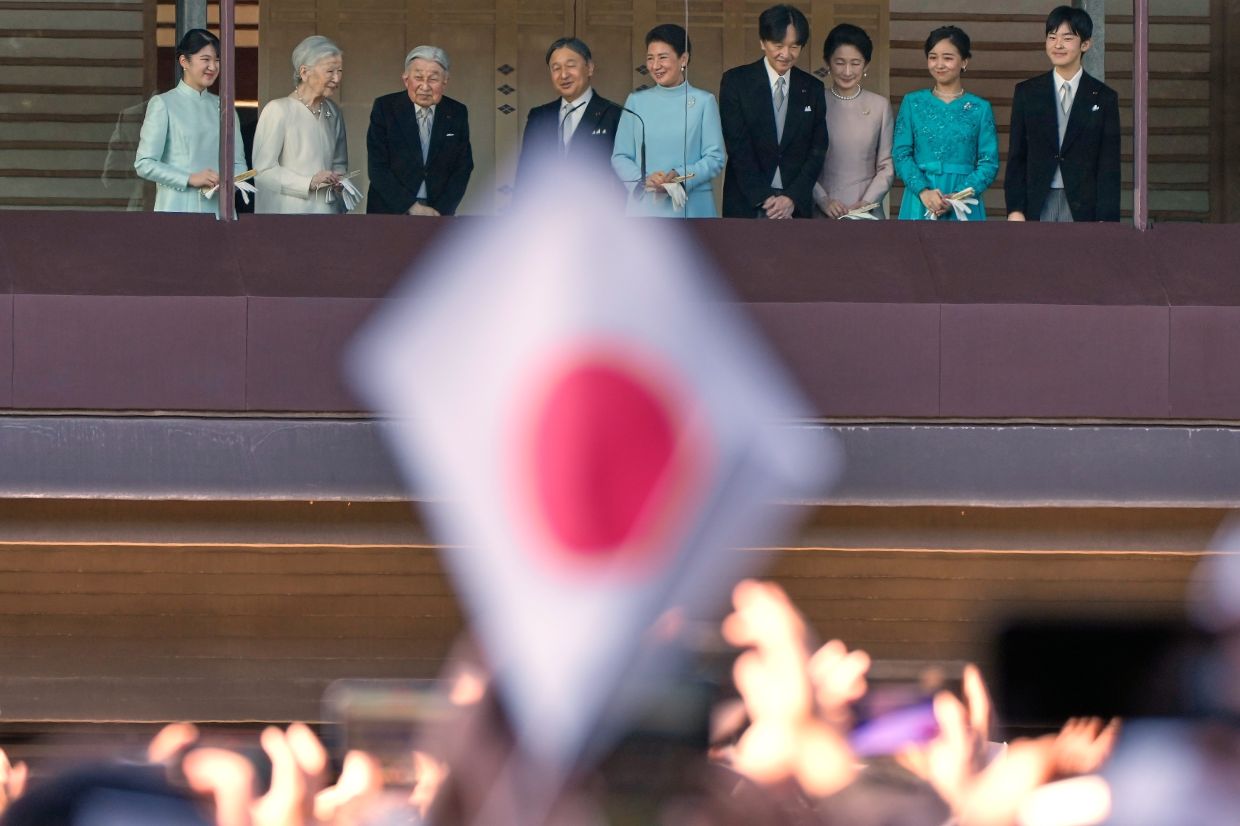
Japan's parliament has enacted sweeping revisions to its imperial succession framework, yet the reforms deliberately preserve one of the country's most contentious constitutional restrictions: the absolute prohibition of female emperors. The upper house passed the legislative package on Friday with overwhelming support, moving forward with modifications to rules that have governed the imperial household since 1947. The changes represent a carefully calibrated political response to an acute succession crisis, while simultaneously rejecting what opinion surveys indicate is a fundamental desire among ordinary Japanese citizens to modernise the monarchy's gender restrictions.
At the heart of Japan's imperial predicament stands Prince Hisahito, a nineteen-year-old who carries the extraordinary burden of being the sole male heir to the throne. Currently unmarried and focused on his university studies in biology and entomology, Hisahito represents the only direct pathway for preserving the unbroken male succession that has defined Japanese imperial tradition for centuries. The young prince is the nephew of the current Emperor Naruhito, who is sixty-six. Should Hisahito fail to produce a son, the hereditary line would effectively terminate under existing legal frameworks, extinguishing a lineage that Japan's Shinto mythology traces back to the sun goddess Amaterasu. This scenario has prompted serious discussion within government circles about the future viability of the imperial institution itself.
The legislative package attempts to address this succession anxiety through a novel but limited mechanism: permitting unmarried male members of imperial branch families—who were severed from the imperial register following World War II—to rejoin the formal lineage after reaching fifteen years of age. The policy effectively attempts to expand the pool of potential male heirs by reintegrating distant relatives into the imperial succession hierarchy, provided they remain single. Simultaneously, the reforms grant women within the imperial family the right to retain their royal status should they marry non-royal citizens, extending to female family members a privilege that male members have long enjoyed. These incremental adjustments suggest an institution cautiously attempting to adapt to contemporary realities while preserving its fundamental patriarchal structure.
Yet the reforms have immediately encountered scepticism from unexpected quarters. Asahiro Kuni, an eighty-one-year-old former imperial family member and one of the last direct connections to the branch families that departed the imperial register decades ago, has issued pointed warnings about the practical feasibility of the readmission scheme. Kuni, drawing from his intimate knowledge of imperial life, has suggested that inviting individuals raised outside the imperial system to suddenly embrace its restrictive protocols and demanding lifestyle would be unrealistic and potentially damaging. In remarks to the Asahi Shimbun newspaper, Kuni observed that by adolescence, young people have internalized the freedoms of ordinary life, making adaptation to the imperial household's exacting requirements extraordinarily difficult. He further speculated that even those initially willing to participate might reconsider upon confronting the genuine hardships accompanying imperial status. This candid assessment from someone steeped in imperial tradition raises uncomfortable questions about whether the government's solution actually addresses the succession challenge or merely creates alternative complications.
The persistence of the female succession ban has emerged as the most contentious element of the revised framework, particularly given the striking divergence between official policy and public opinion. Recent polling by the Asahi Shimbun in May found that seventy-two percent of Japanese respondents supported changing the law to permit women to ascend the throne. This substantial majority preference encompasses diverse demographic segments across the nation, indicating that opposition to female succession represents increasingly marginal sentiment among contemporary Japanese society. The gap between popular will and legislative outcome reveals the degree to which conservative ideology continues to shape imperial policy despite shifts in broader social attitudes toward women's roles and authority.
The reforms were negotiated and passed under the stewardship of Sanae Takaichi, who serves as prime minister and leads the ruling Liberal Democratic Party—making her Japan's first woman to hold the nation's highest office. The irony of this juxtaposition has not escaped public notice: a female leader presiding over a political system that explicitly excludes women from its most exalted constitutional position has underscored the contradictions embedded within Japan's approach to gender and power. Takaichi personally opposes female succession, a position that shaped the entire legislative strategy and ensured that the succession reforms, while modernising certain aspects of imperial rules, would decisively reject the one modification that democratic majorities overwhelmingly favour. This personal stance by the nation's female prime minister has generated considerable internal friction within the ruling party itself.
Dissent within the Liberal Democratic Party has been vocal and substantive. Seiichiro Murakami, a seasoned party veteran, publicly denounced the legislation as "utterly outrageous" for its categorical exclusion of Princess Aiko, the thirty-four-year-old daughter of Emperor Naruhito, from consideration as a potential heir. Murakami's objection reflects a growing recognition within establishment circles that the gender restriction, rather than addressing genuine institutional concerns, instead appears to rest primarily on tradition and ideology. Princess Aiko, highly educated and demonstrably capable, represents precisely the kind of modern sovereign that contemporary constitutional monarchies frequently feature. Her deliberate exclusion from succession purely on the basis of sex has struck many observers—including within the conservative political establishment—as increasingly difficult to justify in contemporary Japan.
Even Japan's venerable media institutions, traditionally sympathetic to the ruling party's agenda, have expressed criticism. The Yomiuri Shimbun, the nation's largest-circulation newspaper and typically a reliable voice supporting the Liberal Democratic Party, recently published an editorial challenging the government's approach to succession reform. This dissent from an ordinarily sympathetic institutional voice indicates the breadth of concern about whether the reforms adequately address fundamental questions about the imperial succession's long-term viability. The Yomiuri's criticism suggests that even conservative establishment voices increasingly question whether patriarchal restrictions represent sound constitutional policy or merely reflect an attachment to custom that Japan can no longer afford to maintain.
The current imperial family now comprises sixteen members, including precisely five males: the retired Emperor Akihito, ninety-two years old; his brother, aged ninety; the reigning Emperor Naruhito at sixty-six; his own brother; and Prince Hisahito, the nineteen-year-old successor-in-waiting. This narrow demographic foundation illustrates the precariousness of the current succession arrangement and underscores why the succession question has become not merely a matter of constitutional tradition but one of genuine institutional survival. Yet for all the legislative activity this week, Japan's political system has engineered a response that addresses the succession crisis while deliberately maintaining the constraints that many experts believe contributed to the crisis's emergence in the first instance. The fundamental incompatibility between demographic realities and the patrilineal succession requirement remains unresolved, suggesting that the imperial succession debate will resurface with even greater urgency within the coming decade if the current male heir fails to produce male offspring.

