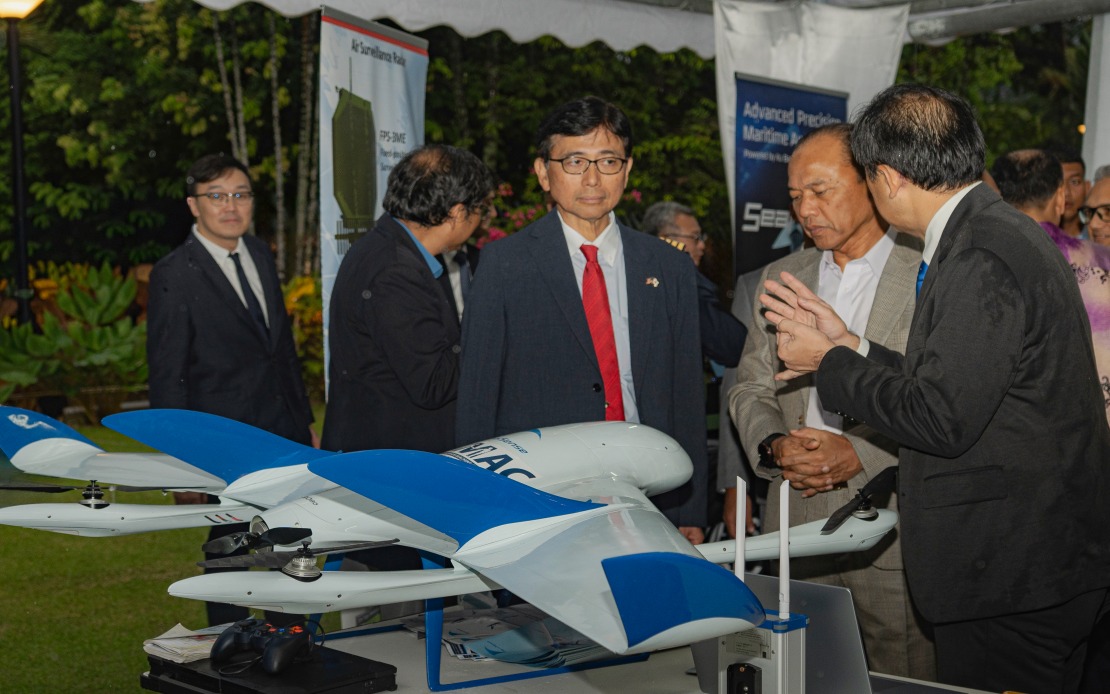
Japan is positioning itself for significantly expanded security cooperation with Malaysia, according to Ambassador Noriyuki Shikata, reflecting Tokyo's broader strategic calculations in a region increasingly shaped by geopolitical tensions and maritime security concerns. Speaking at the 72nd Japan Self-Defence Forces Day Reception in Kuala Lumpur, Shikata underscored Japan's readiness to deepen defence ties with Malaysia, building on the momentum generated by Prime Minister Anwar Ibrahim's recent visit to Japan, where he met with Japanese Prime Minister Sanae Takaichi to discuss the trajectory of bilateral relations.
The two leaders' discussions during Anwar's visit earlier in June crystallized a shared commitment to elevating strategic cooperation, with defence and security explicitly identified as cornerstone pillars. This agreement reflects a recognition by both capitals that the current regional security landscape demands closer coordination among like-minded democracies. The conversation also addressed how Japan's established Free and Open Indo-Pacific framework could be harmonized with ASEAN's own Indo-Pacific outlook, creating a complementary regional architecture designed to promote stability rather than allowing power vacuums to invite destabilization.
The Japan-Malaysia relationship reached a significant institutional milestone in 2023 when the two countries formalized their ties as a Comprehensive Strategic Partnership, a designation that carries weight beyond symbolic recognition. Ambassador Shikata's remarks at the defence forces reception signal that Tokyo intends to operationalize this partnership meaningfully as the two nations prepare to commemorate the 70th anniversary of diplomatic relations next year. This milestone presents an opportunity to demonstrate tangible advances in multiple domains simultaneously, with security cooperation serving as the most visible demonstration of renewed commitment.
Maritime security represents perhaps the most consequential area of practical cooperation between the two nations. Japan's Maritime Self-Defence Force and Malaysia's Royal Malaysian Navy conduct regular bilateral exercises designated MALPAN, conducted across the strategically vital South China Sea and through the Strait of Malacca, one of the world's most critical shipping corridors. The significance of this cooperation lies partly in its regular cadence and partly in its expanding scope. In April, the exercise incorporated Malaysia's air force for the first time, demonstrating a deliberate broadening of interoperability across multiple service branches. These exercises serve a dual purpose: they allow the two navies to develop operational familiarity with each other's capabilities and procedures while simultaneously projecting a message of coordinated commitment to maintaining freedom of navigation and preventing any single power from dominating these essential waterways.
Beyond the bilateral military-to-military axis, Japan has developed what it terms an Official Security Assistance programme, inaugurated in 2023 with Malaysia among the initial cohort of recipient nations. This framework allows Tokyo to provide defence-related equipment and capabilities to strategic partners while managing the political sensitivities that might accompany more formal arms sales arrangements. In 2024, Japan supplied unmanned aerial vehicles and rescue boats to Malaysia, practical contributions that enhance maritime domain awareness and emergency response capacity. The trajectory continues into 2025, with Japan committing to provide ceasefire monitoring equipment to the ASEAN Observer Team and, more significantly, pledging a diving support vessel to the Royal Malaysian Navy. These contributions address genuine operational requirements while binding Malaysia more closely to Japan's regional security architecture.
The defence industry dimension of this partnership received formal recognition when Japan and Malaysia signed a Terms of Reference document to establish a bilateral defence industry dialogue during the Defence Services Asia 2026 exhibition in Kuala Lumpur. This institutional mechanism creates structured channels for Japanese defence manufacturers to engage with Malaysian counterparts and procurement officials. The participation of ten Japanese companies in the 2026 defence exhibition underscores the commercial dimensions of the security partnership, with advanced technologies and equipment on display representing potential future collaborations. For Malaysia, this engagement opens access to cutting-edge Japanese defence capabilities while providing Japanese firms with market opportunities in one of Southeast Asia's most important defence sectors.
From a broader Southeast Asian perspective, the Japan-Malaysia security deepening reflects Tokyo's strategy of building what it terms a "Free and Open Indo-Pacific," a concept that implicitly counters alternative visions of regional order that might constrain Japan's strategic interests or those of its allies. Malaysia's participation in this framework carries significance because Kuala Lumpur occupies a delicate position in regional geopolitics, maintaining pragmatic relationships with multiple powers while navigating between competing visions of regional architecture. By formally embracing alignment with Japan's Indo-Pacific conception and by synchronizing it with ASEAN's own outlook, Malaysia balances its broader institutional commitments with deepening bilateral ties to a technologically advanced ally.
The involvement of Malaysia's Armed Forces chief, General Tan Sri Malek Razak Sulaiman, at the defence forces day reception signalled institutional buy-in from Malaysia's military establishment for the enhanced cooperation framework being articulated by the Japanese ambassador. This high-level Malaysian military presence validates the partnership as a matter of national defence concern rather than merely diplomatic protocol. The convergence of civil and military leadership support for deepened Japan-Malaysia cooperation suggests this trajectory will likely persist across multiple administrations in both countries, providing the continuity necessary for sustained institutional development.
The timing of Ambassador Shikata's pronouncements carries additional significance given the broader context of regional power competition and maritime tension. The Strait of Malacca and adjacent waters remain critical to global energy supplies and international commerce, making their security a concern that extends far beyond Malaysia and Japan. Japanese involvement in maintaining open sea lanes and preventing coercive actions in these waters aligns with Japan's own vital interests, as a resource-dependent island nation dependent on unimpeded maritime access. Malaysia benefits from Japan's technological sophistication and its strategic alignment with other Indo-Pacific democracies, while Japan gains a capable regional partner with territorial interests in maintaining navigational freedom.
Looking forward, the security partnership framework articulated by Ambassador Shikata provides concrete deliverables and institutional mechanisms that extend well beyond rhetorical commitment. The combination of regular joint exercises, equipment provision, defence industry dialogue, and explicit strategic coordination creates multiple nodes of cooperation that reinforce each other. As the two nations approach their 70th diplomatic anniversary, the expansion of security ties from traditional military-to-military channels into the defence industrial base and into multilateral ASEAN-centric frameworks suggests Japan views Malaysia as a cornerstone of its regional security architecture. For Malaysia, the partnership offers access to advanced capabilities and security partnerships without requiring exclusive alignment, allowing the country to maintain its broader diplomatic flexibility while strengthening ties to a technologically advanced and strategically important ally in an increasingly complex regional security environment.

