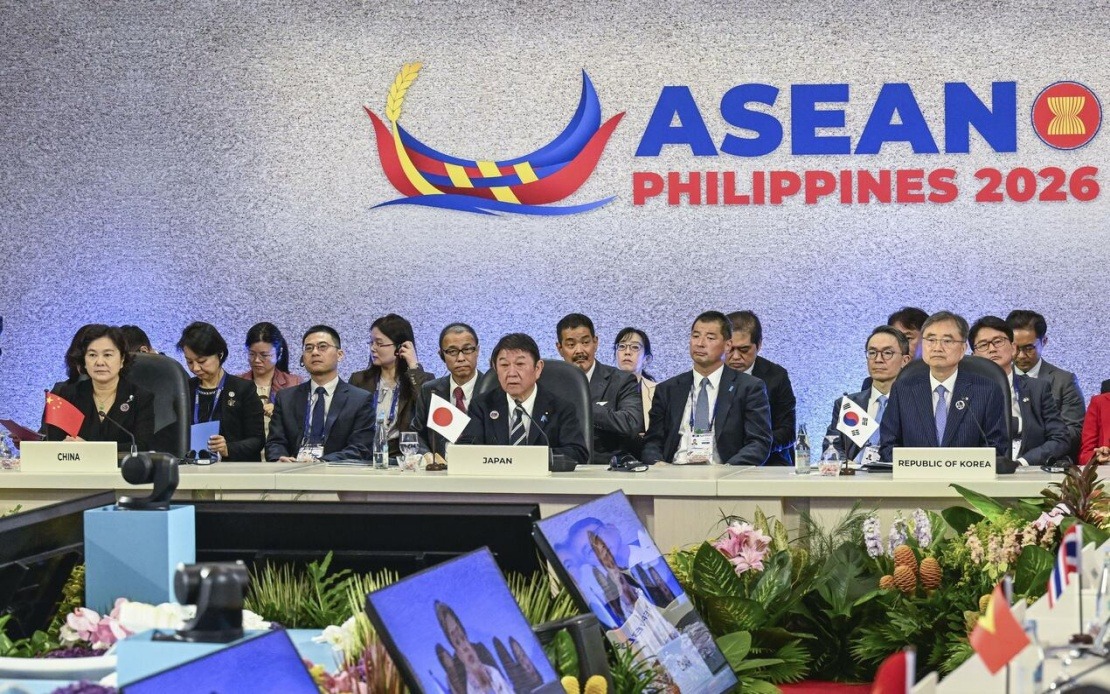
Japan has pledged its commitment to closer regional cooperation with ASEAN member states, China, and South Korea on two critical fronts: bolstering energy security across the region and coordinating efforts to combat the rising tide of online scams. Japanese Foreign Minister Toshimitsu Motegi delivered this message at a diplomatic gathering in Manila on Thursday, signalling Tokyo's determination to play an active role in addressing shared regional challenges that extend beyond traditional geopolitical concerns.
The meeting brought together senior foreign ministry officials representing one of Asia's most economically significant groupings. Motegi participated alongside his counterparts from ASEAN nations, while China sent Vice Foreign Minister Hua Chunying in place of Foreign Minister Wang Yi. South Korea was represented by Foreign Minister Cho Hyun. The composition of the gathering underscored the high-level nature of discussions, even as China's delegation at vice-ministerial level raised questions about Beijing's diplomatic priorities at the moment.
In his opening remarks, Motegi emphasised the economic heft wielded by the ASEAN-plus-three framework, noting that the combined GDP of these nations now represents more than a quarter of the global economy. This figure carries substantial implications for Malaysian policymakers and businesses, as it demonstrates the outsized influence this regional grouping possesses in shaping both regional and global economic trajectories. The magnitude of this economic power positions the grouping as indispensable to discussions on international stability and prosperity, a reality that Japan seeks to leverage through deepened cooperation.
Tokyo's position on regional architecture reveals a strategic calculation centred on supporting ASEAN's central role in maintaining regional order. Motegi explicitly voiced Japan's backing for ASEAN centrality and unity, alongside endorsement of the ASEAN Outlook on the Indo-Pacific (AOIP). This initiative, adopted by the bloc to safeguard peace, freedom, and prosperity across the region, aligns closely with Japan's own vision of a free and open Indo-Pacific. By publicly committing to coordinate with both China and South Korea in promoting AOIP through the ASEAN-plus-three framework, Japan is signalling its willingness to work within multilateral structures to advance shared objectives.
The convergence between Japan's Indo-Pacific vision and ASEAN's own outlook reflects a broader consensus among the region's major powers regarding the importance of maintaining a stable and prosperous regional environment. For Malaysian readers and policymakers, this alignment offers reassurance that Japan views ASEAN not as a secondary concern but as central to regional security architecture. The explicit articulation of support for AOIP, however, also suggests that Japan is seeking to counter alternative visions for regional order, particularly those that might disadvantage smaller or mid-sized powers.
Energy security emerged as a paramount concern during discussions, with participants recognising the urgent need to strengthen regional energy supply networks in response to geopolitical tensions in West Asia. This focus reflects growing anxiety across Southeast Asia regarding potential disruptions to energy supplies stemming from Middle Eastern instability. Malaysia, as a regional energy producer and consumer, stands to benefit from coordinated approaches to energy resilience. Discussions on this matter likely centred on diversifying energy sources, securing alternative supply routes, and enhancing regional energy infrastructure to insulate Southeast Asia from external shocks.
The emphasis on combating online scams represents a recognition of transnational crime challenges that disproportionately affect the region. Southeast Asia has emerged as both a target and a source of sophisticated cyber-fraud operations, with criminal syndicates exploiting regulatory gaps and technological vulnerabilities. Japan's willingness to coordinate regional responses to this challenge signals that Tokyo views cybersecurity and digital governance as integral to regional stability. For Malaysian authorities grappling with rising rates of online fraud targeting citizens, regional cooperation frameworks offer potential pathways for intelligence sharing and coordinated enforcement.
The ASEAN-plus-three framework itself carries historical significance as a mechanism established following the 1997 Asian financial crisis. Born from regional trauma, this grouping has evolved into a platform for practical cooperation spanning trade, finance, and security. The decision by major powers including Japan, China, and South Korea to continue investing in this framework suggests their recognition of its utility. The most recent leaders' summit occurred in Malaysia in October, demonstrating the ongoing vitality of these engagement mechanisms despite broader geopolitical tensions.
Motegi's subsequent bilateral engagement with newly appointed British Foreign Secretary Ed Miliband illustrates Japan's broader diplomatic pivot. By meeting with London's incoming foreign minister, Japan signalled continuity in Tokyo-London relations and expressed commitment to collaboration on global challenges. The reference to Prime Minister Andy Burnham's new government—itself noteworthy for the change in British leadership—underscores how Japan calibrates diplomatic engagement across multiple forums and partnerships simultaneously. This multifaceted approach reflects Tokyo's strategy of maintaining robust relationships with both regional and Western partners.
For Malaysia and other ASEAN members, these developments carry practical implications. Energy cooperation frameworks negotiated at ministerial level often translate into concrete projects affecting energy pricing, infrastructure investment, and supply reliability. Cybersecurity initiatives may result in information-sharing agreements and coordinated capacity-building programmes. The reaffirmation of support for ASEAN centrality, while rhetorically significant, also provides political capital for regional voices advocating for Southeast Asian agency in shaping regional rules and norms.
The gathering in Manila therefore represents more than ceremonial diplomacy. It reflects substantive efforts by major powers to coordinate on issues affecting regional prosperity and stability. Japan's active participation and explicit commitments suggest Tokyo views deeper engagement with ASEAN and its dialogue partners as essential to its strategic positioning in an increasingly complex Asian geopolitical landscape. For Malaysian observers, the message is clear: ASEAN remains a valued platform, and regional consensus on critical issues like energy security continues to command attention from the region's major powers.

