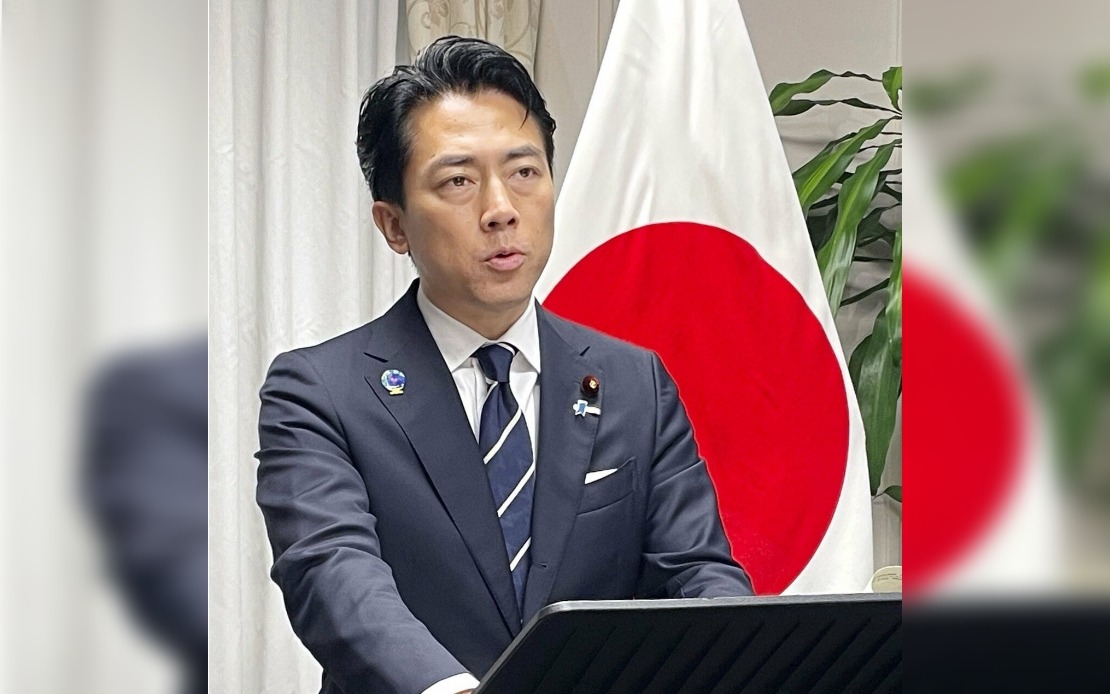
Japan's Defence Minister Shinjiro Koizumi has signalled that Tokyo must engage in serious discussion about nuclear weapons policy, marking a notable shift in how Japan's political establishment approaches one of the nation's most sensitive defence topics. Speaking during an online programme released on Friday, Koizumi argued that Japan cannot sidestep the nuclear question indefinitely, particularly as the regional security landscape becomes increasingly complex and neighbouring powers expand their military capabilities.
The Defence Minister's intervention reflects growing pressure within Japanese government circles to reconsider longstanding defence doctrine. His remarks come ahead of the government's planned overhaul of three crucial national security documents by year's end, suggesting the nuclear weapons debate will likely feature prominently in Japan's strategic recalibration. This timing is significant, as it indicates the issue is moving from whispered policy discussions into the mainstream political arena.
Koizumi specifically highlighted the policy directions being adopted by France and Finland as cautionary examples. France has committed to expanding its nuclear warhead stockpile, according to statements made by President Emmanuel Macron in March, while Finland's parliament passed legislation in June permitting nuclear weapons deployment on its territory. These European developments carry particular weight in Tokyo's strategic calculations, as they demonstrate how traditionally non-aligned or neutral nations are reassessing their security postures in response to geopolitical upheaval.
Japan's current position on nuclear weapons has been enshrined in what Japanese policymakers call the three non-nuclear principles: the nation will not produce, possess, or permit nuclear weapons on its soil. These principles have remained largely sacrosanct in post-war Japan, reflecting both the country's experience as the only nation to suffer atomic bombardment during wartime and broader societal consensus around pacifism and disarmament advocacy.
Yet Japan's security architecture has always rested on a paradox: while adhering to the non-nuclear principles domestically, the country has maintained its alliance with the United States, which extends a nuclear security umbrella over Japanese territory. This arrangement has satisfied most observers, allowing Japan to remain non-nuclear whilst benefiting from superpower protection. However, the efficacy and reliability of this arrangement now faces scrutiny as American domestic politics shift and regional threats from China and North Korea intensify.
Koizumi's argument that Japan must transform societal attitudes toward what he termed "unacceptable" topics signals frustration within defence establishment circles that legitimate policy questions remain culturally taboo. His position suggests that unless Japan permits rigorous debate on nuclear deterrence options, the country risks making defence decisions based on assumptions rather than comprehensive analysis. This framing transforms the nuclear weapons question from a moral absolute into a pragmatic policy matter requiring rational examination.
Previous attempts to inject nuclear weapons discussion into Japanese political discourse have generated considerable backlash. In December of last year, an official involved in formulating security policy under Prime Minister Sanae Takaichi's administration suggested Japan should consider acquiring nuclear weapons, triggering sharp criticism from opposition parties and diplomatic protests from neighbouring countries. Former Defence Minister Itsunori Onodera similarly advocated late last year for serious consideration of Japan's non-nuclear principles, experiences that demonstrate the political sensitivity surrounding such statements.
For Southeast Asian nations, Japan's evolving nuclear posture carries significant implications. A Japanese decision to abandon its non-nuclear principles would fundamentally alter the region's security calculus, potentially triggering proliferation concerns and destabilising diplomatic arrangements that have endured for decades. Malaysia and other ASEAN members have traditionally supported Japan's commitment to non-proliferation, seeing it as a stabilising force in Northeast Asia. Any Japanese pivot toward nuclear armament would complicate regional security frameworks that currently emphasize transparency and restraint.
Koizumi's intervention must be understood within the context of Japan's broader strategic anxiety. China's military modernization, Russia's actions in Ukraine, and North Korea's accelerating weapons programmes have combined to create unprecedented security pressures on Tokyo. Additionally, questions about American commitment to extended deterrence in the Indo-Pacific region, fuelled by debates within Washington about burden-sharing and alliance costs, have amplified Japanese concerns about long-term security guarantees.
The Defence Minister's call for debate also reflects awareness that generational attitudes in Japan may be shifting. Younger Japanese voters did not experience the immediate post-war period and may view non-nuclear principles through a different lens than their predecessors. As demographic change transforms Japan's political electorate, leaders perceive growing space to discuss previously forbidden topics.
However, Koizumi carefully framed his position as calling for discussion rather than advocating for specific nuclear policies. This rhetorical strategy allows him to raise the issue whilst maintaining plausible deniability about his actual policy preferences. The distinction matters because it permits the government to test public and international reaction whilst preserving diplomatic flexibility.
The nuclear weapons debate now emerging in Tokyo represents a watershed moment for Japan's post-war security identity. Whether this discussion ultimately leads to policy changes or serves primarily to ventilate accumulated frustrations about strategic constraints remains uncertain. What seems clear is that Japan's political establishment no longer considers the non-nuclear principles beyond discussion, marking a subtle but profound shift in how the nation conceptualizes its role in an increasingly contested regional order.

