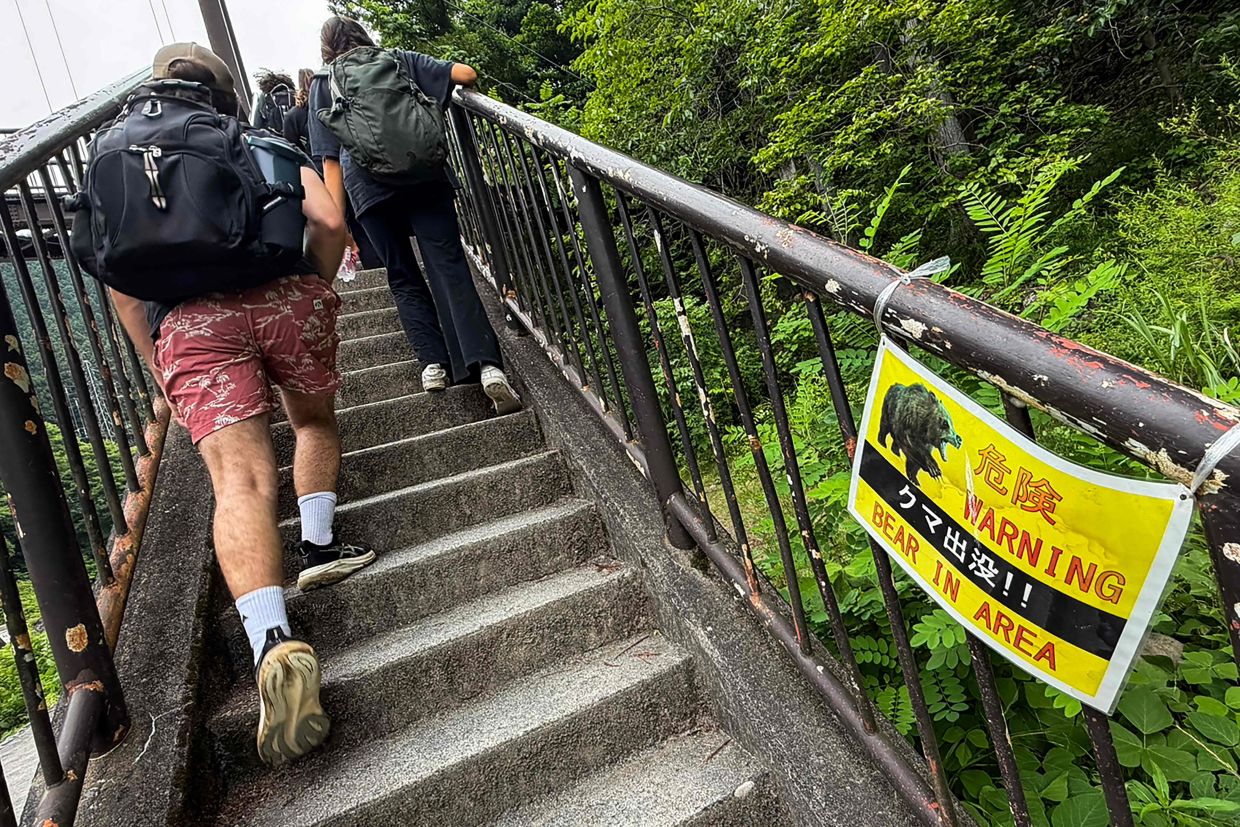
Japan is undertaking an unprecedented effort to understand and track its growing bear population, installing more than 800 monitoring cameras across its northern mountainous regions in response to a surge in deadly human-wildlife encounters. The deployment marks a turning point in how the nation addresses wildlife management, moving away from fragmented local approaches toward a cohesive national strategy. Environment ministry official Yu Takahashi disclosed the initiative to international media on Thursday, signalling that the Japanese government recognises the scope of the problem requires systematic intervention across multiple prefectures and over several years.
The urgency behind this initiative is clear when examining the trajectory of bear-related fatalities. Since April 1, at least five people have been killed by bears, all within the Tohoku region in Japan's north. More alarmingly, the previous fiscal year saw 13 fatal attacks nationwide—a record that underscores a troubling trend rather than a temporary spike. These statistics have transformed bear encounters from a rural curiosity into a genuine public health crisis, particularly for communities living adjacent to forested areas.
The root causes of this phenomenon extend beyond simple animal behaviour. Scientists point to demographic shifts in Japan's countryside, where younger populations have migrated toward urban centres, leaving rural communities depopulated. This exodus has allowed bears to reclaim territory that was previously maintained and monitored by resident populations. The mountains, which comprise approximately 80 percent of Japan's landmass, have become increasingly bear territory rather than human space. The animals have flourished in this vacuum, with populations expanding to levels not seen in generations.
For residents in Tohoku, this transformation has created an atmosphere of persistent anxiety. National media outlets provide almost daily reports of bears appearing in shopping centres, public parks, and school grounds—spaces once considered safely removed from wildlife threats. This constant media attention reflects genuine concern but also amplifies public apprehension, creating a feedback loop where fear shapes behaviour and policy decisions. The psychological impact on communities cannot be separated from the material danger posed by these animals.
To develop an effective response strategy, authorities recognised they needed accurate population data. The new surveillance programme will initially focus on six major bear populations concentrated in Tohoku, with plans to expand across the entire country over the subsequent four years. This phased approach allows for methodological refinement and resource management while maintaining the momentum of the initiative. The systematic expansion suggests that Japanese officials view this as a long-term commitment rather than a temporary emergency measure.
The methodology employed is both practical and innovative. Officials have devised a technique using jars filled with honey and wine, placed at roughly human eye level in targeted locations. When bears stand upright on their hind legs to investigate the sweet mixture, the strategically positioned cameras capture high-resolution images of each animal's distinctive white chest markings. These unique patterns serve as natural identification markers, allowing researchers to differentiate between individual bears and track their movements and behaviour patterns over time.
Historically, bear population surveys in Japan have been conducted sporadically and inconsistently across different jurisdictions. Local governments applied varying methodologies and timelines, making it impossible to construct a coherent national picture of population dynamics or movement patterns. Takahashi emphasised that the new programme represents a fundamental shift toward coordinated data collection focused on population groups rather than ad hoc counts. This standardisation will enable researchers to identify trends, predict future migrations, and develop evidence-based mitigation strategies.
The practical dangers extend beyond forest encounters. On Wednesday, a 22-year-old Vietnamese national inadvertently discharged anti-bear spray inside a post office in Nagoya city, resulting in five people requiring hospital treatment. The individual was subsequently arrested for obstruction of business. While the incident itself was accidental, it highlights how normalised bear defence equipment has become in Japanese society and the secondary risks associated with widespread use of such weapons in populated areas. Bear spray, containing capsaicin derived from chilli peppers, causes severe burning and irritation—effective against animals but hazardous in enclosed public spaces.
The emergence of bears from hibernation in recent months has triggered a sharp increase in urban and suburban sightings. Rather than remaining in remote mountainous areas, bears have been venturing into towns with greater frequency and boldness. In June, Utsunomiya, located north of Tokyo, experienced a particularly dramatic incident when authorities required four days and coordinated efforts involving dozens of police officers, professional hunters, and city officials to capture a single bear, forcing mass school closures in the process. Earlier, another bear displaying unusual intelligence—it opened windows and activated water taps—attacked four people at separate factory locations in Fukushima before evading capture for several days.
These incidents illustrate that the problem transcends simple wildlife management. Bears demonstrating apparent adaptability and learning capacity pose challenges that traditional culling or relocation approaches may not adequately address. The Fukushima bear's apparent ability to manipulate human infrastructure suggests that some animals may be developing strategies to navigate human-dominated environments more effectively. This evolution in behaviour complicates standard response protocols and reinforces the necessity for the comprehensive data collection that the new camera network will provide.
Government authorities are simultaneously issuing practical guidance to residents in bear country. Recommended precautions include avoiding solitary mountain activities, attaching bells to backpacks to alert bears to human presence, and carrying bear spray for emergencies. However, these individual measures, while important, cannot substitute for population-level understanding and coordinated management strategies. The camera deployment programme represents recognition that sustainable coexistence requires systematic knowledge rather than reactive responses to individual incidents.
The implications for Southeast Asia are noteworthy. Japan's wildlife crisis reflects broader patterns affecting the region—rural depopulation, forest encroachment pressures, and the collision between human expansion and animal habitats. Other nations in the region grappling with similar human-wildlife conflict scenarios may find Japan's methodical approach instructive. The emphasis on data-driven decision-making and coordinated multi-jurisdictional response offers a model that transcends national borders.
Looking forward, Japan's bear camera initiative represents both crisis management and long-term strategic repositioning. The next four years will generate unprecedented datasets about bear populations, distributions, and movements. This information will enable authorities to design interventions based on evidence rather than assumption, potentially including habitat management, strategic deterrence, and targeted removal programmes informed by actual population dynamics. Success will require sustained commitment, adequate funding, and coordination across prefectural and national authorities—resources that the government has apparently committed to allocating.

