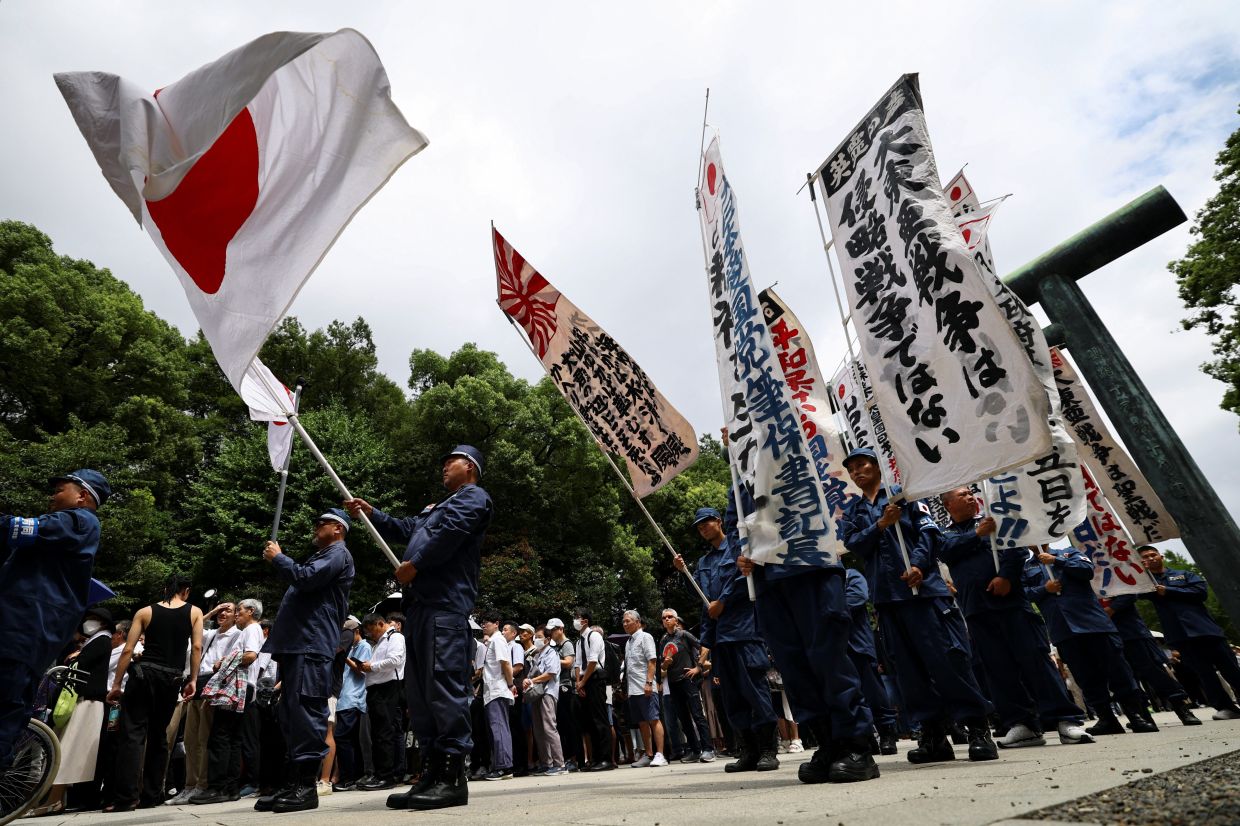
Japan's Defence Minister Shinjiro Koizumi made a symbolic visit to the Yasukuni shrine on August 15, marking the 81st anniversary of Japan's surrender in World War II, but Prime Minister Sanae Takaichi's deliberate absence underscores deepening diplomatic complexities in Northeast Asia. The defence minister's pilgrimage to the controversial site, which honours 2.5 million war dead including convicted war criminals from Imperial Japan's colonial and wartime era, represents a contentious moment in Japan's fraught relationship with its regional neighbours, particularly China and South Korea.
Koizumi's attendance as defence chief carries greater symbolic weight than previous ministerial visits, given his high-profile portfolio and his well-established pattern of regular Yasukuni observances throughout his political career. The last defence minister to visit the shrine was Minoru Kihara in 2024, demonstrating that such pilgrimages, while controversial, remain within Japan's political mainstream. However, the timing and composition of political participation in the annual August 15 commemoration send carefully calibrated signals about Japan's diplomatic posture. Takaichi's decision to stay away represents a notable recalibration from her predecessor Shinzo Abe, who sparked international outrage by visiting Yasukuni in December 2013, drawing sharp rebukes from Beijing, Seoul, and even Washington.
The Yasukuni shrine has functioned as a persistent flashpoint in Japan's regional relations for decades. Beyond its role as a war memorial, the site symbolises broader questions about historical accountability and national memory. The shrine's enshrinement of Class A war criminals convicted for orchestrating Japan's invasions and occupations across Asia during the 1930s and 1940s transforms any high-level political visit into a statement about Japan's interpretation of its wartime past. China and South Korea have consistently interpreted such visits as evidence that Japan has failed to genuinely reckon with colonial atrocities and military aggression, viewing them as representing a resurgence of nationalist militarism rather than historical reflection.
For Southeast Asian observers monitoring Japan's strategic trajectory, Takaichi's cautious diplomacy holds particular significance. Though she gained recognition as a China hawk before assuming office in October, her decision to avoid the shrine suggests an emerging pragmatism about managing the complex balancing act between nationalist constituencies at home and the need to sustain crucial partnerships across Asia. Her sending of an offering to the shrine instead—a practice previous prime ministers have employed as a middle path—reflects the delicate positioning required of Japanese leaders navigating these sensitivities. This approach acknowledges domestic political expectations whilst minimising international diplomatic damage.
Takaichi's broader strategic agenda, however, continues to provoke Beijing's ire through other channels. Her November statement suggesting that Japan might intervene militarily in a conflict over Taiwan crossed a red line for Chinese leadership, which views Taiwan as an internal matter and brooks no interference. China has responded with characteristic tools of economic and diplomatic pressure: warning its citizens against travel to Japan, implementing trade restrictions, and intensifying military patrols around disputed islands. These measures signal China's determination to punish what it perceives as Japanese strategic overreach, creating a climate of ongoing tension that makes every gesture—including shrine visits—subject to heightened scrutiny.
The deterioration in Japan-China relations must be understood within the context of Japan's accelerating military modernisation. Under Takaichi's leadership, Japan has been systematically dismantling the pacifist constitutional framework that has governed its security posture since 1945. Defence spending increases, development of advanced weapons systems, and closer security integration with Western allies represent a fundamental recalibration of Japan's strategic role in Asia. This transformation, whilst presented domestically as necessary adaptation to regional threats, appears to Beijing as confirmation of Japanese neo-militarism—a term Senior Colonel Chen Xi from China's defence ministry invoked just ahead of the August 15 anniversary.
China's diplomatic response has been comprehensive and coordinated. A joint statement from Chinese and Russian ambassadors to Japan emphasised their countries' sacrifices during World War II, implicitly delegitimising Japan's framing of historical memory. Meanwhile, Putin's visit to the disputed Kuril Islands on August 14 added another layer of complexity, forcing Japan to simultaneously protest Russian actions whilst managing the China crisis. These parallel challenges highlight how Japan's strategic reassertions have generated responses from multiple quarters, creating an increasingly crowded and contested diplomatic landscape.
Regional dynamics have not uniformly deteriorated, however. Japan-South Korea relations have experienced notable improvement in recent years, suggesting that careful management of historical sensitivities need not preclude productive engagement. Takaichi's January meeting with South Korean President Lee Jae Myung, which included a lighthearted musical collaboration, signalled a willingness to move beyond historical grievances toward contemporary cooperation. Koizumi's ping-pong match with his South Korean counterpart similarly projected an image of normalcy and goodwill. These moments suggest that whilst Yasukuni remains symbolically fraught, it need not define the entire relationship between Japan and its neighbours if political leadership demonstrates sufficient diplomatic skill.
The Yasukuni shrine authorities themselves attempted to manage the August 15 gathering by requesting visitors refrain from military-style uniforms, seeking to prevent the site from becoming a platform for nationalist demonstrations that might further inflame regional sensitivities. An AFP reporter documented approximately 20-30 uniformed attendees despite these guidelines, indicating that such requests remain unenforceable and that nationalist elements continue to utilise the occasion as a political stage. The shrine's carefully worded statement—emphasising that requests would not lead to forcible ejections—reflects the inherent tensions between commemorative solemnity and the site's function within Japan's ongoing historical and political contestations.
For Malaysia and other Southeast Asian nations, Japan's handling of these tensions carries strategic implications. Japan remains a crucial economic and security partner for regional states, yet its military reorientation and intensifying confrontation with China create new dynamics within the region. The diplomatic restraint Takaichi displayed by skipping the Yasukuni visit suggests she recognises that Japan's regional interests depend partly on managing the historical narrative more carefully than some domestic constituencies prefer. Koizumi's attendance, meanwhile, indicates that complete avoidance remains politically untenable. This ongoing negotiation between nationalist sentiment and strategic necessity will likely characterise Japanese politics for years to come, shaping how Japan's growing military capabilities are perceived and utilised across Asia.
The August 15 anniversary ultimately reflects Japan at an inflection point. The country faces pressure to strengthen militarily whilst maintaining the regional relationships essential to its prosperity and security. How Japan's leadership navigates this tension—through choices about shrine visits, military spending, diplomatic rhetoric, and historical framing—will significantly influence the trajectory of East and Southeast Asian geopolitics. Takaichi's cautious approach suggests awareness of these stakes, yet Koizumi's presence indicates that the pressures pulling Japan toward assertiveness remain substantial and will continue to complicate regional relationships.

