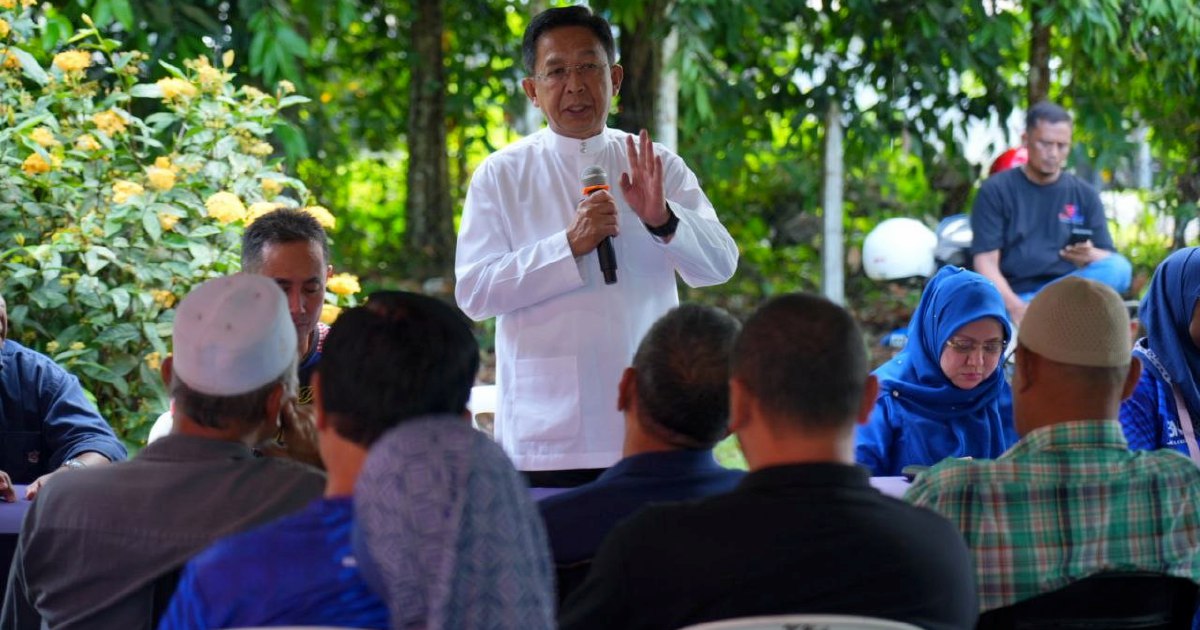
Perikatan Nasional leadership has signalled that Negri Sembilan Umno chairman Datuk Seri Jalaluddin Alias stands among the frontline contenders to become the state's next menteri besar if the PN-BN coalition secures victory in the August 1 election, marking an early indication of power-sharing arrangements within the alliance ahead of polling.
The announcement underscores how the coalition partners are beginning to map out the political landscape in Negri Sembilan, one of the nation's smaller states that nonetheless holds strategic significance within the broader Malaysian political matrix. By publicly naming potential candidates before the election, PN signals both confidence in its coalition arrangement and a desire to shape voter expectations around who would lead the state administration.
Jalaluddin, who holds the influential position of leading Umno's chapter in Negri Sembilan, brings considerable standing within the party structure and community networks throughout the state. His identification as a potential MB pick reflects Umno's continued bargaining power within the PN-BN alliance, particularly regarding distribution of chief minister positions across states where the coalition contests. The move also demonstrates that despite the broader shifting political alliances in Malaysian politics, traditional party structures and leadership hierarchies continue to determine high-level appointments.
The PN-BN understanding represents a significant coalition arrangement that transcends the typical opposition-government binary. Both formations, which have historically competed fiercely against one another, have agreed to coordinate their campaign efforts in Negri Sembilan to prevent vote fragmentation and maximise their collective electoral prospects. Such arrangements have become increasingly common in Malaysian politics as parties seek to navigate complex electoral mathematics and prevent third-force competitors from capitalising on divided opposition or coalition support.
For Negri Sembilan voters, the pre-election positioning of potential menteri besar candidates offers clarity about who might helm the state government. This transparency contrasts with elections where leadership questions remain deliberately ambiguous until after results are declared. By naming Jalaluddin among the viable candidates, PN and its partners invite voter judgment on his suitability for the top state role, staking their coalition's credibility partly on his acceptability to the electorate.
The August 1 election date places the Negri Sembilan contest within a compressed timeframe, requiring all stakeholders to rapidly consolidate their campaign machinery and messaging. The PN-BN decision to publicly float leadership names suggests confidence that their coordination can withstand the intensive campaign period ahead. However, it also introduces potential vulnerabilities, as opposition parties can now focus criticism on specific individuals rather than abstract coalition promises.
Jalaluddin's elevation as a potential menteri besar candidate also reflects calculations about regional power distribution within the PN-BN alliance. Negri Sembilan, though not the largest state, occupies a meaningful position in the larger peninsular political economy. Ensuring that the state has a well-regarded local leader helps the coalition maintain legitimacy and responsive governance structures across different regions of Malaysia.
The broader context of Malaysian state elections has shifted notably in recent years, with coalitions and cross-party arrangements becoming more fluid and negotiated. The traditional dominance of BN in state governments has eroded in several cases, while PN has emerged as a significant political force particularly in states like Kedah and Terengganu. The Negri Sembilan arrangement represents an attempt to combine PN's organisational strength with BN's established administrative experience and ground networks to create a winning coalition.
Such pre-election leadership announcements carry implications beyond the immediate state context. They influence how voters perceive the two coalitions' commitment to their respective visions, and whether such commitments are made transparently or shrouded in mystery. They also shape internal party dynamics, as party members gauge their own prospects for advancement based on how the leadership hierarchy is being restructured ahead of elections.
Regional observers have noted that the increasing frequency of PN-BN cooperation in state elections, despite their continued rivalry at federal level, suggests a pragmatic realignment of Malaysian politics. Rather than wholesale dominance by a single coalition, states appear to be becoming testing grounds where different alliance configurations compete for voter support. Negri Sembilan's August 1 election will provide a significant data point about whether the PN-BN coalition formula resonates with voters or whether rival formations can exploit any weaknesses in the arrangement.
For Jalaluddin personally, the public identification as a potential menteri besar carries both opportunity and risk. Success in the election would validate his candidacy and likely secure his appointment, advancing his political career substantially. Conversely, if the PN-BN coalition underperforms or loses the election, Jalaluddin's profile could become associated with that defeat, complicating his future political prospects despite his individual performance on the campaign trail.

