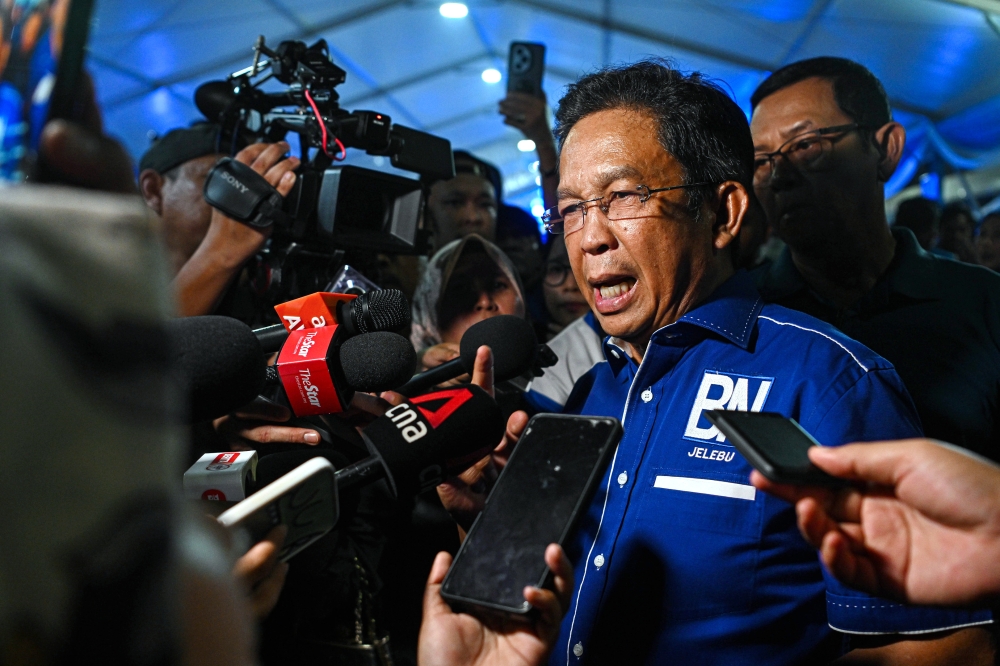
The political landscape in Negeri Sembilan solidified further as the state's Umno leadership acknowledged an important agreement within the broader opposition coalition. Speaking in Jelebu on July 19, Datuk Jalaluddin Alias, who heads Umno's operations across Negeri Sembilan, conveyed his thanks to Perikatan Nasional for its willingness to cede the chief minister's post to Barisan Nasional should their allied forces triumph in the forthcoming state elections.
This arrangement represents a significant political development for the central peninsular state, where coalition-building has become essential for competing against incumbent governance structures. The commitment from Perikatan Nasional to support Barisan Nasional's leadership claim demonstrates the level of coordination achieved between these two major opposition blocs. Such agreements are crucial in Malaysian politics, where the distribution of top positions often determines whether disparate political forces can maintain unity through campaign season and beyond.
For Barisan Nasional, which has faced electoral setbacks in recent years, the endorsement carries particular weight as the coalition attempts to rebuild its political relevance at the state level. Negeri Sembilan represents one of several battlegrounds where traditional power structures have been challenged, making any show of consolidated support strategically valuable. The arrangement suggests confidence within the opposition camp regarding their collective chances of displacing the current administration.
Perikatan Nasional's decision to back Barisan Nasional's claim to the chief minister position reflects pragmatic coalition mathematics rather than ideological alignment. The pan-Malaysian political landscape has evolved significantly since the 2018 general election, with various groupings prioritizing electoral victory over rigid political principles. This flexibility has enabled unusual partnerships to form, particularly in state-level contests where specific constituencies and local issues take precedence over national narratives.
The Negeri Sembilan arrangement also carries implications for broader coalition stability. When major political groupings formalize agreements about power-sharing in advance of elections, they create binding expectations that extend beyond campaign periods. Should the coalition succeed electorally, both Barisan Nasional and Perikatan Nasional would need to translate their pre-election pact into workable governance arrangements, a challenge that has derailed similar agreements historically.
For Umno specifically, securing regional chief minister positions through coalition arrangements has become increasingly important as the party works to recover influence it lost during the 2018 electoral tsunami and subsequent years of internal political turbulence. The Negeri Sembilan agreement provides Jalaluddin and his team with a concrete platform to campaign on—the promise of direct state-level representation and decision-making authority.
The political dynamics within Negeri Sembilan reflect national trends where traditional two-bloc competition has fragmented into more complex multi-polar arrangements. Voters across the state will now face choices not merely between competing parties but between fundamentally different coalition structures, each claiming to offer distinct governance philosophies and policy priorities. The presence of a pre-agreed leadership arrangement may influence electoral calculus among swing voters who prioritize stability and clarity regarding post-election governance.
Analysts have noted that such pacts between Barisan Nasional and Perikatan Nasional could reshape Malaysian politics if replicated across multiple state contests. These arrangements effectively create a third force positioned against ruling coalitions in various states, potentially fragmenting the political landscape further. The long-term sustainability of such alliances remains uncertain, however, as they often depend on personal relationships between leaders and specific electoral circumstances rather than enduring institutional structures.
For ordinary Negeri Sembilan residents, these political machinations translate into questions about which coalition can more effectively address state-specific challenges ranging from economic development to infrastructure investment. The agreement between Barisan Nasional and Perikatan Nasional provides both parties with an opportunity to present a unified platform addressing such concerns, though their ability to maintain coalition discipline during actual governance would ultimately determine their electoral credibility.
Jalaluddin's public acknowledgement of Perikatan Nasional's support served multiple strategic purposes—it reinforced coalition unity before supporters and potential swing voters while simultaneously positioning himself as someone capable of building political consensus across traditional divides. Such positioning often proves valuable in Malaysian state politics, where chief ministers must balance competing interests and maintain broad-based support throughout their tenure.
The timeline leading to state elections will test whether this coalition arrangement holds firm or fractures under pressure from intra-party factions or competing interests. Historical precedent suggests that opposition coalitions in Malaysia face particular challenges maintaining cohesion, as success at the ballot box often triggers disputes over ministerial portfolios, legislative committee positions, and policy direction. The Negeri Sembilan pact will likely face similar pressures once electoral results are finalized.

