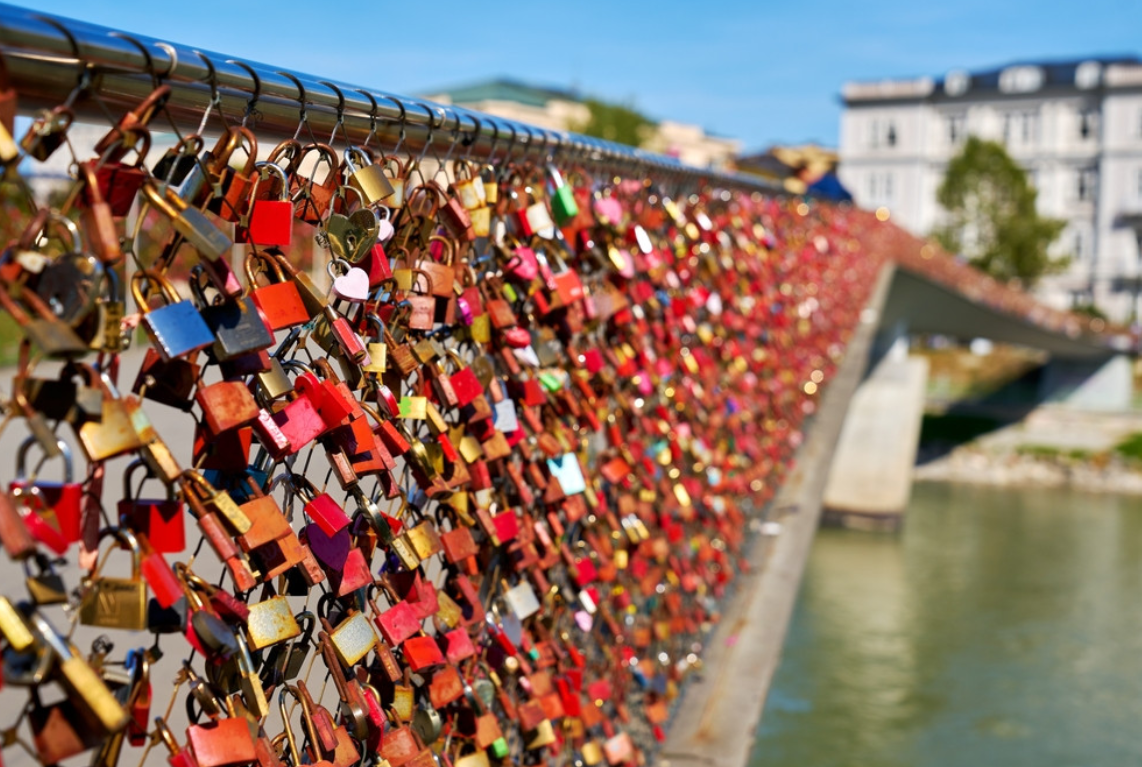
Jakarta's administration is charting a contentious course with its proposal to construct several romantic 'love lock' bridges along one of South Jakarta's busiest corridors, a move that has ignited fresh debate about how the city allocates resources and prioritises competing demands for urban development. Governor Pramono Anung introduced the concept, envisioning three to four footbridges spanning the Cideng River, which runs parallel to Jl. Rasuna Said and would connect to Jl. Kuningan Persada near the headquarters of the Corruption Eradication Commission (KPK). The governor drew inspiration from similar installations in Paris and Seoul, framing the project as an opportunity for young people to create a personalised public space by affixing romantic padlocks to the structures.
The revitalisation initiative extends beyond the novelty bridges themselves. The city administration has committed Rp 91 billion, approximately US$5 million, to transform the entire 3.8-kilometre stretch of Jl. Rasuna Said, one of Jakarta's most congested thoroughfares. The broader package includes reconstructed sidewalks and the removal of deteriorating concrete pillars—remnants of an ill-fated monorail project abandoned in the early 2000s. According to Cyril Raoul "Chico" Hakim, a special adviser to the governor, the bridge design emphasises contemporary aesthetics while maintaining accessibility for pedestrians. However, project officials acknowledged that final costs remain uncertain, with the proposal still in preliminary planning phases pending detailed engineering specifications.
The romantic vision, however, has collided with practical concerns from those who navigate Jakarta's streets daily. Karlina, a 27-year-old office worker in the Mega Kuningan commercial district, expressed measured skepticism, noting that while the bridges might initially attract curiosity, the location's character as a business hub rather than a recreational destination would likely limit genuine foot traffic. She suggested that Jakarta's younger generations, particularly Gen Z, would be more enthusiastic about freely accessible gathering spaces served by convenient public transportation rather than purpose-built romantic installations in an office corridor. Her assessment reflects broader uncertainty about whether the project genuinely responds to what residents actually desire from their urban environment.
Urban planners and infrastructure specialists have mounted more pointed criticism, characterising the love lock initiative as a distraction from urgent mobility challenges. Trubus Rahadiansyah, an urban planning expert, dismissed the project as a "gimmick" that privileges visual appeal over functional necessity. He emphasised that Jl. Rasuna Said remains overwhelmingly dominated by vehicular traffic, making it an inherently unsuitable location for meaningful pedestrian infrastructure. Trubus's objections reflect a broader tension within Jakarta's development strategy—the gap between flagship, eye-catching projects and the unglamorous but essential work of creating genuinely usable public spaces that serve residents' fundamental transportation and safety needs.
The timing of the criticism carries particular weight given recent tragedies that have exposed dangerous gaps in Jakarta's transportation infrastructure. In April, a catastrophic collision at a railway level crossing in nearby Bekasi, West Java, resulted in 16 deaths and injured at least 91 others when a Commuter Line train struck an intercity Argo Bromo Anggrek service, with investigators tracing the incident to a preceding accident in which another commuter train hit an electric vehicle trapped at an unprotected crossing. Trubus highlighted that many railway crossings throughout Jakarta and surrounding regions remain dangerously under-equipped, lacking basic safety features such as automated gates. From this perspective, the choice to invest in decorative bridges while critical level-crossing infrastructure remains unfinished represents a misalignment of priorities that could have literally fatal consequences.
The controversy reflects deeper questions about democratic accountability in municipal spending. Kevin Wu, a Jakarta city councillor representing the Indonesian Solidarity Party (PSI), has demanded transparent scrutiny of the project's justification and budgeting, arguing that city funds should concentrate on addressing equitable distribution of essential services across all districts. Wu's intervention specifically highlighted disparities in development, noting that residents across West, East and North Jakarta deserve comparable attention to the improvements being considered for South Jakarta's upscale corridor. His position encapsulates a common grievance in Indonesia's sprawling capital: that resources cluster around prestige locations while peripheral neighbourhoods struggle with crumbling sidewalks, insufficient pedestrian crossings, and inadequate public amenities.
The love lock bridge proposal also arrives amid broader global trends in city-making that have fuelled comparable debates elsewhere. Cities from Rome to Prague have grappled with whether padlock installations genuinely enhance public life or constitute commercialised kitsch that obscures practical deficiencies. What distinguishes Jakarta's situation is the starkness of the choice: a city where basic pedestrian safety infrastructure remains inadequate, where railway crossings lack protective barriers, and where entire districts suffer from deferred maintenance of fundamental services cannot reasonably be expected to embrace ornamental projects with equanimity, regardless of their aesthetic merits.
The project's defenders might contend that beautification serves psychological and social functions that justify investment, particularly in a megacity where residents endure chronic congestion and noise pollution. Creating attractive public spaces, they argue, contributes to civic pride and urban livability beyond mere functional metrics. Yet this rationale carries less persuasive force when confronted with the specificity of Jakarta's needs—a city where 16 people died because a railway crossing lacked a gate, where sidewalks in many neighbourhoods remain impassable, and where equitable public space distribution remains a distant aspiration. The love lock bridges, however charming in conception, occupy an uncomfortable space between aspiration and frivolity.
The controversy also illuminates how megacities navigate competing pressures to modernise and beautify whilst addressing unglamorous infrastructure maintenance. Jakarta's administration faces genuine challenges: the city must simultaneously tackle decades of deferred maintenance, accommodate explosive growth, address environmental degradation, and create livability improvements that attract investment and talent. Yet these competing demands require rigorous prioritisation, particularly when municipal budgets remain limited relative to needs. A city cannot reasonably pursue all objectives simultaneously; choices inevitably reflect institutional values and political priorities.
Moving forward, the love lock bridge project likely hinges on whether Governor Pramono's administration can maintain political momentum and public acceptance as detailed designs and final costs emerge. The current scepticism suggests that acceptance is far from assured. Residents and planning professionals have articulated substantive objections rooted not in opposition to beautification per se, but in frustration with misalignment between visible, celebrated projects and the distributed, less photogenic work of creating genuinely functional urban infrastructure. If Jakarta's leadership proceeds without addressing these concerns—particularly without demonstrating equivalent commitment to pedestrian safety, railway crossing protection, and equitable service distribution—the bridges may ultimately stand as monuments to institutional priorities that diverge markedly from public needs.

