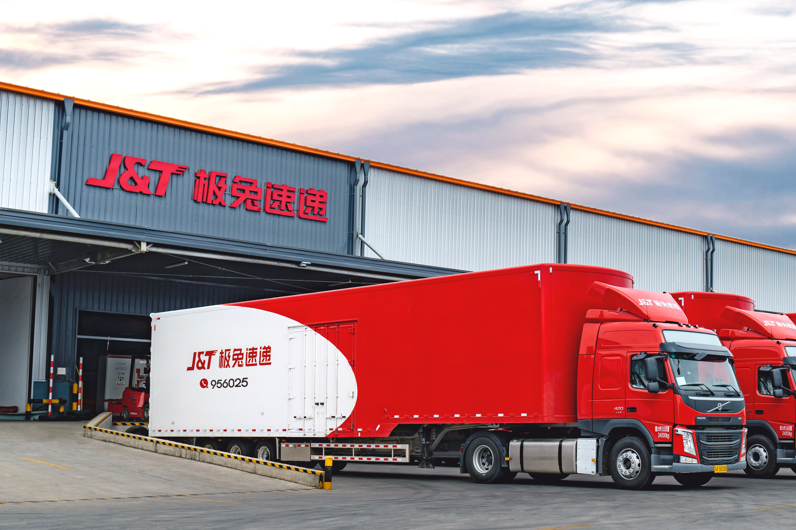
J&T Global Express Ltd, the Hong Kong-listed logistics service provider, has reached a watershed moment in its operational capacity, with its average daily parcel volume exceeding 100 million units for the first time during the second quarter of 2026. This breakthrough reflects the company's accelerating footprint across international markets, particularly in Southeast Asia, where e-commerce growth has outpaced global trends. The milestone signals a fundamental shift in the company's business composition, as international markets now account for an increasingly significant portion of its operational volume and revenue streams.
During the three-month period from April through June, J&T Express processed 9.18 billion parcels globally, representing a 24.2 percent increase compared to the same quarter in 2025. This headline figure masks a more dramatic trend occurring outside China's borders, where parcel volumes climbed 66.9 percent year-on-year to reach 2.97 billion units. The contrast between domestic and international growth trajectories reveals a strategic pivot that reflects both the maturing nature of China's logistics market and the explosive expansion of e-commerce consumption across Southeast Asia and emerging markets in the Americas.
Southeast Asia has emerged as the primary engine of J&T Express's international growth strategy. During the second quarter alone, the region generated 2.76 billion parcels, representing a 63.2 percent surge compared to the prior year, with average daily volumes reaching 30.3 million units. When annualised to the first half of 2026, Southeast Asian volumes reached 5.52 billion parcels, reflecting a 71.2 percent year-on-year expansion that substantially outpaces the company's overall growth rate. This acceleration reflects rising digital commerce adoption among Southeast Asia's growing middle class, increased smartphone penetration, and the expansion of last-mile delivery infrastructure across the region.
The company has undertaken substantial capital investments to support this regional trajectory. As of June 30, 2026, J&T Express operated 127 sorting centres across Southeast Asia, an increase of six facilities from year-end 2025, while its complement of automated sorting lines in the region rose by eleven units to reach seventy-five installations. These infrastructure enhancements are critical enablers for the company to absorb volume growth while maintaining service quality metrics, particularly as Malaysia, Thailand, Indonesia, and Vietnam experience seasonal demand fluctuations tied to shopping festivals and promotional campaigns from major e-commerce platforms.
China continues to represent the largest single market for J&T Express, though growth dynamics differ markedly from the Southeast Asian expansion. During the second quarter, the company recorded 6.21 billion parcels domestically, an increase of 10.6 percent year-on-year, with average daily volume reaching 68.2 million units. This more moderate growth trajectory reflects industry consolidation and intensifying competition within China's mature logistics sector, where players compete heavily on pricing and service speed. To navigate these pressures, J&T Express has pursued network optimisation, refined its customer portfolio to focus on higher-margin segments, and enhanced operational efficiency across its domestic network.
The company's investment in automation technologies has accelerated across all markets. In China specifically, the number of automated sorting lines increased by eight units during the first half of 2026, bringing the total to 346 installations. This expansion of mechanised sorting capacity enables the company to process higher volumes at lower per-unit costs, improve sorting accuracy, and reduce labour dependencies—a critical advantage as wage pressures intensify across Asia. These technological upgrades also provide flexibility to handle seasonal demand spikes without proportionally expanding headcount.
Beyond the core markets of China and Southeast Asia, J&T Express has begun building meaningful operations in emerging logistics corridors. During the second quarter, volumes in other markets including Latin America and the Middle East jumped 136.5 percent year-on-year to 211 million parcels. This dramatic growth reflects the company's strategic entry into cross-border logistics services and its deepening partnerships with major e-commerce platforms seeking to diversify their fulfillment networks away from traditional carriers. These emerging regions represent significant growth frontiers where e-commerce penetration remains relatively modest compared to developed Asian markets.
The company's strategic positioning has attracted positive attention from major institutional investors. Morgan Stanley recently elevated its rating on J&T Express to overweight, indicating the investment bank believes the company offers superior growth prospects relative to logistics peers. The analyst commentary specifically highlighted the company's exposure to high-growth e-commerce markets in Southeast Asia and South America, regions where digital commerce adoption curves remain in steep ascent phases. This endorsement reflects confidence that J&T Express's international expansion strategy addresses genuine structural shifts in global consumption patterns.
The implications for the Southeast Asian logistics sector are substantial. J&T Express's aggressive expansion signals confidence in the region's long-term e-commerce trajectory and validates the business case for localised logistics infrastructure. The company's investment in sorting centres and automation across Malaysia, Indonesia, Thailand, and Vietnam will likely elevate service standards across the region, creating competitive pressure that benefits end-consumers through faster delivery times and more reliable tracking. Conversely, regional logistics providers will face intensified competition as J&T Express scales operations and leverages its technological capabilities.
From a Malaysian perspective, the dynamics at play in this logistics expansion carry particular relevance. As a developed Southeast Asian market with sophisticated e-commerce infrastructure and high internet penetration, Malaysia represents both an opportunity and a battleground for logistics operators. J&T Express's increased sorting centre capacity in the region and deployment of automated sorting lines suggest the company is investing for sustained volume growth. This investment cycle should translate into faster parcel deliveries, expanded geographic coverage, and potentially more competitive pricing for Malaysian businesses utilising logistics services for domestic distribution or cross-border shipments.
The broader pattern emerging from J&T Express's operational metrics reflects a fundamental reconfiguration of Asian logistics architecture. Where Chinese logistics providers once served primarily as domestic operators with international aspirations, they are now positioning themselves as truly pan-Asian or even global networks. J&T Express's achievement of 100 million daily parcels represents a scale that places it among the world's largest logistics operators by volume, comparable to established multinational carriers. This scale provides the company with negotiating power with e-commerce platforms, allows sophisticated pricing strategies, and enables continued investment in automation and technology infrastructure that smaller competitors cannot match.
Looking forward, the sustainability of J&T Express's growth trajectory depends on several factors. Regulatory environments across Southeast Asia continue to evolve regarding cross-border logistics, customs procedures, and data localisation requirements. Labour availability and wage inflation in key hub cities remain concerns for labour-intensive sorting operations, though automation investments aim to mitigate these pressures. Additionally, intense competition from both regional carriers and international operators like DHL, FedEx, and local champions means that maintaining margin expansion alongside volume growth will require continuous operational innovation and customer service excellence. Nevertheless, the Q2 2026 results demonstrate that J&T Express has successfully scaled its international operations into a meaningful profit driver, positioning the company at the forefront of Asia's rapidly consolidating logistics sector.

