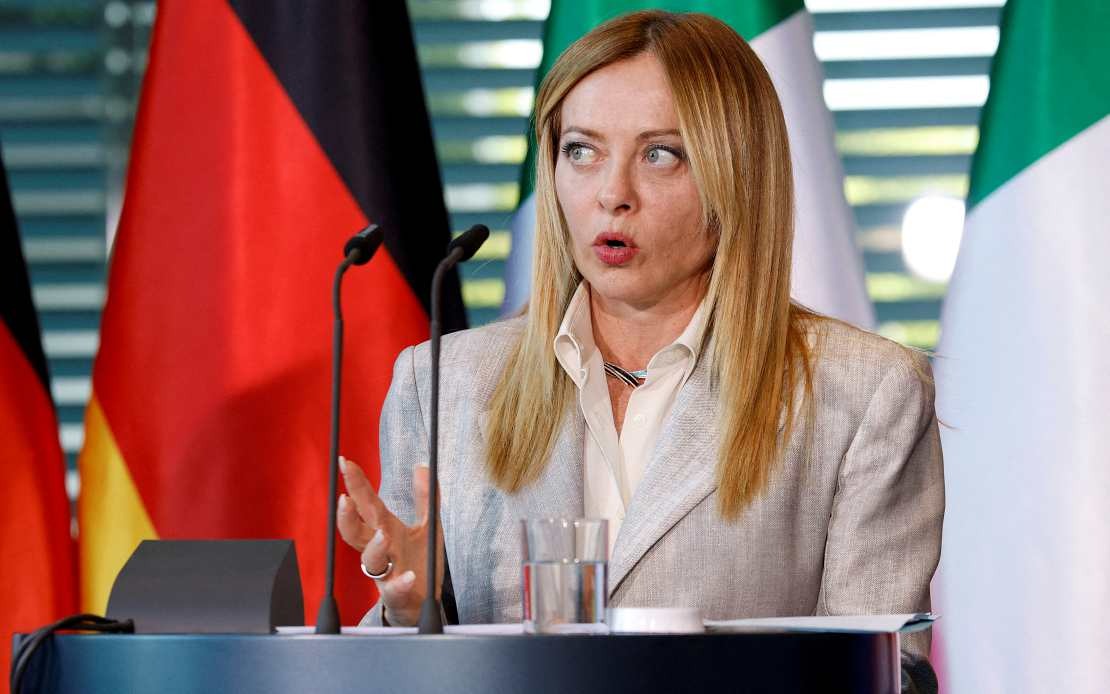
Italian Prime Minister Giorgia Meloni has launched a significant push to establish migrant processing and return centres in non-EU countries, marking an escalation in Rome's efforts to externalize asylum operations beyond the bloc's borders. The proposal, to be tabled at Tuesday's informal meeting of EU home affairs ministers, represents an ambitious attempt to reshape how Europe handles migration through offshore processing facilities, with Italy's Interior Minister Matteo Piantedosi leading discussions on the matter.
The Italian government is working toward finalizing agreements with third countries before year's end, using its existing arrangement with Albania as the foundational template for these new partnerships. Officials have indicated that the first such centres could become operational as early as 2027, suggesting a multi-year implementation timeline that accounts for the diplomatic and logistical complexities involved in establishing processing infrastructure across borders. The proposal has already garnered backing from Danish Prime Minister Mette Frederiksen, signalling that northern European governments view offshore processing as a viable solution to migration pressures.
Wider European support for Italy's vision extends beyond individual endorsements. Twenty-two EU member states submitted a collective letter to European Commission President Ursula von der Leyen and European Council President Antonio Costa, formally requesting that EU leadership examine new protective mechanisms against undocumented migration. This multilateral backing underscores how migration management has become a priority concern across the bloc, with numerous capitals seeking systemic solutions rather than purely national responses.
The geographical spread of these negotiations reveals which countries face the most acute pressure. Rwanda and Uganda represent the furthest advanced negotiations among African partners, while Denmark, Austria, the Netherlands and Germany are driving the European side of discussions. Greece, another frontline nation, has similarly committed to launching its own experimental centres by 2027, demonstrating that the pressure for external processing solutions is not confined to Italy but reflects a broader European anxiety about border management.
Italy's existing track record with offshore processing offers both cautionary lessons and operational experience. The country has independently established and funded migrant centres in Albania, operating them under Italian jurisdiction to handle asylum applications, detention, and deportation procedures. However, the Italian domestic experience reveals significant complications. Between May 2025 and mid-July 2026, only 685 migrants were transferred to the Albanian facility, with fewer than 15 per cent ultimately repatriated, indicating that the offshore model has not delivered the efficiency originally anticipated.
The judicial obstacles facing Italy's migration strategy further complicate the picture. Italian courts have repeatedly intervened to block migrant detention in the Albanian facilities, ordering their return to Italian territory and effectively undermining accelerated processing procedures. This tension between the executive branch's desire to expedite border management and the judiciary's protection of migrant rights reveals fundamental tensions within European liberal democracy that offshore processing cannot simply resolve. The cost dimension adds another layer of concern: maintaining the centre in Gjader alone required €50 million in 2025, raising questions about fiscal sustainability for a proposed EU-wide network of similar facilities.
The Ceuta crisis provides the immediate context driving these initiatives. In late July, the Spanish autonomous city on Morocco's border experienced a sudden surge in migrant arrivals that overwhelmed local capacities. Within a single 24-hour period, approximately 60,000 individuals crossed into Ceuta, a city with a population of roughly 85,000, effectively doubling the settlement's size overnight. Spain responded by mobilizing additional police units, Civil Guard forces, and military personnel to manage the influx and deter further crossings, demonstrating the strain that even well-resourced European cities face when confronted with mass migration.
For Malaysian and Southeast Asian observers, Italy's proposal carries important implications regarding global migration governance patterns. The European debate over offshore processing reflects a broader struggle by wealthy nations to manage irregular migration without fundamentally altering labour market access or asylum commitments. The model being developed in Europe will likely influence approaches in other regions, particularly as Southeast Asian nations increasingly become both transit routes and destinations for displaced populations. Malaysia's own experience hosting over 900,000 registered refugees highlights the asymmetrical burdens facing developing countries when wealthy nations pursue externalization strategies.
The third-country processing model also raises sovereignty and human rights questions that extend beyond Europe. Establishing EU-funded facilities in countries like Rwanda and Uganda creates complex jurisdictional arrangements where processing decisions made by EU authorities apply to applicants detained in third nations. This outsourcing of asylum determination to non-EU territory potentially creates accountability gaps and enforcement challenges that could undermine international refugee protection standards. Southeast Asian nations watching these developments should carefully consider whether similar arrangements, if proposed regionally, adequately protect vulnerable populations from irregular migration routes.
The financing mechanism identified for these centres—EU funding—suggests that member states view offshore processing as a collective European responsibility rather than an individual national burden. This funding approach potentially incentivizes third countries to participate in EU migration management, creating economic dependencies that reshape bilateral relationships. For African partners like Rwanda and Uganda, negotiating positions regarding centre operations, staffing, and deportation procedures become leverage points in broader development relationships with European actors.
The ambitious 2027 timeline for operational facilities suggests that proponents view offshore processing as a relatively urgent solution rather than a longer-term strategic shift. However, the implementation challenges evident in Italy's existing Albanian arrangement indicate that actual timelines may extend considerably beyond initial projections. The gap between the 685 transfers achieved and the anticipated volume of people requiring processing reveals fundamental capacity questions that optimistic timelines may not adequately address.
Moving forward, the success of Italy's initiative will depend on negotiating third countries accepting operational models that align with EU standards while respecting host nation sovereignty, securing adequate sustainable funding, and establishing judicial frameworks that satisfy both European protection standards and partner country legal systems. The combination of judicial resistance within Italy and the modest repatriation rates achieved thus far suggests that offshore processing represents only one component of a broader migration strategy, rather than a comprehensive solution to the underlying forces driving irregular movement toward Europe.

