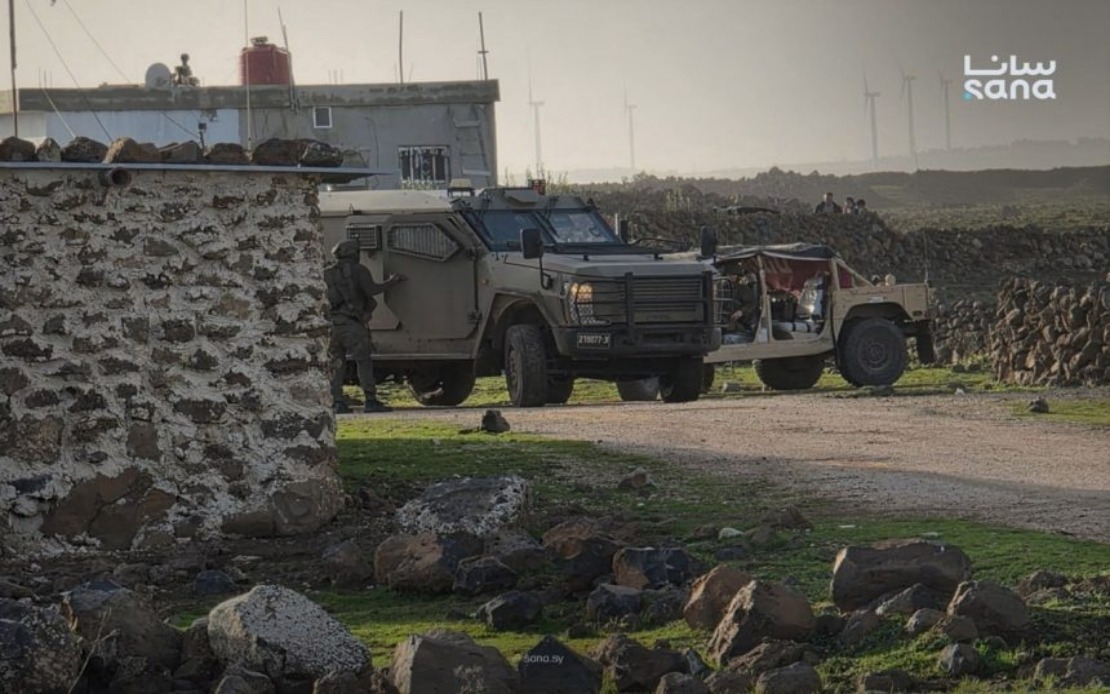
An Israeli military contingent of six vehicles crossed the border into Syria's southwestern Quneitra province on Saturday, according to Syrian state media, underscoring escalating tensions in the region following the dramatic political upheaval in Damascus. The operation saw the vehicles advance into the central Quneitra countryside toward the Kudna Dam, with Israeli drones simultaneously conducting reconnaissance operations overhead. The movement reflects a significant shift in Israel's posture toward its northern neighbour since the collapse of Bashar al-Assad's government in December 2024.
The incursion represents just the latest in an expanding pattern of Israeli military activity across Syria's southern frontier. Since Assad's fall six months ago, the Damascus government has lost effective control over critical border areas and strategic military installations that had previously been jointly administered under international agreements. Israel's decision in December to formally abrogate the 1974 disengagement accord and unilaterally extend security control over the buffer zone fundamentally altered the status quo that had, despite periodic tensions, maintained a degree of predictability along the disputed Golan Heights frontier.
The frequency and scale of Israeli operations in southern Syria have intensified markedly in recent months, moving well beyond occasional cross-border raids to encompass sustained military presence and administrative control. These operations include not merely hit-and-run attacks on military facilities but also the establishment of permanent military checkpoints, systematic searches of Syrian territory, and the detention of individuals deemed security threats. The activities suggest Israel is consolidating territorial gains and leveraging Syria's weak central authority to restructure security arrangements along its border.
For Malaysia and Southeast Asian observers, these developments hold significant implications for broader Middle Eastern stability and international law. The systematic violation of Syrian sovereignty by a major power without effective international countermeasures raises questions about the applicability of international agreements and the vulnerability of smaller nations to unilateral action by militarily superior neighbours. The situation echoes concerns that resonate across the region regarding border security, territorial integrity, and the reliability of international frameworks designed to prevent conflict escalation.
Syria's current political transition has created a security vacuum that Israel has moved quickly to exploit. With Assad's military apparatus dismantled and a new transitional government still consolidating authority, Damascus lacks the capacity to enforce its territorial claims or prevent foreign military operations on its soil. This power imbalance has emboldened Israeli decision-makers to take actions that would have been diplomatically and militarily untenable under the previous regime, which maintained significant military capabilities and strategic partnerships with regional powers.
The Kudna Dam operation specifically targets infrastructure in an area long considered strategically significant for water resources and agricultural production. Control over such facilities provides Israel with leverage not merely over Syrian territory but potentially over resource distribution affecting civilian populations. The simultaneous deployment of drones suggests Israel is conducting comprehensive surveillance and mapping operations, activities consistent with establishing permanent monitoring and control infrastructure rather than conducting temporary tactical operations.
The international community has largely remained silent regarding these violations, a striking contrast to the diplomatic outcry that follows similar actions by other nations. The absence of meaningful consequences or diplomatic pressure from major powers effectively legitimizes Israel's unilateral redrawing of the regional security architecture. For Southeast Asian nations mindful of their own border disputes and concerns about great power interference, the lack of international accountability for Israeli actions in Syria presents troubling precedent.
Syria's new political leadership faces an acute dilemma in responding to these incursions. The transitional government requires international recognition and economic assistance to stabilise the country, yet assertive resistance to Israeli operations risks triggering military responses that Syria is ill-equipped to counter. This asymmetry of power leaves Syrian decision-makers with limited practical options, potentially resulting in de facto acceptance of Israeli military presence and control over strategic areas of southern Syria.
The broader context of these incursions must account for Israel's stated security concerns regarding weapons transfers to hostile organizations and the proliferation of advanced military technology in Syria's fragmented security environment. Yet the scope and permanence of current Israeli operations exceed what purely defensive security measures would justify, suggesting strategic objectives that extend beyond counterterrorism to encompass territorial consolidation and buffer zone expansion. This distinction matters considerably for understanding Israeli intentions and assessing the likelihood of further escalation.
Regional observers note that the timing of these operations, occurring within the context of Syria's political transition and international focus directed elsewhere, reflects strategic calculation about windows of opportunity. As Syria gradually reconstitutes governmental authority and potentially rearms or seeks security partnerships with regional powers, Israel's current freedom of action will likely diminish. This creates incentives for Israel to maximize its territorial and strategic advantages while Syria remains weak, establishing facts on the ground that would prove difficult to reverse once Syrian capacity is restored.
The human cost of these operations remains inadequately documented, with limited access for independent observers and international monitors in southern Syria. Civilian impact assessments and accountability for potential violations of humanitarian law depend on transparent investigation and documentation, capacities currently absent in the conflict zone. This accountability gap raises international humanitarian concerns that extend beyond strictly political considerations of state sovereignty.

