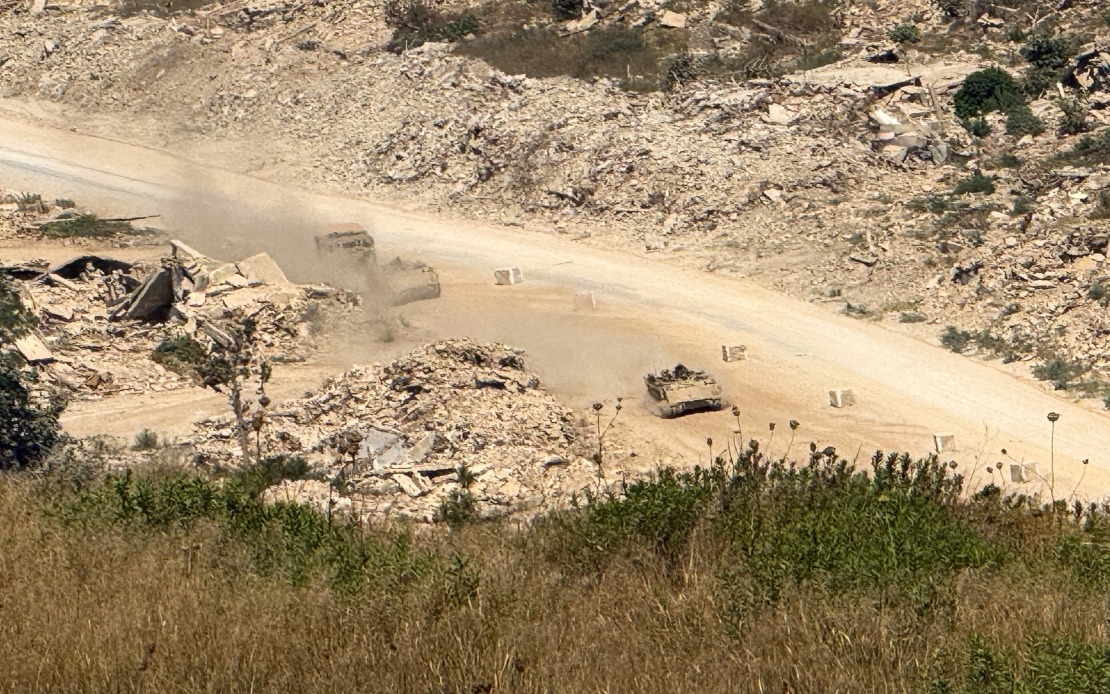
The Israeli military launched a series of coordinated operations throughout southern Lebanon on Monday, employing artillery bombardments, ground movements, and property destruction across multiple towns and villages, according to reports from Lebanon's National News Agency. The operations represent a continuation of military pressure in the region despite ongoing diplomatic efforts to establish a framework for Israeli withdrawal and conflict de-escalation. The strikes targeted settlements including Mansouri, Khiam, Mays al-Jabal, and areas within Nabatieh governorate, demonstrating the geographical scope of the military campaign.
Specific incidents reported during the 24-hour period included machine gun fire directed at Wadi al-Salouqi in Nabatieh governorate and intensive shelling of the town of Mansouri overnight. Israeli forces also detonated explosive devices within the Mansouri locality in what appeared to be a coordinated demolition operation. In the northern sector near Kfar Tebnit, a significant explosion was recorded, while the surrounding areas experienced intermittent artillery barrages. These tactical strikes suggest a pattern of targeting civilian infrastructure rather than concentrated military positions, raising concerns among humanitarian observers about the classification of such operations.
The burning of residential structures in Khiam represents an escalation in the nature of the military operations, moving beyond conventional bombardment to deliberate destruction of housing stock. Israeli forces simultaneously advanced into the western outskirts of Mays al-Jabal, supported by artillery fire that specifically targeted residential buildings. Low-altitude drone surveillance operations were conducted over the Zahrani region, indicating ongoing reconnaissance activities to monitor movement and identify targets throughout the operational zone. These multi-faceted military activities occurring in close temporal proximity suggest a coordinated campaign rather than isolated incidents.
The timing of these operations carries particular significance given the recent diplomatic developments in the region. Just three days prior, the seventh round of Lebanese-Israeli negotiations concluded in Rome under United States mediation, with both parties ostensibly making progress on critical issues including border demarcation and the treatment of detainees. Lebanese President Joseph Aoun characterized the Rome discussions as producing "positive progress" following the Cabinet session, suggesting that political leadership in Beirut believed momentum toward resolution was building. The resumption of intensive military operations so soon after these talks raises fundamental questions about the sincerity of the negotiating positions and the degree of control that political authorities exercise over military operations.
The framework agreement reached on June 26 established the conceptual foundation for conflict resolution through a phased approach involving designated pilot zones where Israeli forces would gradually withdraw in exchange for Lebanese military deployment and the disarmament of armed groups, primarily Hezbollah. This mechanism acknowledges the complexity of the security situation and attempts to address both Israeli security concerns and Lebanese territorial sovereignty. However, the continued military operations suggest that Israeli strategic objectives may extend beyond the parameters established in the framework agreement, or that operational commanders on the ground possess significant autonomy in implementing military tactics.
The broader context of Israeli military presence in Lebanon reveals a long-standing pattern of territorial control. Israeli forces currently occupy southern Lebanese areas, some continuously since the 1980s and others acquired during the recent 2023-2024 military campaign. The current operational period, which commenced on March 2, has witnessed Israeli forces penetrating more than ten kilometres into Lebanese territory, substantially exceeding the depth of occupation from earlier periods. This expansion reflects a strategic shift in Israeli military posture toward establishing deeper control mechanisms within Lebanese sovereign territory, complicating any eventual withdrawal scenario.
The humanitarian toll recorded by Lebanese authorities stands at 4,335 deaths and 12,277 wounded since the beginning of the current military campaign, with over one million people displaced from their homes. These figures represent one of the largest displacement crises in the Middle East in recent years and create significant pressure on neighbouring countries, including potential spillover effects into Syrian refugee hosting areas. The regional implications extend beyond Lebanon, as the conflict influences the broader geopolitical balance in the eastern Mediterranean and creates security challenges for countries throughout Southeast Asia with maritime interests and expatriate communities in the region.
For Malaysian readers and regional observers, the Lebanon situation exemplifies the fragility of diplomatic frameworks when military operations continue unabated. Southeast Asian nations have historically supported Palestinian self-determination and Lebanese sovereignty through United Nations voting patterns, and the apparent disconnect between negotiation and military action raises concerns about the viability of similar frameworks elsewhere in the region. The situation also underscores the limitations of external mediation, particularly when conducted through established powers that maintain complex relationships with the parties involved.
Israel's concurrent occupation of Palestinian territories and Syrian land, combined with its documented refusal to implement United Nations resolutions calling for Palestinian independence, suggests a regional approach that treats territorial control as negotiable through military means rather than through binding international frameworks. This posture creates long-term instability and complicates efforts at achieving comprehensive regional peace architectures. The international community's limited capacity to enforce compliance with negotiated agreements when major military powers exhibit selective commitment to implementation mechanisms remains a persistent challenge.
The operational tempo observed in southern Lebanon demonstrates that military establishments may pursue objectives independently from or in contradiction to stated diplomatic positions. The Monday operations occurred without reported casualties or property damage claims in initial reports, suggesting either that targeting was conducted with precision to avoid mass civilian casualties or that assessment mechanisms remain incomplete. Regardless, the continuation of military operations during active negotiations establishes a bargaining dynamic where military pressure supplements diplomatic conversations, potentially undermining confidence-building measures necessary for lasting peace.
The involvement of United States mediation in the Rome talks reflects broader American strategic interests in preventing regional escalation that could affect broader Middle Eastern stability and international shipping through Mediterranean and regional waterways. However, American diplomatic capacity appears constrained by the military actions continuing despite their sponsorship of negotiating forums. This limitation on external mediator effectiveness has implications for other regional conflicts where international powers attempt to facilitate resolution while lacking enforcement mechanisms or genuine leverage over all parties.
Moving forward, the credibility of the framework agreement depends on establishing mechanisms that link military operations to diplomatic progress and create consequences for violations. The current pattern suggests that absent such linkages, military operations will continue reflecting strategic calculations about territorial control and security positioning regardless of negotiating outcomes. For the region broadly, including Southeast Asian nations with interests in Middle Eastern stability, the Lebanon situation reinforces the necessity of multilateral approaches that go beyond bilateral mediation and establish international oversight mechanisms with enforcement authority.

