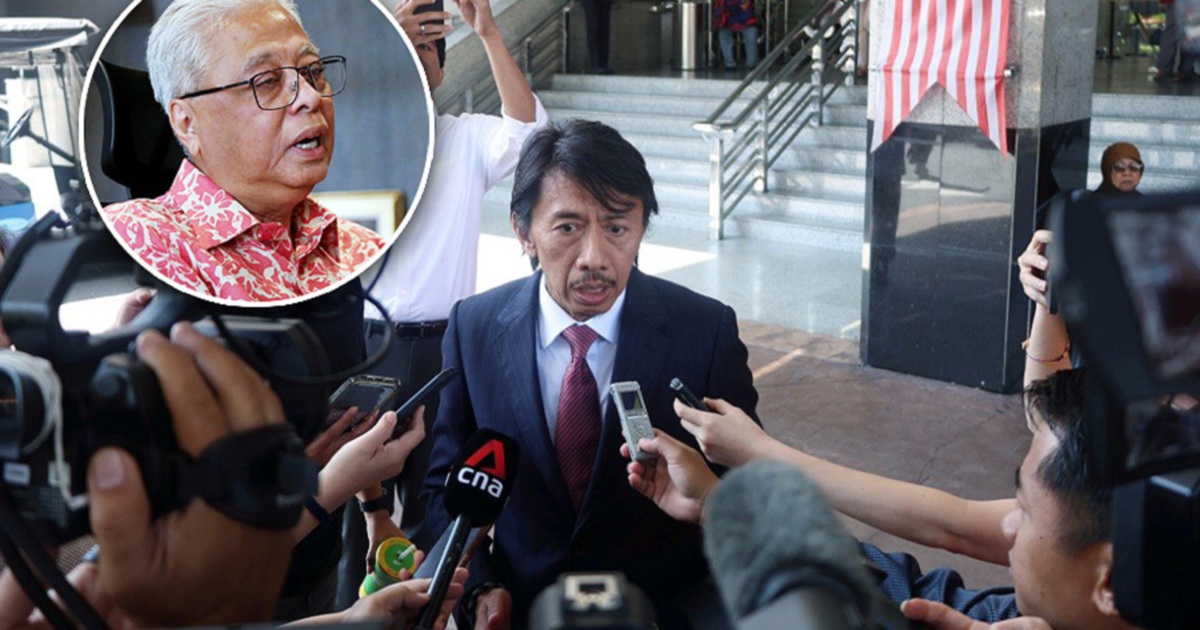
The former prime minister Datuk Seri Ismail Sabri Yaakob has signalled his determination to pursue legal vindication despite recent health complications, as the Malaysian Anti-Corruption Commission (MACC) Act charges against him move closer to resolution. The high-profile case underscores the intensifying scrutiny of Malaysia's political leadership and reflects the country's broader commitment, or at least formal institutional efforts, to hold office-holders accountable through anti-corruption mechanisms.
Ismail Sabri's situation represents a pivotal moment in Malaysia's governance narrative. The former premier, who served as the country's 9th prime minister from August 2021 to November 2022, has consistently maintained his innocence and signalled his willingness to face the legal process head-on. His resolve to clear his name, even amid personal health difficulties, demonstrates a defiant stance that has become characteristic of his public response to the accusations.
The MACC's pursuit of charges against a sitting prime minister—albeit a former one—marks a significant juncture in the post-2020 Malaysian political landscape. Since Muhyiddin Yassin's administration and the subsequent shift to Ismail Sabri's leadership, the anti-corruption agency has demonstrated a more visible enforcement posture. This case will likely shape public and political perceptions of whether Malaysia's institutions can genuinely investigate and prosecute senior government figures without partisan interference or protection.
For Malaysian readers, the implications extend beyond one individual's legal troubles. The case raises fundamental questions about the integrity of governance during Ismail Sabri's tenure as prime minister, a period marked by coalition instability and the constant threat of government collapse. His administration grappled with managing a fractious parliamentary majority while addressing pandemic-related economic challenges and the lingering Sheraton Move fallout from his predecessor's political manoeuvres.
Regionally, the prosecution of a former Southeast Asian premier carries weight in how Malaysia positions itself within the broader governance landscape of the region. Neighbouring countries including Indonesia, Thailand, and the Philippines have struggled with anti-corruption efforts that often appear selective or politically motivated. Malaysia's handling of this case will be scrutinised by international observers monitoring the health of the country's institutional independence and rule of law.
Ismail Sabri's health setback adds a layer of complexity to the proceedings. While the former premier has not publicly detailed the nature of his medical condition, such challenges during high-stakes legal battles can complicate case strategy and public perception. The interplay between personal adversity and legal defence creates a narrative dimension that extends beyond mere procedural matters, potentially influencing how ordinary Malaysians relate to his circumstances.
The decision to press ahead with charges against a former prime minister reflects the MACC's institutional positioning as an autonomous investigative body, though critics have questioned whether its enforcement actions consistently reflect political balance. The agency's credibility hinges significantly on whether cases are pursued with equal rigour regardless of a suspect's current political standing or affiliation. Ismail Sabri's case will inevitably be interpreted through this lens by both supporters and detractors.
The timing of the charges and upcoming court proceedings occurs within a broader context of Malaysian politics characterised by coalition realignments and the search for governmental stability. The Anwar Ibrahim administration, which succeeded Ismail Sabri, has faced its own governance challenges and questions about its approach to opposition accountability. The continuation of MACC prosecutions across political divides, or their apparent concentration on particular groupings, will continue to shape public trust in anti-corruption institutions.
Ismail Sabri's legal team will presumably mount a vigorous defence, drawing on whatever factual and procedural grounds they believe support his position. The detailed circumstances of the charges—whether related to contract awards, financial irregularities, or other forms of alleged misconduct—remain subject to judicial examination. His assertion of innocence, coupled with his willingness to face the process despite health obstacles, will resonate differently across Malaysia's fractionalised political landscape.
The broader significance of this case for Malaysian democracy rests on whether the legal process unfolds with transparency, fairness, and adherence to procedural integrity. Regardless of the eventual outcome, the precedent established by pursuing charges against a former premier will influence how future administrations perceive their vulnerability to investigation and prosecution once they leave office. This inevitably affects incentive structures within the political elite.
For investors and international observers concerned with Malaysia's investment climate and institutional stability, cases involving high-ranking former officials carry implications for perceived governance reliability. Consistent and credible enforcement of anti-corruption laws, free from partisan manipulation, supports long-term confidence in Malaysia's regulatory environment. Conversely, prosecutions perceived as selective undermine such confidence.
As the scheduled court date approaches, Ismail Sabri's determination to clear his name will be tested through the Malaysian legal system. Whether his case concludes in vindication or conviction, it will contribute substantially to the evolving understanding of how Malaysia's anti-corruption institutions function and whether they can maintain public legitimacy across the nation's diverse political constituencies. The outcome will reverberate through Malaysian politics well beyond the individual involved.

