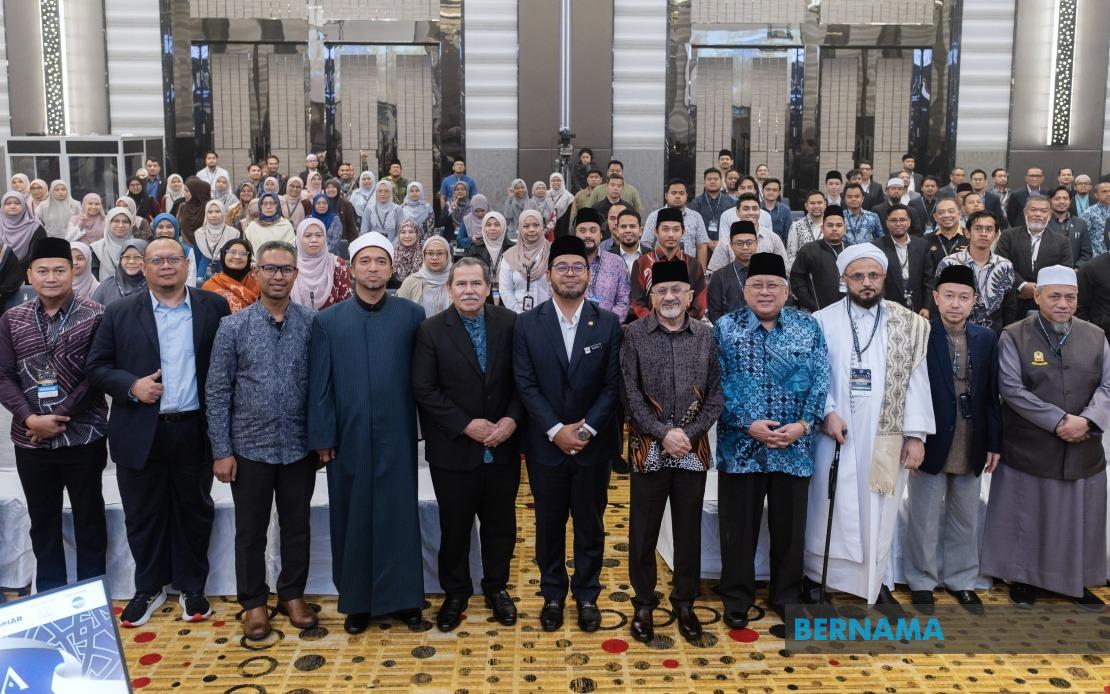
Islamic social finance represents an underutilised yet potent mechanism for tackling poverty while simultaneously accelerating Malaysia's broader economic agenda, according to Dr Zulkifli Hasan, the Minister in the Prime Minister's Department (Religious Affairs). Speaking at the MULTAQA SIDR Islamic Social Finance Conference in Kuala Lumpur on Tuesday, Zulkifli underscored the sector's readiness to transition from niche financial operations into mainstream economic instruments that could reshape Malaysia's development trajectory.
To realise this potential, the federal government intends to forge deeper partnerships spanning government departments, universities and commercial enterprises. The strategy hinges on pooling technical expertise and innovation capacity across these three pillars to create a more robust ecosystem. By integrating Islamic social finance mechanisms—such as waqf (endowments), zakat (almsgiving) and qard hasan (benevolent lending)—with conventional development initiatives, policymakers believe Malaysia can unlock resources currently dispersed across fragmented channels and redirect them toward measurable poverty reduction outcomes.
A critical institutional reorganisation is already underway. The Department of Waqf, Zakat and Haj, commonly known as JAWHAR, has been designated as the coordinating body responsible for upgrading governance standards and professional practices within the Islamic charitable ecosystem. This centralisation reflects growing recognition that sector-wide improvements require a single authoritative voice capable of enforcing uniform standards across disparate organisations. The emphasis on professionalisation addresses longstanding concerns about accountability and efficiency in how Islamic institutions deploy community resources.
Academic and vocational collaboration forms the backbone of this enhancement strategy. Universities and higher education institutions are being positioned as partners in capacity-building for Islamic non-governmental organisations, which form the operational backbone of grassroots social finance delivery. Zulkifli stressed that streamlining governance within these organisations is prerequisite to legitimising the entire sector's credibility. Without credible institutional frameworks, he implied, Islamic social finance risks remaining peripheral to Malaysia's financial architecture, unable to attract the scale of capital necessary for meaningful poverty intervention.
The conference also witnessed the unveiling of Malaysia's Islamic Social Finance Report 2026, a comprehensive diagnostic document jointly produced by the Zakat Collection Centre under the Federal Territories Islamic Religious Council, CoEISF ISRA Institute, and INCEIF University. This report functions as both an institutional barometer and a policy reference point, cataloguing ecosystem developments, operational bottlenecks and expansion pathways. Its dual audience—local institutions and regional stakeholders—reflects ambitions to position Malaysia as a thought leader in Islamic finance innovation across Southeast Asia and beyond.
Zulkifli articulated a crucial conceptual reframing of Islamic social finance's purpose. Rather than remaining confined to conventional welfare distribution—essentially providing temporary relief to impoverished individuals—the sector must evolve into what he termed 'The Third Force,' actively building productive capacity within vulnerable communities. This distinction separates consumptive charity from developmental empowerment, suggesting initiatives that generate sustainable income sources rather than perpetuating dependency. Such a shift would require reimagining how zakat funds are deployed, channelling portions toward vocational training, microenterprise support and asset-building rather than exclusively toward consumptive assistance.
The minister's remarks came against a backdrop of institutional integrity concerns that have troubled the Islamic finance sector. Recent parliamentary debate surrounding the Royal Commission of Inquiry report on Tabung Haji—Malaysia's hajj savings fund—revealed substantial governance failures and investment losses affecting millions of savings accounts. Zulkifli cautioned that allowing similar weaknesses to persist within the broader Islamic social finance apparatus risked corroding public confidence not merely in individual institutions but in Islamic finance as a whole. He explicitly warned that governance lapses could damage Islam's institutional reputation domestically and regionally.
These integrity concerns carry particular weight for Southeast Asia's Muslim-majority and Muslim-plurality nations, where Islamic finance operates at the intersection of religious identity and commercial aspiration. Malaysia's Islamic financial sector, already a regional heavyweight, faces reputational risks if governance standards falter. Neighbouring jurisdictions including Indonesia, Brunei and Singapore monitor Malaysian regulatory approaches closely, meaning domestic failings ripple across regional markets. Zulkifli's framing suggested that mainstreaming Islamic social finance cannot proceed independently of fortifying institutional accountability and transparency mechanisms.
When pressed about calls for establishing a new royal commission to investigate Tabung Haji's losses more extensively, Zulkifli declined to elaborate, maintaining a cautious diplomatic posture. This reticence suggests sensitivity around institutional accountability measures within religious establishments, where investigative authority traditionally defers to state religious authorities. Nevertheless, his earlier warnings about integrity's importance hinted that governance issues cannot be indefinitely postponed without jeopardising the broader agenda to elevate Islamic social finance's systemic prominence.
The practical implementation of Zulkifli's vision will demand sustained coordination across multiple agencies and sectors. JAWHAR's expanded mandate, while significant, requires supporting infrastructure—training programmes, auditing frameworks, performance metrics and inter-agency communication channels. Universities must develop curricula aligned with sector needs. Private enterprises must find commercial incentives within social finance partnerships. This orchestration remains incipient; the conference announcements represent aspirational statements rather than fully operationalised systems. Malaysia's experience in implementing complex cross-sectoral development initiatives suggests that translating policy pronouncements into field-level reality requires sustained political commitment and adequate resource allocation.
The unveiling of the Islamic Social Finance Report 2026 and conference proceedings signal Malaysia's determination to position itself as a regional authority on integrating Islamic charitable mechanisms into development frameworks. For policymakers and practitioners across Southeast Asia—particularly those in other Muslim-majority nations confronting similar poverty challenges—Malaysia's institutional experiments with mainstreaming Islamic social finance may yield transferable lessons. Whether this ambition materialises into measurable poverty reduction and sustainable community empowerment, however, will depend upon resolving the governance and integrity challenges that have shadowed related institutions.

