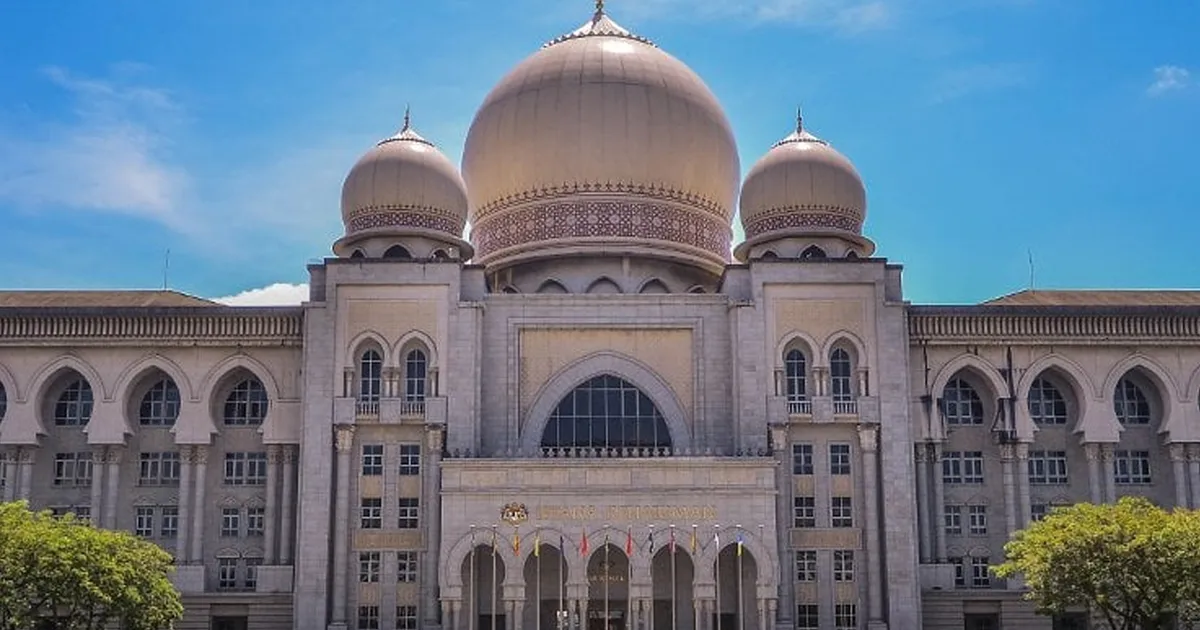
Pertubuhan Ikram Malaysia has moved to Malaysia's apex court to overturn a significant judicial decision that bars registered societies from pursuing defamation lawsuits. The organisation has formulated ten focal legal questions aimed at overturning the Court of Appeal's finding that registered societies lack the requisite legal personality and reputation necessary to maintain defamation actions. This escalation marks a critical juncture in Malaysian jurisprudence concerning the rights and standing of non-governmental organisations within the civil sphere.
The case carries implications that extend far beyond a single Islamic organisation. The Court of Appeal's ruling effectively creates a legal barrier preventing thousands of registered societies operating across Malaysia from defending their institutional reputation through the courts. This threshold question—whether civil society organisations possess legal standing in defamation matters—touches upon fundamental principles of justice and organisational rights that apply equally to secular and religious NGOs, community associations, professional bodies, and advocacy groups.
Pertubuhan Ikram Malaysia's strategic approach through formulating specific legal questions demonstrates a sophisticated understanding of appellate procedure. Rather than simply rehashing factual disputes or procedural matters, the organisation has focused the court's attention on substantive points of law that have remained unsettled. These questions likely probe whether the distinction between incorporated and unincorporated associations should determine defamation standing, whether reputation is an attribute unique to individual persons, and whether public interest principles should inform judicial reasoning on this matter.
The underlying jurisprudential tension reflects a broader global debate about how legal systems should accommodate collective actors in an increasingly complex society. Most common law jurisdictions have grappled with whether unincorporated organisations—lacking a formal corporate veil—possess the legal personality necessary to claim injury to reputation. The answers vary significantly, with some jurisdictions extending broad protections to associations while others maintain restrictive traditional approaches. Malaysia's position on this spectrum has significant consequences for how civil society operates within the nation.
For Malaysian registered societies, the practical impact of the Court of Appeal's ruling is substantial. Organisations that invest significant resources building institutional credibility and public trust suddenly find themselves without judicial recourse when false statements damage their reputation. A defamatory publication attacking an NGO's integrity, financial management, or leadership can circulate unchecked, with the organisation unable to seek court intervention. This asymmetry creates vulnerability that larger, incorporated entities do not face.
The religious dimension adds additional complexity to this matter. Islamic organisations in Malaysia operate within a specific constitutional and statutory framework that recognises Islam's position in the federation. The question of whether Pertubuhan Ikram Malaysia—functioning as a registered society and operating within Islamic community spheres—should possess defamation standing intersects with questions about how religious organisations are treated under Malaysian law compared to secular counterparts. A ruling that extends defamation rights to registered societies generally would necessarily encompass Islamic NGOs.
Pertubuhan Ikram Malaysia's decision to pursue this matter to the apex court signals confidence in the legal arguments underpinning its position. The organisation likely believes the Court of Appeal's reasoning either misapplies established principles or fails to account for contemporary needs of civil society. The formulation of ten distinct legal questions suggests a comprehensive strategy addressing multiple potential weaknesses in the lower court's judgment, ensuring the apex court can intervene on any number of grounds.
Sector observers have noted increasing scrutiny of NGO operations in Malaysia, with civil society organisations frequently facing criticism and occasionally defamatory statements. The ability to vindicate institutional reputation through legal mechanisms is therefore not merely academic but operationally important for organisations seeking to maintain public trust and donor confidence. Without defamation remedies, NGOs become easy targets for malicious campaigns seeking to undermine their effectiveness.
The apex court's decision will likely influence how Malaysian law treats collective entities more broadly. A ruling favouring Pertubuhan Ikram Malaysia could extend beyond societies to affect questions about the legal standing of partnerships, associations, and other unincorporated bodies. Conversely, upholding the Court of Appeal would entrench a restrictive doctrine requiring formal incorporation as a prerequisite for defamation standing. Each outcome carries significant policy implications for Malaysian civil society architecture.
International comparative jurisprudence may feature prominently in the apex court's reasoning. Common law courts in jurisdictions including Australia, Canada, and the United Kingdom have addressed identical or closely analogous questions, developing nuanced frameworks balancing corporate personality principles against practical needs of collective actors. Malaysian courts have increasingly referenced such comparative authorities when addressing novel constitutional or legal questions.
The timing of this challenge occurs within a broader context of Malaysian civil society seeking greater legal recognition and protection. NGOs, religious organisations, and community groups have increasingly turned to courts to vindicate institutional interests, creating pressure on legal frameworks designed primarily for individual actors and incorporated entities. This case may therefore represent a watershed moment in how Malaysian jurisprudence accommodates civil society within traditional common law structures.
Pertubuhan Ikram Malaysia's willingness to invest judicial resources in this appeal suggests the organisation views the question as having significance extending beyond its immediate institutional interests. The formulation of ten legal questions provides the apex court with multiple entry points for engaging with this complex area, potentially enabling the court to develop comprehensive guidance benefiting the entire NGO sector. The apex court's judgment may ultimately reshape how Malaysian law conceptualises the rights, protections, and legal standing of registered societies operating across the nation.

