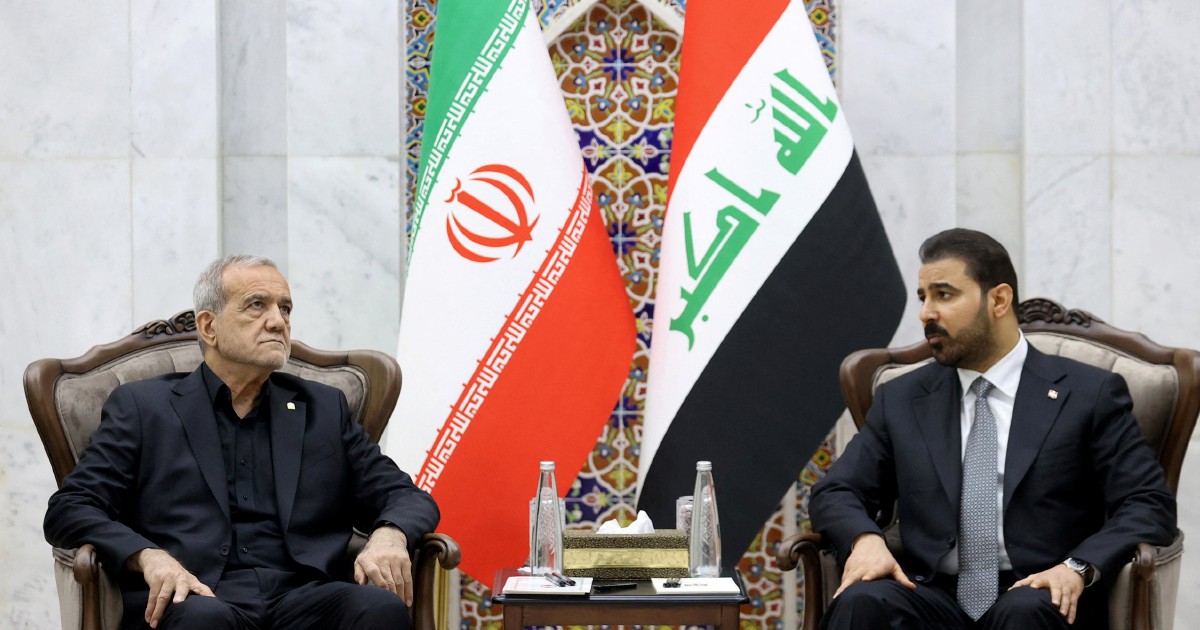
Iraq's commitment to the Organization of the Petroleum Exporting Countries remains unwavering, according to Prime Minister Ali al-Zaidi, who dismissed any notion that Baghdad might abandon its membership in the influential oil cartel. Speaking through his official office during an interview with the Saudi Arabian broadcaster Al Arabiya TV, the Iraqi leader sought to clarify his government's position as discussions within Opec continue over production quotas and the group's strategic direction in an increasingly volatile global energy market.
The clarification comes amid broader tensions within Opec regarding how crude production should be distributed among member states. Iraq's position is particularly significant given its status as one of the organization's founding members and its substantial proven oil reserves, which rank among the world's largest. The country has historically faced challenges in maximizing its output due to decades of conflict and international sanctions that have constrained infrastructure development and investment.
What distinguishes al-Zaidi's statement is the explicit emphasis on fairness in quota allocation. Iraq has long argued that its production ceiling does not adequately reflect either its geological endowment or its capacity to increase output with proper investment. The nation has made significant progress in recent years in rebuilding its oil sector following the defeat of Islamic State, and these improvements have created both opportunity and frustration with quota constraints that the Iraqi leadership views as restrictive.
Opec's quota system, established to prevent members from flooding the market and crashing prices, has become an increasingly contentious issue. While the organization operates on the principle of consensus and cooperation, individual members often feel disadvantaged by allocations they perceive as arbitrary or outdated. Iraq's renewed focus on quota fairness reflects broader dissatisfaction with how production limits are calculated and adjusted within the cartel framework.
For Malaysian observers and regional energy analysts, Iraq's stance carries particular relevance. Southeast Asia depends significantly on stable and predictable petroleum supplies, with several nations relying on Middle Eastern crude imports. Iraq, as a major producer and crucial Opec member, influences not only global crude prices but also the cartel's overall cohesion and effectiveness. Any internal friction could have ripple effects across the region's energy security landscape.
The timing of al-Zaidi's remarks suggests Iraq is positioning itself strategically ahead of upcoming Opec meetings where production decisions will be made. By publicly reaffirming membership while clearly articulating grievances about quota fairness, Baghdad is signalling that it seeks changes through negotiation rather than confrontation, yet remains serious about its demands. This diplomatic approach contrasts with more abrupt statements that might trigger defensive reactions from other cartel members.
Iraq's oil sector rehabilitation has been substantial in recent years, with production capacity recovering toward pre-conflict levels. The country's reserves remain among the world's most significant, estimated at over 145 billion barrels. However, much of this resource remains underdeveloped due to technical and financial constraints. A more generous quota would incentivize further investment and infrastructure development, potentially allowing Iraq to expand output significantly. This expansion could be transformative for Iraq's economy, which remains heavily dependent on petroleum revenues.
The broader Opec dynamics have shifted considerably since the return of US sanctions against Iran and ongoing geopolitical tensions in the Middle East. These factors have created an environment where producer nations increasingly scrutinize their relative standing within the organization. For Iraq, which has rebuilt its oil sector while managing delicate relationships with both Western powers and regional actors, achieving fairer treatment within Opec represents both a practical and symbolic priority.
Western energy markets have also become more attuned to supply concerns following Russia's invasion of Ukraine and subsequent Western sanctions targeting Russian oil. In this context, Opec's unity and stable production decisions carry heightened significance for global energy security. Iraq's insistence on remaining engaged with the organization while demanding fairer terms suggests the country recognizes the importance of maintaining its seat at the table even while negotiating harder for improved conditions.
The question of quota allocation ultimately reflects deeper questions about Opec's evolving purpose and effectiveness in the modern energy landscape. Technological advances in renewable energy, shifts toward electrification, and changing global consumption patterns all complicate traditional cartel mechanics. Iraq's positioning indicates that member states are rethinking how the organization should function and whether historical quota arrangements remain appropriate given transforming market conditions.
Moving forward, al-Zaidi's statement establishes clear parameters for Iraq's participation in Opec. The country will not seek an exit that might damage relationships with other producers or undermine its influence within Middle Eastern affairs, yet it will vigorously advocate for recognition of its capabilities and reserves. This balanced approach reflects pragmatic leadership focused on maximizing Iraq's benefits from cartel membership while refusing to accept arrangements the government considers disadvantageous.

