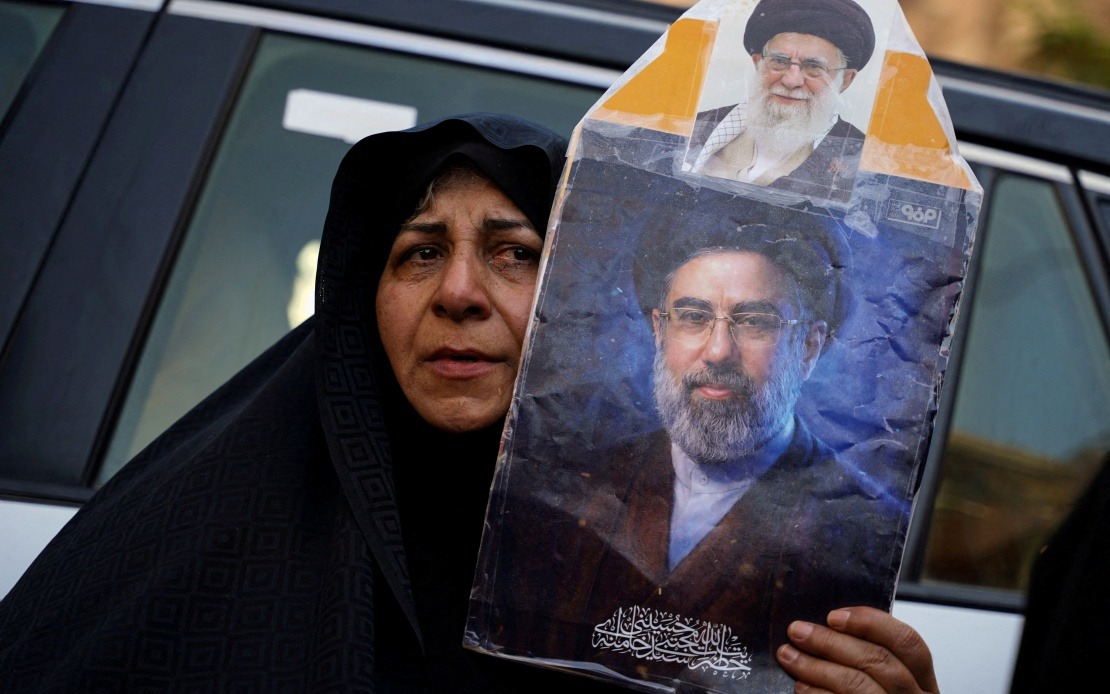
Iran's Supreme Leader Mojtaba Khamenei has launched a scathing critique of United States President Donald Trump's trustworthiness, declaring his signature on a peace agreement to be meaningless in the face of what Tehran characterises as repeated American violations. Speaking to the Iranian people on Saturday through state media, Khamenei expressed deep frustration over the deteriorating situation following the collapse of the memorandum of understanding signed by Iranian President Masoud Pezeshkian and Trump on June 18, just over a month ago.
The Supreme Leader's remarks represent a significant escalation in rhetoric from Iran's leadership, reflecting the mounting hostility between the two countries despite the initial diplomatic outreach. Khamenei's message carried powerful symbolic weight within Iran, as his words shape the nation's official stance on international relations and set the tone for policy responses. By questioning the validity of Trump's signature on the agreement, he struck at the heart of diplomatic credibility—the notion that written commitments between nations carry binding moral and legal weight.
According to Khamenei, Washington's pattern of breaking its commitments demonstrates a fundamental characteristic of American leadership: unreliability paired with what he characterised as deceptive conduct. He argued that the US has repeatedly shown its "true and unmasked face," suggesting that recent violations were merely the latest manifestation of longstanding American dishonesty rather than isolated incidents. This framing allows Iranian leadership to present their own rejection of the agreement as a logical response to systematic betrayal rather than as Iran initiating the breakdown.
The memorandum that has now effectively collapsed was intended to serve as a framework for de-escalation, with both parties agreeing to conduct formal negotiations within a 60-day window aimed at reaching a comprehensive final agreement. The timeline was deliberately designed to allow for intensive diplomatic engagement while reducing the immediate risk of military confrontation. However, the agreement's underlying fragility became evident almost immediately as mutual accusations of treaty violation began surfacing.
Tehran's deputy foreign minister for legal and international affairs, Kazem Gharibabadi, formalised Iran's position on Saturday by announcing that the country has ceased fulfilling its obligations under the MoU, citing Washington's prior breach of its own commitments. This statement represents more than a rhetorical position; it signals Iran's willingness to abandon the agreement's constraints and suggests the country may resume activities that the deal had restricted. The timing of this announcement alongside Khamenei's supreme leader pronouncement suggests coordinated messaging from different levels of Iran's government.
The current situation reflects the dangerous trajectory of US-Iran relations, with recent military escalations demonstrating that diplomatic channels remain fragile. The US has conducted multiple rounds of strikes against Iranian targets in recent days, while Iran has responded with retaliatory attacks on American military bases and facilities spread across the Middle East. This cycle of action and counter-action has become the defining feature of their interaction, overshadowing the brief window of diplomatic engagement that the MoU represented.
Khamenei's warning that Iran would deliver "unforgettable lessons" to the US if it continues what he termed warmongering carries implicit military undertones. The reference to "the resistance front" invokes Iran's network of allied militias and proxy forces throughout the region, including groups operating in Iraq, Syria, Lebanon, and Yemen. This phrasing suggests that Iran's response to continued American pressure would not be limited to direct state-to-state military action but could involve its broader regional alliance structure.
For Southeast Asian observers, the collapse of the Iran-US memorandum carries important implications for regional stability. The Middle East remains a critical zone for global energy security and international commerce, with shipping lanes through the Persian Gulf and Strait of Hormuz carrying essential resources that flow toward Asian markets. Heightened tensions in this region create uncertainty for energy prices, insurance costs for maritime shipping, and the broader economic environment affecting regional trade.
The breakdown also illustrates the challenges inherent in diplomatic negotiations when fundamental trust has eroded between parties. The initial agreement was signed during a moment of apparent willingness from both sides to attempt conflict resolution, yet it collapsed within weeks. This pattern suggests that unless deeper structural issues are addressed—including sanctions regimes, nuclear programme concerns, and competing regional interests—temporary ceasefires and agreements will continue to fail, leaving the region vulnerable to recurring cycles of escalation.
The Malaysian context deserves particular attention, as the country maintains diverse relationships across the Middle East and holds significant business interests in the region. As a Muslim-majority nation with strategic partnerships spanning from Tehran to Washington and its Gulf allies, Malaysia occupies a unique position where instability in the Middle East affects both its economic interests and its delicate diplomatic balancing act. The deterioration of US-Iran relations complicates Malaysia's ability to maintain constructive relationships with all parties while pursuing its economic and security interests.
Moreover, the collapse of this agreement raises questions about the viability of any future diplomatic initiatives without fundamental shifts in the underlying positions of both parties. The speed with which the MoU unravelled suggests that both sides may have signed it primarily for tactical advantage rather than genuine commitment to conflict resolution. This dynamic mirrors historical patterns in international relations where agreements collapse when domestic political pressures or military opportunism override diplomatic commitments.
The coming weeks will reveal whether this breakdown represents a temporary setback in a longer negotiation process or signals a return to more dangerous confrontation patterns. International observers, including neighbouring states and regional powers, will be watching closely to determine whether either side attempts to revive negotiations or whether the focus shifts entirely to military posturing and regional manoeuvrings. For now, Khamenei's words suggest that Iran's immediate trajectory is one of increased hostility rather than reconciliation.

