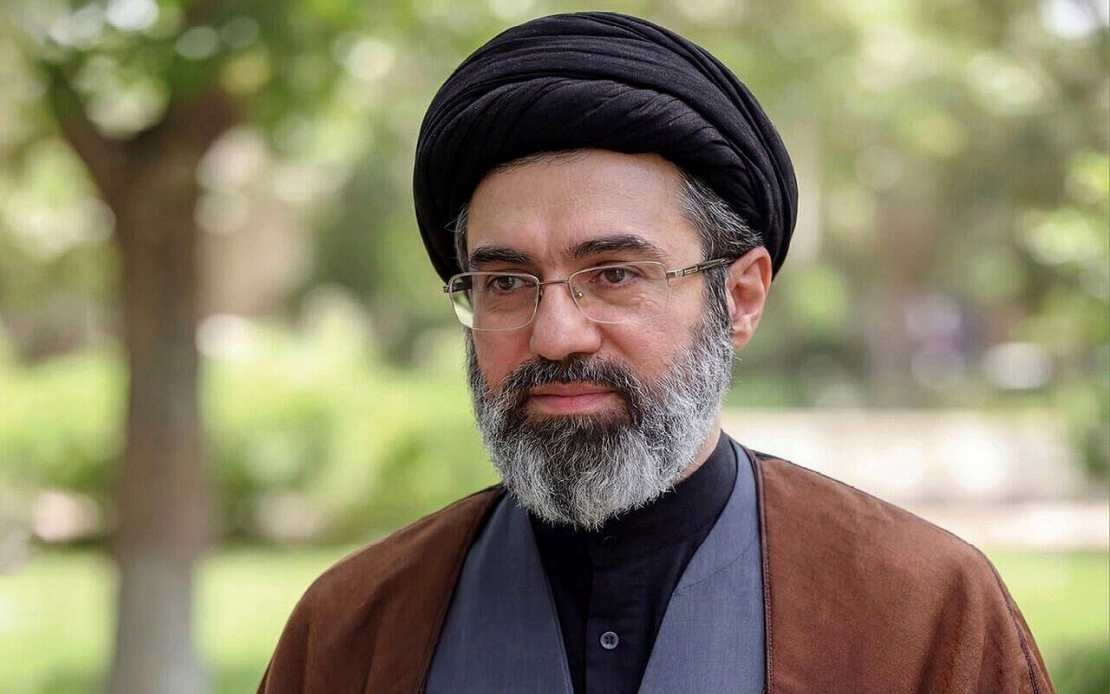
Iranian President Masoud Pezeshkian has moved to quell any lingering concerns about the wellbeing of Supreme Leader Mojtaba Khamenei, declaring in a television interview that the country's highest-ranking official is in perfect health. The statement, delivered during remarks on state broadcaster IRIB TV, comes as Pezeshkian marked the beginning of his third year in office and signals an attempt to project stability and continuity within Iran's leadership structure during a period of significant regional tension.
The presidential confirmation follows an extensive seven-hour meeting between Pezeshkian and Khamenei, a gathering that underscores the substantial coordination required at the apex of Iran's dual-system government. Such prolonged high-level engagements typically address the nation's most pressing policy challenges and represent critical moments for aligning the executive branch with the supreme leader's strategic vision. The length and nature of this particular meeting suggest substantive deliberation rather than routine consultation, reflecting the complexity of Iran's current domestic and international circumstances.
In discussing the substance of their conversation, Pezeshkian emphasised that Khamenei prioritised national unity and solidarity as overarching themes. This emphasis on cohesion carries particular weight in the Iranian context, where managing tensions between hardline and reform-oriented factions within the governing apparatus remains perpetually challenging. The focus on these integrative values suggests concern within the upper echelons of power about potential fractures in the national consensus, especially given the tumultuous circumstances that brought Khamenei to his current position.
The president also outlined several domestic policy priorities that surfaced during the discussions, highlighting the supreme leader's engagement with bread-and-butter issues affecting ordinary Iranians. Economic livelihoods, employment generation, and housing availability ranked prominently among the topics addressed, indicating that despite Iran's regional security preoccupations, leadership attention remains focused on the material conditions confronting the population. These concerns resonate across Southeast Asia, where comparable pressures on housing affordability and job creation similarly dominate domestic political discourse.
Sanctions-related challenges formed another significant dimension of the presidential-supreme leader dialogue, a reflection of the persistent international isolation that has constrained Iran's economic capacity. The impact of multilateral and unilateral sanctions regimes continues to complicate policy formulation around currency stability, foreign trade, and industrial investment. For Malaysian observers, Iran's experience with comprehensive sanctions offers instructive lessons about the interconnectedness of geopolitical standing and economic performance.
The timing of Pezeshkian's public health reassurance warrants careful analysis. Mojtaba Khamenei ascended to the supreme leader position in March following the death of his father, Ali Khamenei, who was killed in joint United States and Israeli military strikes on February 28. This succession—described by Iranian authorities as occurring via selection by the Assembly of Experts—represents one of the most significant transitions in Iran's post-revolutionary governance. The violence attending the previous supreme leader's death created substantial uncertainty about institutional continuity and factional stability within the regime.
Notably, the new supreme leader has maintained a restricted public profile since assuming office, with no confirmed public appearances reported in the months following his selection. This absence from public view inevitably generates speculation about his health, capacity, and the true distribution of power within Iran's leadership circles. Pezeshkian's explicit health declaration appears designed to counteract such rumours and reinforce confidence in the stability of the succession arrangement. In authoritarian or quasi-authoritarian systems, public confirmation of a leader's fitness for office often serves as an important psychological reassurance mechanism for both domestic constituencies and international actors.
The political implications of this health assurance extend beyond Iran's borders. Regional powers including Saudi Arabia, the United Arab Emirates, and Israel maintain keen interest in the coherence and strategic orientation of Iran's decision-making apparatus. Clear succession and functional leadership reduce the likelihood of miscalculation or destabilisation during periods of heightened military tension. For Southeast Asian nations engaged in careful diplomatic balancing acts with regional powers, the stability of Iran's governance structure carries indirect relevance to broader patterns of international stability and alliance formation.
The presidential statement also implicitly addresses potential concerns within Iran's military, Revolutionary Guard, and intelligence establishments about the new supreme leader's authority and capacity to command. In institutional hierarchies where the supreme leader wields command authority over armed forces and security apparatus, public affirmation of health and fitness serves functional governance purposes beyond symbolic reassurance. These organisational dimensions prove particularly significant given that Iran's security establishment has historically exercised decisive influence over policy implementation and enforcement.
From a Southeast Asian perspective, Iran's succession dynamics merit attention as instructive examples of how regimes manage leadership transitions during periods of external threat and internal uncertainty. Malaysia and other regional nations have observed how successor regimes seek legitimacy through both institutional mechanisms (Assembly of Experts selection) and personality-based affirmations (health declarations). The Iranian case demonstrates how even highly centralised political systems require ongoing public and bureaucratic confidence-building measures to sustain operational effectiveness.
The substantive agenda discussed during the Pezeshkian-Khamenei meeting—national unity, economic management, and sanctions effects—maps closely onto governance challenges confronting many nations globally. The prioritisation of these domestic concerns alongside persistent regional security preoccupations illustrates the perpetual tension between inward and outward-facing policy priorities that characterises modern statecraft. For Malaysian policymakers, Iran's balancing act between regime consolidation and international positioning offers relevant parallels to regional diplomatic and strategic management.
Looking forward, the frequency and content of leadership meetings between the president and supreme leader will offer additional indicators of institutional stability and the distribution of effective authority within Iran's governance structure. Public confirmations such as Pezeshkian's health statement will likely become routine elements of regime communication strategy, serving to maintain confidence domestically while projecting stability internationally. The seven-hour meeting and subsequent public reassurance thus represent both substantive governance coordination and calculated messaging designed for multiple audiences—a pattern familiar to students of authoritarian and semi-authoritarian political systems across Asia.

