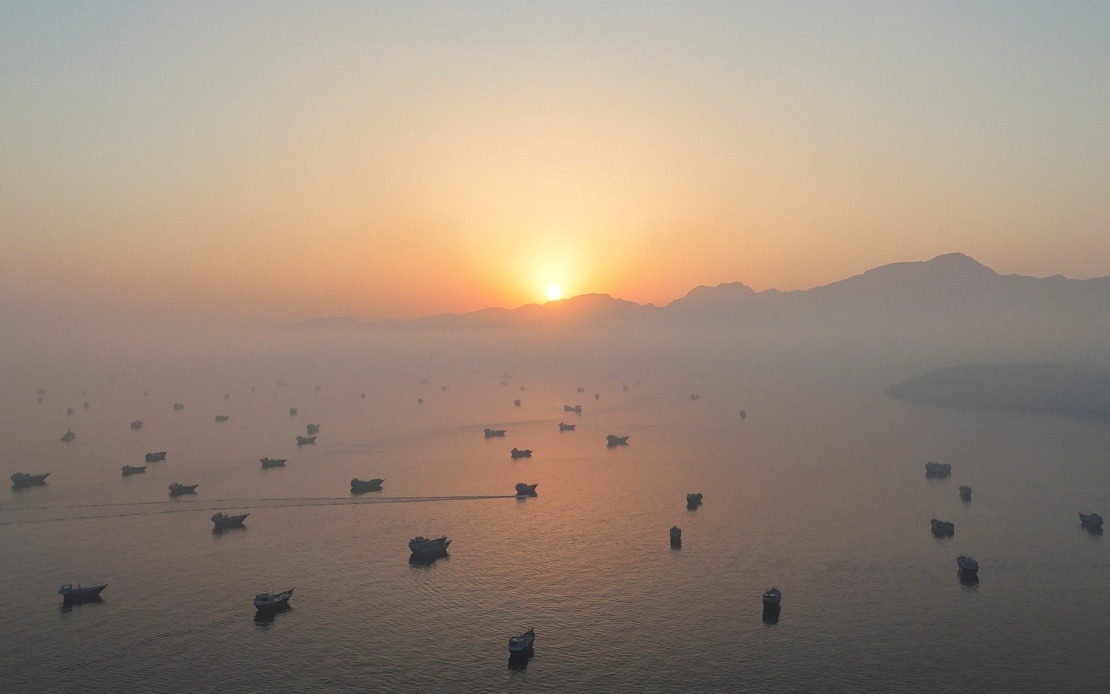
Iran's military has significantly escalated its grip over one of the world's most critical shipping lanes, announcing that no commercial vessels carrying oil, liquefied natural gas, or other cargo will be permitted to pass through the Strait of Hormuz without direct coordination and formal approval from Tehran. The declaration came after the Islamic Revolutionary Guard Corps reported confrontations with what it described as four US-backed violator vessels on Sunday, marking the latest flashpoint in a widening pattern of maritime confrontation in the Persian Gulf.
According to the IRGC's account, the four vessels attempted to transit through what Iran characterises as an unsafe corridor after disabling their automatic identification systems, a move that typically signals an attempt to obscure vessel movements. The Iranian military claims it issued multiple warnings to the vessels, yet they proceeded with their passage. The situation escalated when two of the vessels were forced to halt following what the IRGC termed "incidents," whilst the remaining two vessels turned back, apparently abandoning their intended route through the strategic waterway.
The Strait of Hormuz remains one of global commerce's most vital chokeholds, with roughly one-fifth of the world's seaborne oil passing through its waters daily. For Malaysia and other Southeast Asian economies heavily dependent on Middle Eastern energy supplies, any disruption to Hormuz traffic carries immediate economic consequences. The strait's width narrows to just 21 miles at its critical point, making it inherently vulnerable to blockade or interference. Iran's assertion of unilateral control over transit routes therefore poses substantial risks to regional energy security and shipping costs throughout Asia.
The IRGC's ultimatum reflects Tehran's hardening stance on maritime access following a series of military escalations. Since July 8, the United States has conducted multiple strikes against Iranian targets, actions that the US Central Command justified as responses to what it characterises as Iranian harassment of commercial shipping in the Strait of Hormuz. Iran, in turn, has retaliated with attacks directed at American military installations across the broader West Asian region, creating a tit-for-tat cycle that threatens to further destabilise shipping lanes upon which global energy markets depend.
Iranian authorities insist they maintain comprehensive control of the Strait of Hormuz and have unilaterally designated what they consider the single safe passage route through the waterway. This claim directly contradicts decades of international maritime law and practise, which recognises the Strait of Hormuz as an international waterway subject to freedom of navigation principles. Iran's insistence that foreign vessels require Tehran's explicit permission for transit contradicts the United Nations Convention on the Law of the Sea, to which Iran is a signatory, raising questions about the legal and practical implications of enforcing such restrictions.
For Malaysian shipping companies and regional energy importers, Iran's new permitting requirement presents operational and financial headaches. Vessels transiting the Strait of Hormuz already face insurance complications and security risks; adding a formal Iranian approval process introduces bureaucratic delays, potential political leverage points, and uncertainty into supply chain logistics. Shipping lines may incur additional costs or seek alternative routes, such as the longer passage around the Cape of Good Hope, which would substantially increase transportation expenses and delivery times for Asian energy consumers.
The broader context illuminates the precarious state of maritime security in the Persian Gulf. Previous incidents involving Western naval vessels, Iranian-backed militias, and commercial shipping have demonstrated how quickly confrontations can escalate in this confined waterway. The US military presence in the region, intended ostensibly to safeguard freedom of navigation, has itself become a flashpoint for Iranian military responses, creating a security dilemma wherein efforts to ensure passage stability actually increase tensions and risks.
Iran's positioning of these incidents as defensive actions against hostile incursions contrasts sharply with Western interpretations of Iranian interference with commercial shipping. This fundamental disagreement over the legitimacy of passage reflects deeper geopolitical divisions. For Southeast Asian nations attempting to maintain balanced relations with both Iran and Western powers, such confrontations complicate diplomatic and economic calculations. Countries relying on stable Gulf shipping lanes have limited leverage to influence Iranian or American behaviour, yet face direct consequences from escalating tensions.
The practical enforcement of Iran's permit requirement remains uncertain. Whether Tehran possesses the naval capacity to systematically intercept and examine all passing vessels, or whether the declaration represents primarily a rhetorical assertion of sovereignty, will become apparent through subsequent weeks. However, even the announcement itself creates uncertainty that affects shipping insurers, route planning, and fuel pricing throughout Asia. Risk premiums may increase, translating into higher energy costs for Malaysian consumers and manufacturers.
Looking forward, this situation underscores the vulnerability of global energy infrastructure to regional geopolitical conflict. For Malaysia and ASEAN nations, the Hormuz crisis represents a cautionary reminder of dependence on politically unstable supply routes. Diversifying energy sources, investing in alternative transportation infrastructure, and engaging diplomatically in Gulf security arrangements all merit serious consideration. The alternative—accepting that access to essential energy resources may be periodically disrupted by Middle Eastern military posturing—carries unacceptable risks to Southeast Asian economic stability and development.

