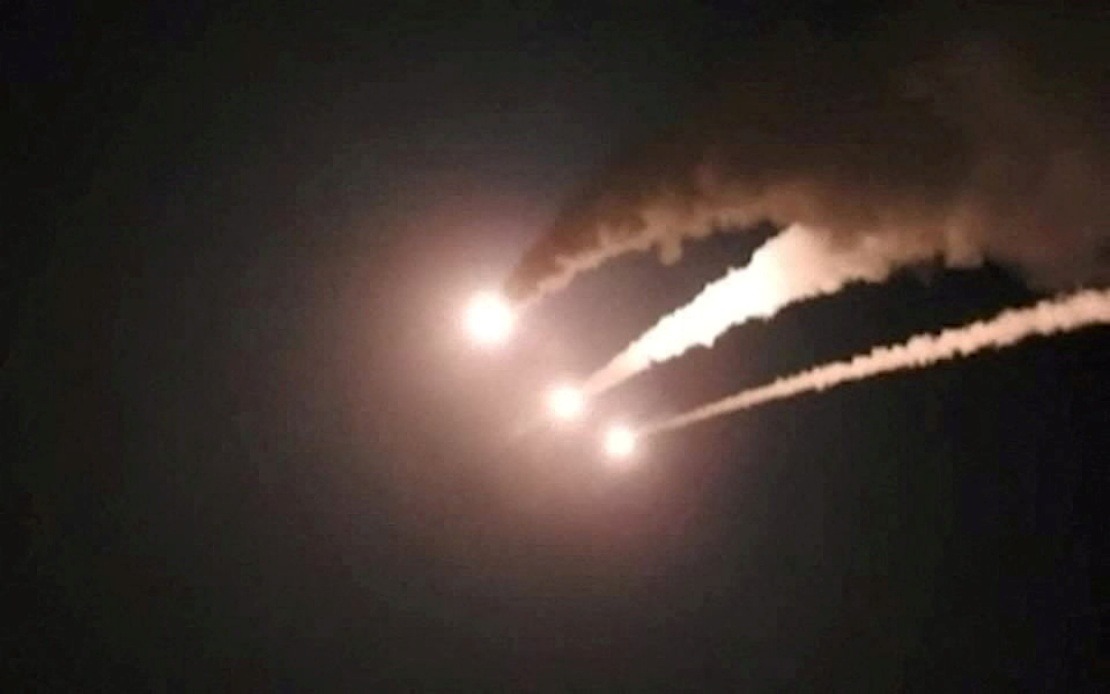
Tehran has escalated its military posturing in the Gulf, with Iran's armed forces declaring that every American military installation across the Middle East region now qualifies as a legitimate target for Iranian drone operations. The stark warning came Wednesday following a fresh cycle of mutual military attacks between Tehran and Washington, signalling a dangerous deepening of regional tensions that threatens commercial shipping lanes and energy security critical to global markets, including Southeast Asian economies dependent on Gulf oil and gas.
The Iranian army's formal statement, broadcast through state media outlet IRIB, explicitly connected its escalatory stance to what it characterized as repeated American violations of a ceasefire agreement comprising 14 articles. According to Iran's account, the agreement has been systematically breached by the United States through what Tehran describes as hostile military operations targeting civilian and military areas in Iran's southern regions. This characterization reflects Iran's longstanding grievance that American military presence and actions in the Gulf region constitute ongoing aggression requiring defensive countermeasures.
Earlier on Wednesday, Iranian forces themselves launched a substantial coordinated operation, with the Islamic Revolutionary Guard Corps (IRGC) claiming responsibility for strikes involving missiles and drones that targeted approximately 85 separate US military installations throughout the region. The strike list encompassed strategically significant facilities including Salman Port and the headquarters of the US Navy's Fifth Fleet in Bahrain, along with Ali Al-Salem Air Base in Kuwait. These targets represent the backbone of American military logistics and command infrastructure in the Gulf, underscoring that Iran is deliberately targeting high-value military assets rather than engaging in symbolic gestures.
The geopolitical significance of this escalation extends well beyond bilateral Iran-US tensions. The Strait of Hormuz remains one of the world's most crucial maritime chokepoints, with roughly one-third of global seaborne oil transiting through its narrow waters annually. Disruptions to shipping in this corridor directly impact energy prices and supply security for countries across Southeast Asia, particularly nations like Malaysia, Singapore, and Thailand that depend heavily on Middle Eastern energy imports. Any sustained disruption could trigger inflation and economic slowdown across the region.
Defensive systems across the Gulf attempted to counter Iranian strikes, with Kuwait's Ministry of Defence reporting successful interception of missiles and drones on Wednesday. In Bahrain, air raid sirens activated in response to the incoming attack wave, a stark reminder to residents of the volatile security environment. These active air defence operations illustrate the real kinetic dimension of the conflict, moving well beyond rhetorical exchanges into tangible military engagement.
Washington swiftly responded to Iranian actions with its own strikes, with US Central Command (CENTCOM) announcing that American forces had conducted counterattacks against more than 80 Iranian targets. The American military characterized its operation as an immediate defensive response to Iranian attacks on commercial vessels operating in the Strait of Hormuz. CENTCOM's framing emphasizes protection of global commerce and freedom of navigation, though Iran views such actions as illegal aggression justifying further Iranian military responses.
This tit-for-tat cycle reveals the dangerous spiral dynamic now consuming Gulf security. Each side claims to be responding defensively to the other's aggression, creating a self-reinforcing escalation ladder where each retaliatory action becomes justification for the next. The invocation of a 14-article ceasefire agreement in Iranian statements suggests previous diplomatic frameworks exist, yet these structures appear insufficient to prevent current hostilities or establish clear mutual understanding of acceptable conduct boundaries.
For Malaysia and neighbouring ASEAN nations, this Middle East volatility presents multiple economic vulnerabilities. Beyond energy security concerns, the region hosts significant Malaysian business interests, offshore platforms operated by Malaysian companies, and shipping traffic carrying goods destined for Southeast Asian ports. Military operations or accidental hits on commercial shipping could trigger ripple effects across regional supply chains already strained by geopolitical tensions and pandemic-related disruptions.
The rhetoric employed by Iran's military command warrants careful analysis. By formally designating all US bases as "legitimate targets," Tehran removes ambiguity about potential future strike options while simultaneously providing Washington with clear warning. This transparency, paradoxically, could either facilitate diplomatic off-ramps by establishing mutual red lines or accelerate escalation by demonstrating resolve. The calculation likely reflects Iranian assessments of regional power dynamics and confidence in its drone and missile capabilities against US air defences.
The backdrop to current tensions involves competing narratives about ceasefire compliance and violation patterns. Iran accuses America of systematic agreement violations through military operations in Iran's southern territories, while the United States frames its actions as responses to Iranian attacks on merchant shipping. These divergent interpretations suggest the underlying political dispute remains fundamentally unresolved, with military operations serving more as negotiating leverage than attempts at genuine settlement.
Regional powers and maritime stakeholders face acute pressure to prevent further escalation. The involvement of commercial vessels in these disputes—cited as justification for American strikes—introduces civilian interests into military calculations, raising humanitarian concerns beyond state-to-state conflict. Shipping companies and energy producers operating in Gulf waters must now factor increasingly sophisticated Iranian drone and missile capabilities into risk assessments, potentially driving up insurance costs and operational expenses that ultimately burden consumers globally.

