Iran's top diplomat has signalled cautious optimism about the prospects of reviving formal diplomatic channels with the United States, though he has attached significant conditions to any potential breakthrough. Foreign Minister Abbas Araghchi, speaking in Istanbul after high-level discussions in Tehran, stressed that restoring dialogue need not remain permanently stalled, but only if the American administration fundamentally alters its approach to negotiations.
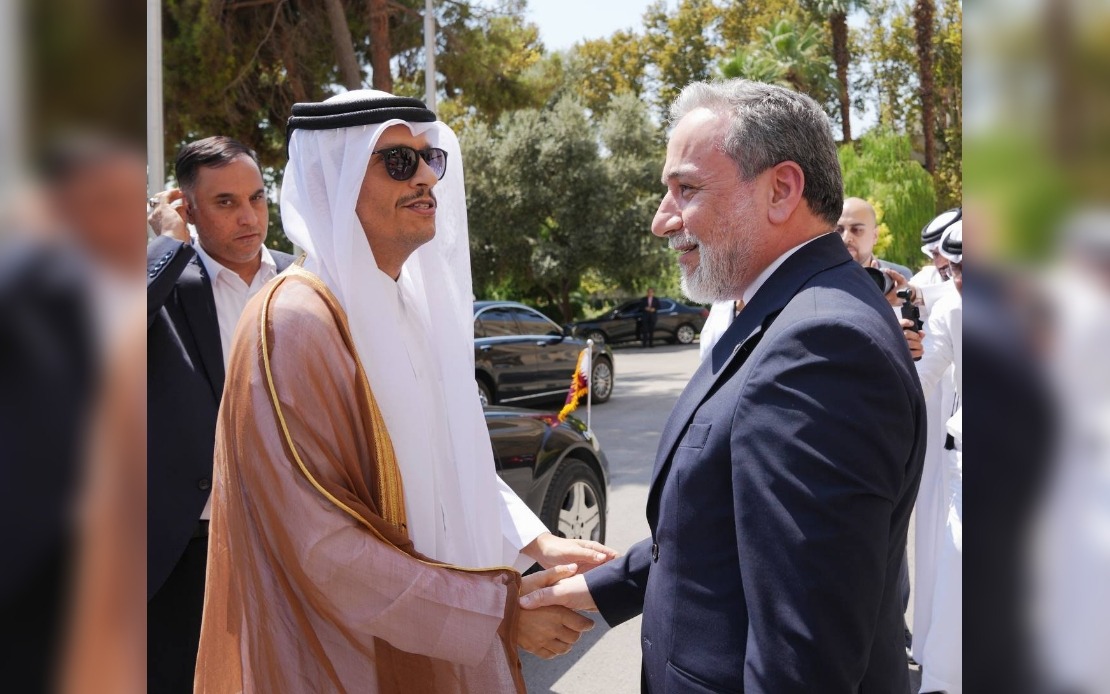
Araghchi's remarks came following substantive talks with Qatari Foreign Minister Sheikh Mohammed bin Abdulrahman bin Jassim Al Thani, who visited Iran to continue Doha's sustained mediation efforts between the two regional powers. The Qatari delegation's engagement reflects the broader regional imperative to stabilise the increasingly volatile situation across the Middle East, where US-Iran tensions have repeatedly threatened to escalate into direct military confrontation.
At the heart of Araghchi's statement lies a clear message directed at Washington: the application of economic sanctions, military posturing, and diplomatic isolation has consistently failed to achieve American objectives in Iran. Rather than capitulating to pressure, he suggested, the Iranian government remains committed to its position and will only negotiate from a foundation of mutual respect and acknowledged equality. This framing reflects a long-standing Iranian diplomatic position that emphasises national dignity alongside pragmatism.
The Iranian foreign minister outlined three foundational principles that he believes must underpin any renewed diplomatic engagement. First, the United States must demonstrate genuine respect through its rhetoric and conduct, abandoning the dismissive or confrontational language that has characterised recent interactions. Second, Washington must explicitly acknowledge Iran's rights as a sovereign nation with legitimate regional interests and a functioning nuclear programme. Third, the American government must demonstrate a willingness to honour any commitments made during negotiations, a concern rooted in Iran's historical experience with abandoned agreements.
Qatar's diplomatic intervention carries particular weight in this context. The Gulf state has maintained functional relations with both Iran and the United States, positioning itself as a trusted intermediary. Sheikh Mohammed's visit to Tehran marked his first engagement with Iranian officials since the conflict escalated in late February, when coordinated American and Israeli military strikes prompted Iranian retaliation. This resumption of high-level Qatari-Iranian dialogue suggests that regional actors perceive diplomatic openings where none appeared obvious only weeks earlier.
During his Tehran visit, the Qatari foreign minister engaged not only with Araghchi but also with Iranian President Masoud Pezeshkian, Parliament Speaker Mohammad Bagher Qalibaf, and Secretary of Iran's Supreme National Security Council Mohsen Rezaei. The breadth of these interactions indicates that Doha was pursuing discussions across Iran's political and security hierarchy, ensuring that any proposals carried weight and legitimacy within Tehran's decision-making structures.
The substantive agenda discussed during these meetings extended beyond conventional diplomatic niceties. Among the most significant proposals was Qatar's suggestion for establishing a temporary joint navigational corridor through the strategically vital Strait of Hormuz, through which approximately one-third of global seaborne traded oil passes. This proposal directly addresses one of the most volatile flashpoints in the region, where Iranian military assets and American naval forces operate in close proximity, creating constant potential for miscalculation or accident.
Additionally, the Qatari initiative included discussion of coordinated mine-clearing efforts in the waters around Iran. Such cooperation would represent a substantial departure from the current posture of mutual suspicion and could establish practical mechanisms for managing maritime safety and freedom of navigation—concerns that theoretically unite Iran, regional states, and international powers despite their broader political conflicts.
For Southeast Asian observers and policymakers, these diplomatic developments carry indirect but significant implications. The Strait of Hormuz disruptions or any Iran-US military escalation would ripple through global energy markets, affecting fuel costs across the region. Malaysian refineries, petrochemical industries, and transportation sectors all depend on stable energy supplies and predictable crude oil pricing. Any deterioration in US-Iran relations translates into higher operational costs and economic uncertainty throughout Southeast Asia.
Moreover, regional diplomatic progress offers potential benefits for trade and investment patterns. Prolonged US-Iran tensions encourage sanctions regimes and capital flight from Middle Eastern markets, constraining commercial opportunities for third-party nations. Conversely, any easing of tensions could normalise business relationships and create space for Malaysian companies to expand their presence across Iran and broader Middle Eastern markets.
Araghchi's carefully calibrated optimism suggests that Iran remains willing to engage constructively provided its fundamental concerns receive serious consideration. The positioning of Qatar as mediator, combined with Iran's engagement across its political hierarchy, indicates that Tehran is treating these discussions as substantive rather than merely theatrical. Whether Washington will reciprocate with the respectful, commitment-honoring approach Araghchi demands remains the critical variable determining whether this apparent diplomatic opening leads to sustained improvement or proves another false dawn in a relationship characterised by recurring cycles of tension and tentative engagement.
The coming weeks will prove decisive in determining whether Qatar's diplomatic initiatives gain traction or encounter the bureaucratic and political obstacles that have consistently derailed previous attempts at US-Iran reconciliation. For regional stability and the broader international community, the stakes could hardly be higher.

