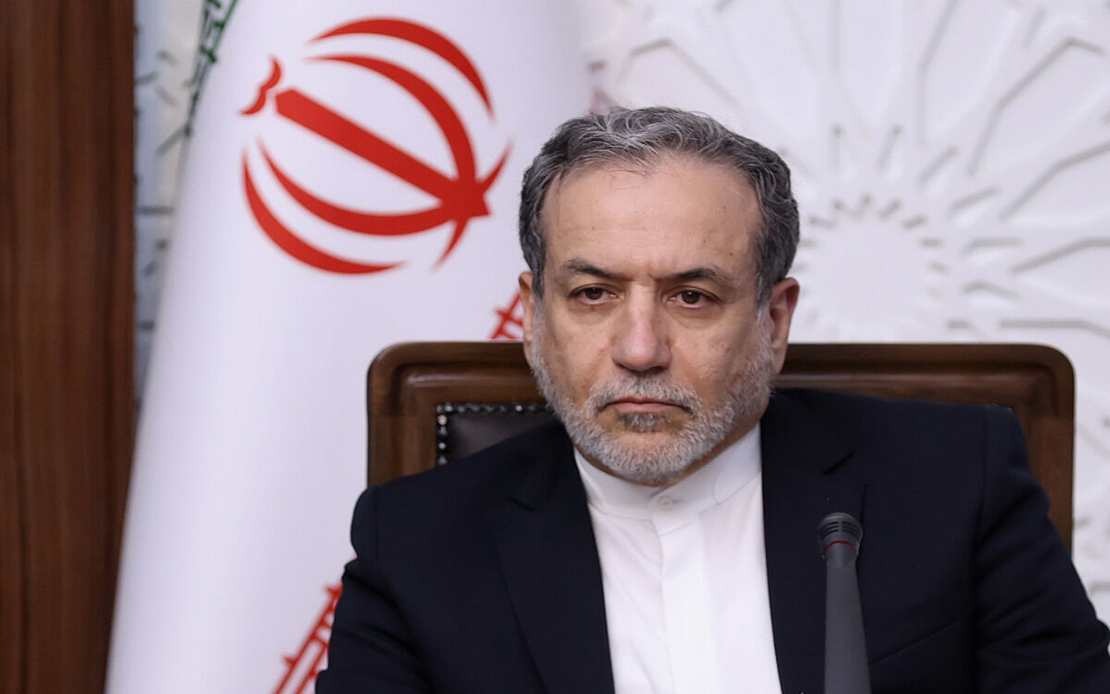
Tensions across the Middle East remain under intense diplomatic scrutiny as Iran's Foreign Minister Abbas Araghchi pursued multiple channels of dialogue this week to prevent further escalation. In separate phone conversations on Tuesday, Araghchi spoke with Pakistan's Army Chief Field Marshal Asim Munir and Qatar's Foreign Minister Mohammed bin Abdulrahman Al Thani, both conversations centred on stabilising a region fractured by months of military brinkmanship between Iran and its adversaries.
The exchanges with Pakistan and Qatar underscore Tehran's strategy of leveraging regional partners to mediate its disputes rather than relying solely on direct negotiations with Washington. The discussions with Munir emphasised the necessity of sustained consultation and coordinated action to build lasting peace and security architecture across the broader region. Similarly, Araghchi impressed upon Al Thani the critical importance of maintaining open diplomatic channels and avoiding missteps that could trigger additional conflict. Qatar, which has previously mediated between Iran and the United States, appears to be repositioning itself as a stabilising force in these delicate negotiations.
Central to these discussions is the question of maritime traffic through the Strait of Hormuz, one of the world's most strategically important shipping routes and a flashpoint for Iranian-Western friction. The Qatari Foreign Ministry confirmed that Al Thani and Araghchi examined recent developments, particularly a framework recently unveiled by Oman and Iran for establishing a temporary shared shipping corridor and jointly clearing mines from the waterway. Qatar expressed its firm backing for diplomatic endeavours aimed at crafting solutions that preserve unobstructed passage through the strait while laying groundwork for comprehensive regional peace.
The Oman initiative represents a tangible move toward de-escalation that carries significant implications for global energy security and trade flows. Iranian Foreign Minister Araghchi and Omani Foreign Minister Badr Albusaidi announced the framework following consultations in Tehran, proposing joint arrangements to manage both the shipping corridor and mine-removal operations. This initiative responds directly to security concerns affecting vessels navigating one of the world's most critical petroleum transit routes, through which roughly one-third of global maritime oil trade flows annually.
However, the Oman-Iran framework faces considerable headwinds from Washington's competing vision for the strait. President Donald Trump stated on Tuesday that the United States Navy had either removed or detonated all mines present in international waters within the strait, suggesting American unilateral action may already be addressing the security concerns underlying these diplomatic efforts. The United States has consistently maintained that the strait constitutes an international waterway requiring unrestricted passage, and it opposes both toll mechanisms on shipping and formalised Iranian authority over traffic management.
The American position reflects broader strategic competition over regional influence and maritime control. Washington prefers routing shipping through a southern corridor nearer to Omani territory while maintaining its longstanding economic embargo against Iran and blockade of Iranian ports. This approach effectively hands navigational advantage to American allies in the Gulf while constraining Tehran's capacity to generate revenue from transit fees or assert maritime sovereignty. The divergence between American and Iranian visions for the strait's future governance remains a fundamental obstacle to lasting regional stability.
The current diplomatic push arrives against a backdrop of escalating military tensions that have characterised the past eight months. In February, American and Israeli forces launched coordinated strikes against Iranian targets, prompting Tehran to conduct retaliatory missile and drone attacks on both Israeli and American military installations throughout the region. These exchanges demonstrated the fragility of regional peace and the capacity for miscalculation to trigger broader conflict. In mid-June, both nations signed a preliminary memorandum of understanding, facilitated through Pakistani and Qatari mediation, but implementation stalled over competing interpretations of maritime management principles.
Last month, Washington resumed military operations against Iranian targets, and Tehran responded by striking American military assets housed within allied Gulf nations, further demonstrating how quickly diplomatic progress can collapse when underlying security concerns remain unresolved. These tit-for-tat exchanges have made clear that symbolic gestures and preliminary agreements prove insufficient without substantive mechanisms addressing core grievances. The involvement of Pakistan and Qatar in current discussions suggests these nations recognise that deeper structural solutions require multilateral frameworks rather than bilateral arrangements that inevitably fracture under pressure.
For Malaysian and Southeast Asian observers, these Middle Eastern developments carry consequential economic ramifications. Any disruption to Strait of Hormuz shipping directly threatens regional energy security and supply chains dependent on petroleum transit. Malaysia, as an energy-importing nation with significant maritime trade stakes, faces exposure to potential supply shocks or shipping cost escalations stemming from unresolved regional conflicts. The diplomatic initiatives involving Oman, Qatar, and Pakistan therefore merit close monitoring as indicators of whether the current de-escalation efforts prove robust enough to prevent recurring military confrontations.
The role of Pakistan and Qatar as mediators reflects a broader pattern wherein smaller Gulf and South Asian nations occupy disproportionate influence in great power disputes. Both nations maintain complex relationships with Iran, the United States, and other regional actors, positioning them as credible intermediaries. Pakistan's interest in regional stability stems from security concerns along its western border and economic dependencies on both Iran and American support. Qatar's mediation efforts reflect its capacity to engage all parties without appearing aligned with any single bloc, though its American military presence and investment commitments create inherent constraints on its independence.
The Oman framework represents the most concrete diplomatic achievement to emerge from months of escalating tensions, though scepticism about its durability appears justified given previous failed initiatives. The framework's emphasis on temporary arrangements and joint operational responsibility suggests compromise on the question of who controls maritime access, yet American statements about unilateral mine removal suggest Washington may feel empowered to ignore arrangements negotiated between Oman and Iran. Whether these current talks produce lasting institutional frameworks or merely provide temporary breathing space before tensions resurface remains uncertain, but the breadth of diplomatic engagement among regional players indicates that none desire full-scale conflict.
Looking forward, the success of these de-escalation efforts will depend upon whether negotiators can construct arrangements addressing legitimate security concerns for all parties while protecting global maritime commerce. The involvement of Qatar and Pakistan suggests that smaller regional powers increasingly recognise their capacity to shape outcomes through strategic mediation. For Southeast Asia, outcomes from these negotiations could determine shipping costs, energy availability, and investment climate across the coming years, making continued diplomatic engagement among these regional players consequential far beyond the Middle East itself.

