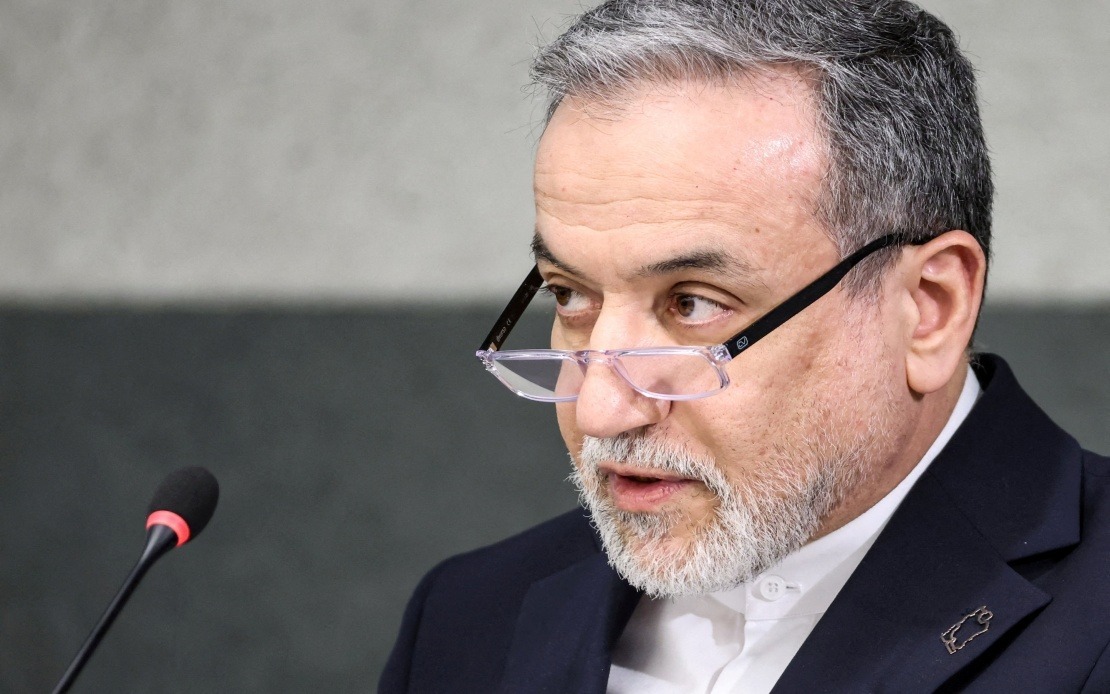
Iran's Foreign Minister Abbas Araghchi has reasserted his country's authority over the Strait of Hormuz, directly challenging the Trump administration's proposal to impose a toll on international shipping traffic through one of the world's most critical maritime chokepoints. Araghchi's statement, made public on social media, represents Tehran's defiant response to the US president's threat to blockade Iranian waters and levy a 20 per cent fee on vessels seeking safe passage through the strategic corridor.
The Iranian diplomat adopted a calculated rhetorical strategy in his response, initially appearing to validate Trump's underlying premise that whoever ensures secure shipping through the Strait should receive compensation. However, Araghchi immediately pivoted to assert Iran's historical claim to guardianship of the waterway, using emphatic language to underscore Tehran's permanent role in the region. This diplomatic manoeuvre attempts to reframe the conversation by accepting the principle of compensation while simultaneously rejecting the US authority to collect it.
The Strait of Hormuz remains one of the world's most economically vital maritime passages, through which approximately one-third of all seaborne traded oil passes annually. For Malaysia and other Southeast Asian nations dependent on stable global energy supplies and international commerce, any disruption or toll system affecting transit through this waterway carries direct implications for regional economic stability. The corridor's strategic importance makes it a flashpoint for geopolitical competition, particularly as tensions between Washington and Tehran continue to escalate.
Trump's proposal to impose a 20 per cent toll represents a significant escalation in rhetoric, essentially articulating a blockade strategy coupled with a revenue-generation mechanism. By framing the fee as compensation for security services, the US administration is attempting to legitimise what would effectively constitute a toll on international commerce. Araghchi's counter-argument that such a levy is excessive demonstrates Iran's willingness to negotiate on principle while rejecting the specific terms being proposed by the United States.
The broader context of US-Iran tensions extends far beyond maritime trade disputes. The two nations have been engaged in a dangerous cycle of escalating provocations, with military assets positioned throughout the region and periodic clashes occurring despite diplomatic efforts. A Pakistani-mediated memorandum of understanding aimed at de-escalation and achieving a lasting peace settlement has proven insufficient to arrest the deteriorating security situation, suggesting that deeper structural conflicts remain unresolved between the adversaries.
For regional powers like Malaysia, the stakes of this confrontation are considerable. The interruption or costly operation of shipping lanes through the Strait would directly impact regional supply chains, energy security, and the cost of goods traded through Southeast Asia. Many Malaysian businesses rely on the predictability and affordability of passage through this corridor, making the outcome of this US-Iran dispute a matter of legitimate concern for Kuala Lumpur policymakers.
Iran's assertion of permanent guardianship reflects both historical claims based on geographic proximity and contemporary assertions of authority derived from military capabilities and naval presence in the region. Tehran's narrative emphasises that Iran, as the dominant regional power adjacent to the Strait, bears responsibility for maintaining security and ensuring passage for international commerce. This framing allows Iran to position itself as a custodian of global maritime interests rather than merely a strategic competitor.
The proposal for a 20 per cent toll would represent an unprecedented attempt to monetise control over international waters, setting a potentially dangerous precedent for other strategically positioned nations. If such a system were implemented, it could invite similar toll systems in other critical chokepoints around the world, fundamentally altering the structure of international maritime commerce and the principles upon which global trade has functioned since the UN Convention on the Law of the Sea was established.
Araghchi's counter-offer to accept compensation at a fair rate, while rejecting the 20 per cent figure, suggests that Iran is not categorically opposed to monetising its security role but disputes the valuation. This rhetorical opening might provide space for negotiation, though the underlying power struggle between the two nations remains intractable through normal diplomatic channels. The statement reflects Iran's confidence in its ability to enforce its claims through military means, particularly given its naval forces' familiarity with local waters and long-established infrastructure for controlling maritime traffic.
The escalation between these two powers carries significant ramifications for Southeast Asian nations navigating between competing great powers. Malaysia and its neighbours must balance commercial interests in maintaining open passage through the Strait with the realities of geopolitical competition between the United States and Iran. Southeast Asian governments will likely monitor these developments closely while seeking to maintain neutrality and advocate for freedom of navigation principles that underpin the region's own economic interests.
Looking forward, the resolution of this dispute will likely depend on whether broader diplomatic channels can address the fundamental grievances driving US-Iran antagonism. The toll dispute is symptomatic of deeper tensions rather than their root cause, and any lasting settlement would require addressing issues beyond maritime commerce. The international community, including Southeast Asian stakeholders, has a vested interest in preventing further escalation that could destabilise one of the world's most critical economic corridors and trigger wider regional conflict.

