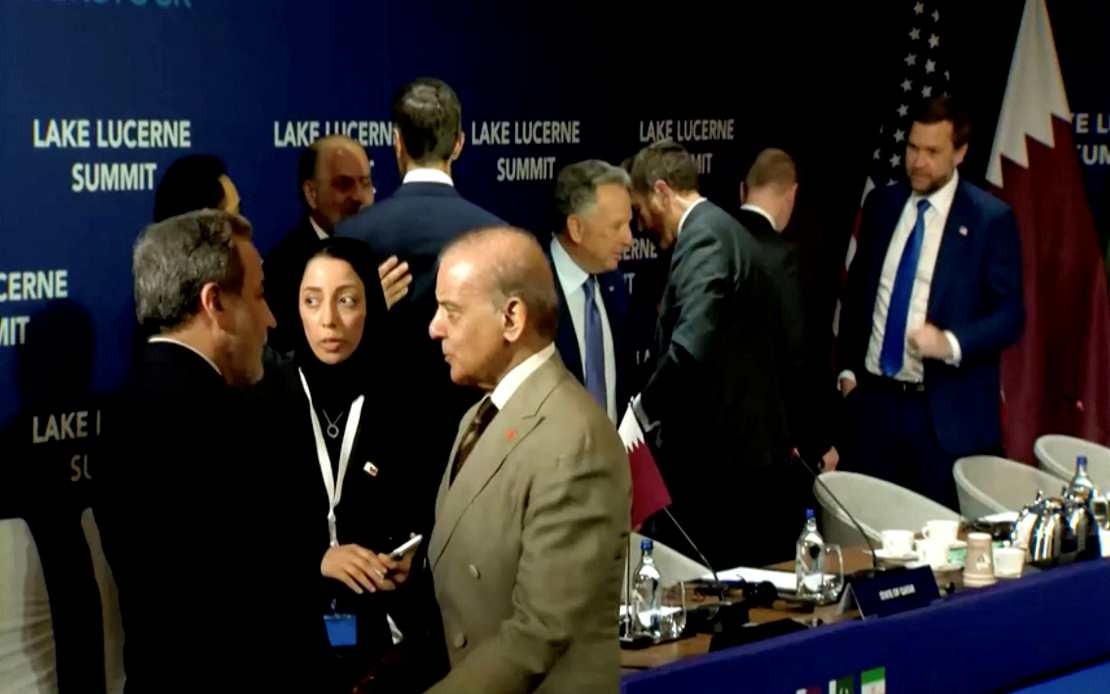
Tehran and Washington have reached consensus on a draft framework for temporarily lifting restrictions on Iranian oil exports, according to statements from Iran's negotiating delegation on Sunday. The agreement emerged from technical discussions conducted at the Burgenstock resort in Switzerland as part of ongoing efforts to operationalise a broader peace accord between the two adversaries. This development marks a significant milestone in translating diplomatic understanding into concrete economic measures affecting one of the world's most strategically important energy producers.
Hossein Ghorbanzadeh, a senior member of Iran's negotiation team, disclosed that the temporary oil sanctions relief draft has now been finalised following intensive technical discussions held alongside primary diplomatic sessions in Switzerland. He emphasised that the agreement represents substantial progress toward normalising trade relations, though he attached important conditions to its implementation. The negotiator underscored that additional provisions within the memorandum of understanding remain conditional—they will not activate unless both parties achieve a definitive political settlement ending the ongoing conflict in Lebanon, where regional tensions have complicated broader US-Iran relations for decades.
The inclusion of the Lebanon condition reflects the interconnected nature of Middle Eastern disputes and demonstrates how regional conflicts continue influencing bilateral negotiations between major powers. Both nations appear to have accepted that comprehensive resolution requires addressing multiple flashpoints simultaneously rather than isolating individual disputes. For Malaysian observers tracking regional developments, this linkage illustrates how events in distant theatres—particularly Lebanon's instability—carry implications extending to energy markets and global security architecture affecting Southeast Asian interests.
Beyond the oil sanctions dimension, Ghorbanzadeh indicated that Iran's delegation engaged with Qatari counterparts specifically regarding restoration of Iranian assets previously frozen under international sanctions regimes. The frozen assets issue represents a separate but complementary negotiation channel, addressing financial dimensions of the broader reconciliation process. These parallel discussions suggest a multifaceted approach encompassing trade, energy, and financial normalisation simultaneously, with different negotiating partners responsible for distinct portfolio elements.
The technical discussions in Switzerland extended considerably beyond headline negotiations, incorporating specialised working groups addressing implementation mechanisms, verification procedures, and regulatory frameworks necessary to operationalise sanctions relief on Iranian oil. These granular discussions, often invisible to public attention, frequently determine whether diplomatic agreements succeed or encounter practical obstacles during execution phases. The completion of technical drafting suggests both parties have invested substantial effort in creating workable mechanisms rather than drafting aspirational documents destined for shelf storage.
These negotiations occur within the formal architecture of the Islamabad Memorandum of Understanding, which Pakistani diplomacy helped construct. On June 14, both nations announced a comprehensive 14-point understanding addressing multiple dimensions of their long-standing confrontation. The framework explicitly targets ending hostilities across all operational theatres, reopening the Strait of Hormuz—a waterway critical to global energy flows—and terminating the US naval blockade constraining Iranian maritime commerce. These objectives directly influence energy prices, shipping insurance costs, and commercial patterns affecting Southeast Asian trading partners and energy importers.
Presidents Masoud Pezeshkian and Donald Trump formally activated the Islamabad Memorandum on June 18 through electronic signatures, providing institutional weight and executive commitment to the agreement. This ceremonial finalisation distinguished the memorandum from non-binding diplomatic statements, creating legal and political obligations binding respective governments. For Malaysia and regional governments, such formalisation carries implications for long-term planning regarding energy procurement strategies, insurance and shipping arrangements, and investment decision-making across Middle Eastern portfolios.
The temporary nature of the oil sanctions relief carries particular significance for energy markets accustomed to Iranian supply volatility. Rather than establishing permanent lifting of export restrictions, negotiators crafted a transitional framework, suggesting continued uncertainty regarding longer-term normalisation. This temporary characterisation may reflect mutual caution—neither party entirely trusting the other's sustained commitment—or simply acknowledge that conclusive agreement on permanent measures requires additional diplomatic groundwork. For energy-importing nations including Malaysia, this transitional approach presents both opportunity and risk: supplies may increase, but temporary arrangements carry inherent uncertainty.
The Strait of Hormuz dimension deserves particular emphasis for Southeast Asian stakeholders. This strategic waterway handles approximately one-third of global seaborne petroleum trade. US naval blockades and Iranian counter-measures have repeatedly created transit disruptions, elevated insurance premiums, and complicated supply chains. Reopening this passage under normalised conditions would yield immediate benefits for regional economies dependent on efficient energy logistics. Malaysian shipping companies, refineries, and energy consumers possess direct interest in resolving this particular dispute.
The broader context involves decades of US-Iranian confrontation encompassing nuclear programme disputes, sanctions architecture, and regional proxy conflicts. That negotiators have achieved even draft agreements on oil sanctions represents notable diplomatic progress, though the conditional nature of implementation—particularly linking oil relief to Lebanese settlement—acknowledges how deeply intertwined these various disputes remain. Regional observers must recognise that apparent progress on one dimension remains vulnerable to complications elsewhere.
For Malaysia's government and business community, these negotiations carry implications extending beyond energy pricing, though that dimension remains economically significant. Stabilised Middle Eastern relations reduce uncertainty affecting regional security, investment flows, and trading patterns. Malaysian companies operating throughout the region benefit from predictable operating environments. Furthermore, reduced tension between Washington and Tehran decreases likelihood of incidents disrupting global shipping and commerce, benefits extending across Southeast Asia's maritime-dependent economies.
The technical completion of the oil sanctions relief draft suggests negotiators now focus on political dimensions—particularly achieving settlement in Lebanon that would activate the broader memorandum provisions. This sequencing illustrates how diplomacy frequently proceeds: establishing technical frameworks while political negotiations address thorniest disputes. Lebanon's stability thus becomes critically important not merely for Lebanese interests but for determining whether US-Iran normalisation proceeds comprehensively.
%22%2F%3E%3C%2Fpattern%3E%3C%2Fdefs%3E%3Crect%20width%3D%22100%25%22%20height%3D%22100%25%22%20fill%3D%22url(%23ph35ytfg)%22%2F%3E%3Crect%20width%3D%22100%25%22%20height%3D%22100%25%22%20fill%3D%22url(%23ph35ytfp)%22%2F%3E%3Ctext%20x%3D%2250%25%22%20y%3D%2250%25%22%20text-anchor%3D%22middle%22%20dominant-baseline%3D%22central%22%20fill%3D%22rgba(255%2C255%2C255%2C0.95)%22%20font-family%3D%22Georgia%2C%20'Times%20New%20Roman'%2C%20serif%22%20font-weight%3D%22700%22%20font-size%3D%22320%22%20letter-spacing%3D%22-0.02em%22%3EMuda%3C%2Ftext%3E%3C%2Fsvg%3E)