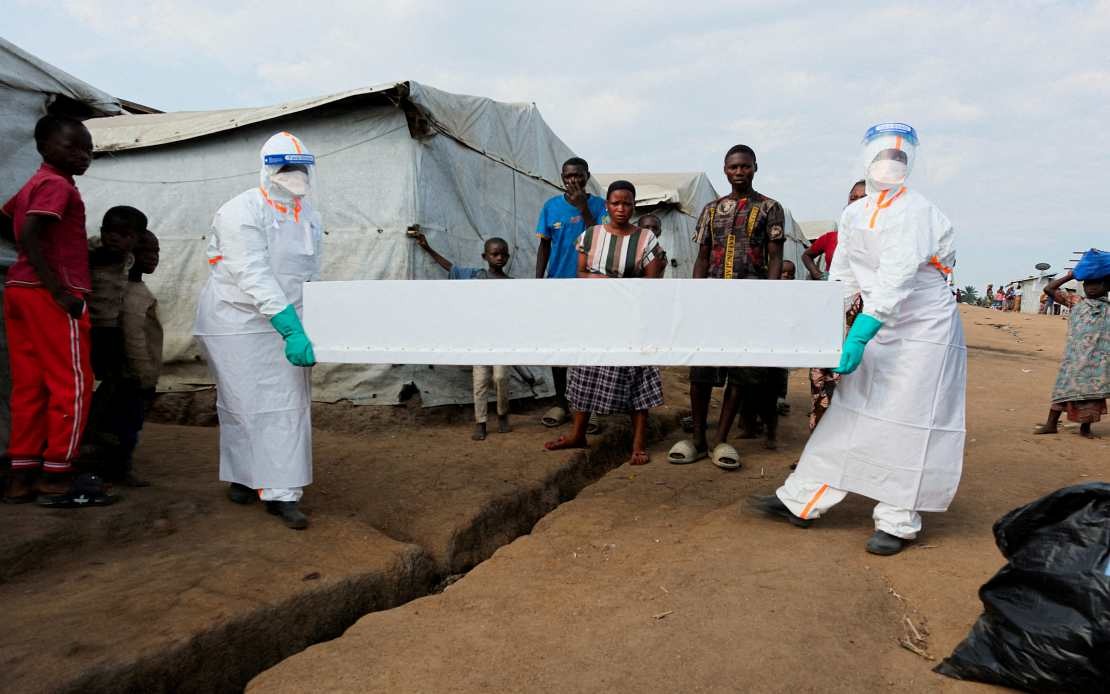
The Ebola virus crisis in the Democratic Republic of Congo has reached a critical threshold, with confirmed cases climbing beyond 1,003 as of mid-June, according to the country's health ministry. The outbreak, officially declared on May 15, has already claimed 254 lives, representing a mortality rate of approximately 25.3 per cent among those diagnosed with the virus. This milestone marks a troubling progression in what has become one of the most significant public health emergencies facing Central Africa in recent years, with implications extending across the wider region as neighbouring countries brace for potential spillover.
The geographical concentration of the virus in the provinces of Ituri, North Kivu and South Kivu reflects the complex socio-political context of eastern Congo, where conflict and displacement have historically complicated disease surveillance and containment measures. Health Minister Roger Kamba acknowledged these challenges while emphasizing that response operations remain active in all three affected regions. The ministry's statement underscores ongoing efforts in active case investigation, epidemiological surveillance and community prevention initiatives, though the declining rate of contact follow-up—a critical early warning mechanism—suggests mounting operational difficulties.
Among the positive indicators in the outbreak response, health authorities have documented at least 100 recovered patients, demonstrating that some individuals can overcome the infection with appropriate medical intervention. However, this bright spot is tempered by the sobering reality that 365 patients currently remain in isolation or hospital care, indicating substantial burden on already-stretched health infrastructure in regions where medical resources are perpetually constrained. The balance between recoveries and ongoing cases illustrates the volatile nature of Ebola containment, where even modest improvements in case management can be overshadowed by continued transmission in community settings.
International health experts have sounded alarm bells about the trajectory of this outbreak. The Africa Centres for Disease Control and Prevention issued a stark warning last week that without rapid transmission control, the current epidemic could ultimately exceed the devastation witnessed during the 2014-2016 West African Ebola crisis, which killed more than 11,000 people across Guinea, Liberia and Sierra Leone. That historical reference point carries particular weight in regional policy circles, as the West African outbreak demonstrated how quickly Ebola can overwhelm national health systems and destabilize entire economies when containment mechanisms fail during the critical early phases.
A crucial scientific development emerged from collaborative research by Uganda's Department of National Health Laboratory and Diagnostic Services and Congo's Institute of National Biomedical Research. Genetic analysis confirmed that the current strain circulating in the Democratic Republic of Congo is Ebola Bundibugyo, derived from a fresh wildlife spillover event rather than resurgence of historical virus chains. This distinction carries important epidemiological implications, as it rules out the scenario of dormant viral persistence or undetected continued transmission from previous outbreaks. The finding also suggests that viral adaptation to human populations may still be occurring, potentially influencing transmission dynamics and complicating prediction models.
The Bundibugyo designation itself represents a lesser-known variant compared to the more familiar Zaire strain that dominated the West African epidemic. While generally associated with lower case fatality rates than Zaire Ebola, the 25.3 per cent mortality documented in this outbreak remains exceptionally high by public health standards and substantially exceeds seasonal influenza or other common infectious threats. This fatality profile underscores the severity of the current emergency and the critical importance of achieving rapid case identification and isolation before community transmission further accelerates.
Health Minister Kamba's emphasis on intensified community communication efforts reflects recognition that technical medical responses alone cannot contain Ebola without complementary social strategies. Previous outbreaks have demonstrated that misinformation, cultural practices surrounding burial, and distrust of health authorities can profoundly impede outbreak control. The Democratic Republic of Congo's health ministry has prioritized engagement with community leaders and transparent communication about transmission routes, clinical symptoms and appropriate health-seeking behavior—lessons learned expensively during earlier regional Ebola emergencies.
Diagnosis and case management intensification initiatives represent the operational backbone of containment strategy. Rapid diagnostic capacity deployed to primary healthcare facilities across affected provinces enables faster identification of suspected cases, reducing the window during which infectious individuals remain in community circulation. Simultaneously, expanded isolation facilities and improved case management protocols—including targeted supportive care with intravenous fluids, electrolyte replacement and treatment of secondary infections—directly improve survival prospects for confirmed patients, as demonstrated by the 100 documented recoveries.
For Southeast Asian readers and policymakers, this Central African outbreak carries sobering implications for regional pandemic preparedness. The Democratic Republic of Congo's crisis reveals how swiftly Ebola can transition from contained wildlife spillover to public health emergency when initial detection and response systems falter. Malaysia and other ASEAN nations with substantial air and maritime connectivity to Central Africa must ensure robust surveillance systems for fever cases, strengthen laboratory diagnostic capacity for viral hemorrhagic fevers, and maintain stockpiles of appropriate personal protective equipment. Regional coordination through established ASEAN mechanisms for disease surveillance could enhance early warning systems should Ebola spread internationally.
The outbreak also underscores vulnerabilities within the international health security architecture, particularly regarding resource allocation to early outbreak response. The Africa CDC's warning about potential catastrophic scale emphasizes that containment during the critical window of the first few hundred cases requires sustained international financial and technical support. For Malaysia's regional diplomatic efforts, this crisis presents an opportunity to advocate within international forums for strengthened pandemic prevention and early response mechanisms, recognizing that diseases emerging in remote African contexts can within weeks pose threats to distant Asian populations through modern transportation networks.

%22%2F%3E%3C%2Fpattern%3E%3C%2Fdefs%3E%3Crect%20width%3D%22100%25%22%20height%3D%22100%25%22%20fill%3D%22url(%23ph2nwnfg)%22%2F%3E%3Crect%20width%3D%22100%25%22%20height%3D%22100%25%22%20fill%3D%22url(%23ph2nwnfp)%22%2F%3E%3Ctext%20x%3D%2250%25%22%20y%3D%2250%25%22%20text-anchor%3D%22middle%22%20dominant-baseline%3D%22central%22%20fill%3D%22rgba(255%2C255%2C255%2C0.95)%22%20font-family%3D%22Georgia%2C%20'Times%20New%20Roman'%2C%20serif%22%20font-weight%3D%22700%22%20font-size%3D%22272%22%20letter-spacing%3D%22-0.02em%22%3EAnwar%3C%2Ftext%3E%3C%2Fsvg%3E)
%22%2F%3E%3C%2Fpattern%3E%3C%2Fdefs%3E%3Crect%20width%3D%22100%25%22%20height%3D%22100%25%22%20fill%3D%22url(%23ph3iumfg)%22%2F%3E%3Crect%20width%3D%22100%25%22%20height%3D%22100%25%22%20fill%3D%22url(%23ph3iumfp)%22%2F%3E%3Ctext%20x%3D%2250%25%22%20y%3D%2250%25%22%20text-anchor%3D%22middle%22%20dominant-baseline%3D%22central%22%20fill%3D%22rgba(255%2C255%2C255%2C0.95)%22%20font-family%3D%22Georgia%2C%20'Times%20New%20Roman'%2C%20serif%22%20font-weight%3D%22700%22%20font-size%3D%22151%22%20letter-spacing%3D%22-0.02em%22%3EMuhyiddin%3C%2Ftext%3E%3C%2Fsvg%3E)