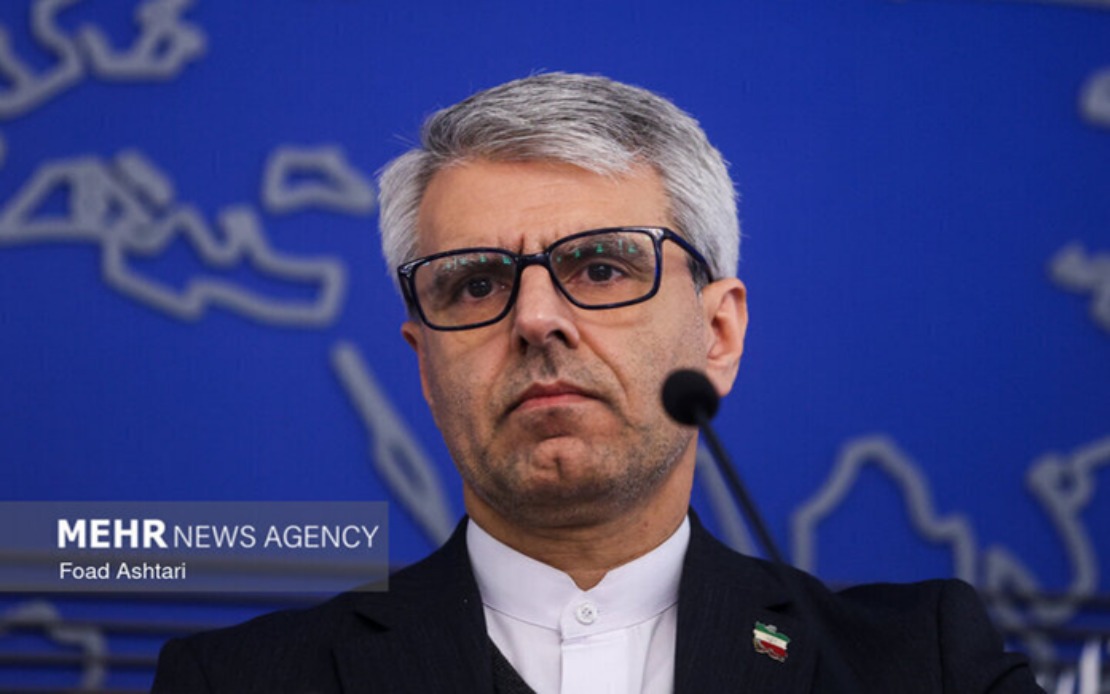
Iran and Oman have reaffirmed their commitment to sustained dialogue on ensuring secure navigation through the Strait of Hormuz, one of the world's most critical maritime chokepoints. Iranian Foreign Ministry spokesman Esmaeil Baghaei announced the agreement following Foreign Minister Abbas Araghchi's visit to Oman on Saturday, emphasizing that both nations would engage in talks spanning political, legal, and technical dimensions to develop a shared framework for maritime safety in the strategically vital waterway.
The timing of these consultations reflects heightened tensions in the Persian Gulf region, where the Islamic Revolutionary Guard Corps (IRGC) has previously declared the closure of the Strait of Hormuz, warning that no vessels would be permitted passage until the United States ceases its involvement in regional affairs. This hardline stance underscores the complexity of the situation facing Gulf states, particularly smaller nations like Oman that depend on maintaining stable transit through waters essential to global energy supplies and international commerce.
Oman's role as a mediator in these discussions carries significant weight. The Gulf sultanate has long positioned itself as a neutral interlocutor capable of bridging divides between regional powers and external actors, a diplomatic tradition cultivated over decades of careful statecraft. By hosting Araghchi's visit and participating in multilateral consultations, Oman signals its determination to prevent the Strait of Hormuz from becoming a flashpoint that could destabilize the broader region and disrupt critical sea lanes through which millions of barrels of oil transit daily.
Baghaei emphasized that any future framework governing the Strait of Hormuz must emerge from direct consultations between Tehran and Muscat, incorporating lessons from recent months of elevated military activity involving the United States and Israel. This formulation reflects Iran's insistence that external powers should not unilaterally dictate arrangements affecting regional security, a principle that carries resonance across the Middle East where nations remain sensitive to perceived interference in their affairs.
The involvement of Qatar in these consultations adds another diplomatic layer. As a nation with historical experience mediating between Iran and the United States, Qatar's participation underscores the interconnected nature of Gulf diplomacy and the various channels through which regional actors attempt to manage tensions. Such multilayered engagement demonstrates that despite public rhetoric about confrontation, behind-the-scenes diplomatic efforts continue to seek pathways toward de-escalation.
For Malaysia and Southeast Asia, developments in the Strait of Hormuz carry direct implications. The region's economies depend substantially on maritime trade flowing through these waters, and any disruption to navigation would ripple through global supply chains affecting everything from energy prices to manufacturing costs. Malaysian shipping interests, petrochemical industries, and energy importers all maintain exposure to volatility stemming from Persian Gulf disputes.
The Strait of Hormuz remains among the world's most congested maritime passages, with roughly one-third of global seaborne petroleum trade transiting through its narrows. Disruptions here do not remain localized but quickly transmit shocks throughout international markets. Previous incidents involving tanker attacks, naval confrontations, and vessel seizures have demonstrated how quickly regional instability can escalate into broader crises affecting distant economies.
The agreement to continue consultations rather than pursue confrontation suggests that key players recognize the mutual interest in avoiding complete breakdown of navigation. Iran's rhetorical threats regarding closure coexist with diplomatic engagement, indicating that Tehran also understands the costs of actually implementing such measures. Oman's mediation efforts appear designed to sustain this delicate balance, keeping communication channels open while acknowledging legitimate security concerns on all sides.
The emphasis on technical and legal dimensions in these talks indicates that negotiators are exploring concrete mechanisms rather than remaining at the level of abstract principles. Such specificity might encompass vessel tracking systems, designated shipping corridors, coordination protocols between naval forces, and dispute resolution mechanisms. These practical approaches could gradually build confidence and establish precedents for managing maritime issues without recourse to military confrontation.
The broader strategic context involves not only immediate Gulf security but also the question of how major powers and regional actors will structure their relationships in coming years. The Strait of Hormuz represents far more than a geographic location; it symbolizes competing visions of regional order, sovereignty, and the legitimate exercise of maritime power. How Iran, Oman, Qatar, and other stakeholders resolve these questions will influence regional stability well beyond the immediate horizon.
For observers in Southeast Asia, these developments merit close attention. ASEAN nations have articulated principles regarding freedom of navigation and peaceful dispute resolution in shared waters, principles equally applicable to the Persian Gulf. The diplomatic model being tested in Strait of Hormuz consultations may offer lessons, both positive and cautionary, for managing tensions elsewhere in maritime Asia.
Looking ahead, the success of ongoing Iran-Oman consultations will likely depend on whether they can translate diplomatic commitments into concrete improvements in maritime safety and predictability. Both nations have demonstrated willingness to engage in dialogue, a foundation upon which more durable arrangements might eventually be constructed. Yet underlying geopolitical tensions and the involvement of external powers ensure that progress will remain measured and subject to reversal if circumstances shift.

