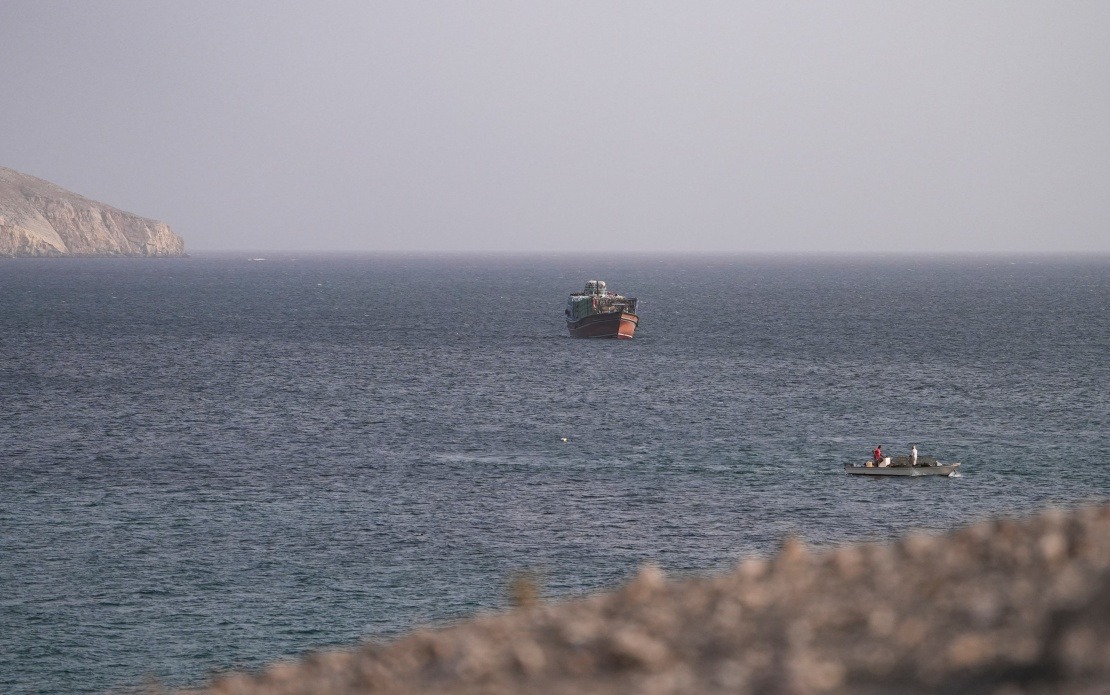
Iran and Oman are moving toward the completion of a significant bilateral agreement that will reshape how commercial vessels navigate the Strait of Hormuz, one of the world's most critical maritime chokepoints through which roughly one-third of global seaborne oil passes annually. Deputy Foreign Minister Kazem Gharibabadi announced on Wednesday that the two countries have nearly finalised their understanding regarding revised arrangements for merchant shipping in the strategically vital waterway, marking a potential shift in regional maritime governance that carries implications extending far beyond the Gulf itself.
The emerging framework represents a departure from shipping practices maintained over the past six decades, Gharibabadi emphasised, introducing instead a novel configuration in which a substantial portion of traffic will be routed through Iranian territorial waters. This distinction carries considerable diplomatic weight, as it effectively positions Tehran as a primary stakeholder in regulating passage through waters it controls, rather than maintaining the established international protocols that have governed transit through the strait. The reconfiguration underscores Iran's determination to assert greater authority over maritime movements within its claimed jurisdiction, a position that has periodically generated friction with international shipping interests and Western powers.
Gharibabadi was careful to delineate what the arrangement does not entail, stressing that the agreement should not be construed as a complete reopening of the Strait of Hormuz in the conventional sense. Instead, it constitutes a carefully calibrated reordering of how commercial traffic will move through the passage, with Iranian authorities negotiating directly with Omani counterparts to establish the parameters and procedures. Oman's involvement is particularly significant given its geographic position straddling the Gulf entrance and its historical role as a neutral regional actor capable of mediating between opposing parties, lending the negotiations a degree of legitimacy that might otherwise prove elusive.
The question of whether Iran will impose transit fees on vessels traversing the strait remains unresolved, Gharibabadi indicated, contingent upon directives from Iran's supreme leadership and the conduct of the United States. This conditionality reveals the inextricable linkage between maritime arrangements and broader geopolitical tensions, suggesting that revenue collection mechanisms may become leverage points in future negotiations. The implicit threat—or possibility—of fee collection underscores how thoroughly the Strait of Hormuz dispute has become entwined with sanctions disputes and nuclear negotiations between Tehran and Washington.
Gharibabadi's comments regarding American signals represent a notable shift in diplomatic messaging, as he stated that Iran has received indications that Washington is prepared to "return to its commitments," though he declined to specify which particular obligations he referenced or through what channels these messages were transmitted. This vagueness may reflect ongoing backchannel communications or deliberate ambiguity designed to preserve negotiating flexibility. The timing of such signals, arriving as negotiations with Oman advance toward completion, suggests possible coordination between different diplomatic tracks, with maritime arrangements and broader nuclear or sanctions discussions potentially proceeding in parallel.
For Malaysian readers and Southeast Asian shipping interests, the implications warrant careful attention. The Strait of Hormuz ranks among the world's most essential maritime corridors, and disruptions to traffic flow directly impact regional economies dependent on energy imports and international trade. Malaysia, as a major maritime trading nation with significant petroleum import requirements, faces potential consequences should the new arrangements prove unstable or subject to arbitrary enforcement. The precedent of Iran unilaterally controlling access to strategic waterways could reverberate across Asian maritime commerce, establishing templates for other regional powers seeking to monetise or restrict passage through waters under their jurisdiction.
The diplomatic engagement between Iran and Oman reflects a pragmatic approach to managing a complex regional challenge. By including Oman—a country with established relationships across the region—the negotiating framework gains legitimacy and suggests that arrangements might prove more durable than unilateral Iranian impositions. However, the ultimate sustainability of such an agreement depends heavily on international acceptance, particularly whether major maritime powers and shipping companies view the new protocols as legitimate modifications to existing transit regimes or as problematic restrictions on freedom of navigation.
The potential involvement of the United States, hinted at in Gharibabadi's remarks about an imminent deal "in the next couple of days," introduces another variable into an already intricate equation. American engagement could either legitimise the new arrangements by granting tacit acceptance or trigger complications if Washington views them as constraining maritime interests or strategically favouring Iranian influence. Previous American administrations have taken varied approaches to Iranian actions in the strait, ranging from military posturing to diplomatic accommodation, and the current administration's stance will significantly shape regional perceptions and the viability of the Iran-Oman agreement.
The six-decade-old framework that the new arrangement would replace evolved during periods of different geopolitical configurations and international law interpretations. Establishing alternative routing through Iranian territorial waters represents a significant assertion of coastal state authority and suggests Tehran's confidence in its ability to enforce such arrangements without provoking military confrontation. This confidence likely stems from calculations regarding international appetite for conflict and recognition that major maritime powers may prefer negotiated accommodations to the unpredictability of confrontation.
For the broader region, particularly Southeast Asian nations with substantial maritime interests, the Strait of Hormuz developments warrant monitoring as test cases for coastal state assertion of maritime authority. Should Iran successfully implement new routing schemes and collect transit fees, other nations bordering critical waterways may view it as a viable model for asserting control and generating revenue from strategic geography. Conversely, if international opposition undermines the arrangement, it might discourage such initiatives elsewhere, preserving existing maritime governance structures that have proven broadly acceptable to global trading interests.
The finalisation timeline remains uncertain despite Gharibabadi's indication of proximity to completion. Negotiations involving multiple stakeholders, security considerations, and questions of international acceptance typically proceed slowly, with final agreements often delayed by technical details or political reservations. Malaysian policymakers and maritime industry representatives should remain engaged with developments in the Strait of Hormuz given the direct implications for regional shipping costs, insurance premiums, and supply chain stability that would flow from any successful implementation of new Iranian-Omani arrangements.

