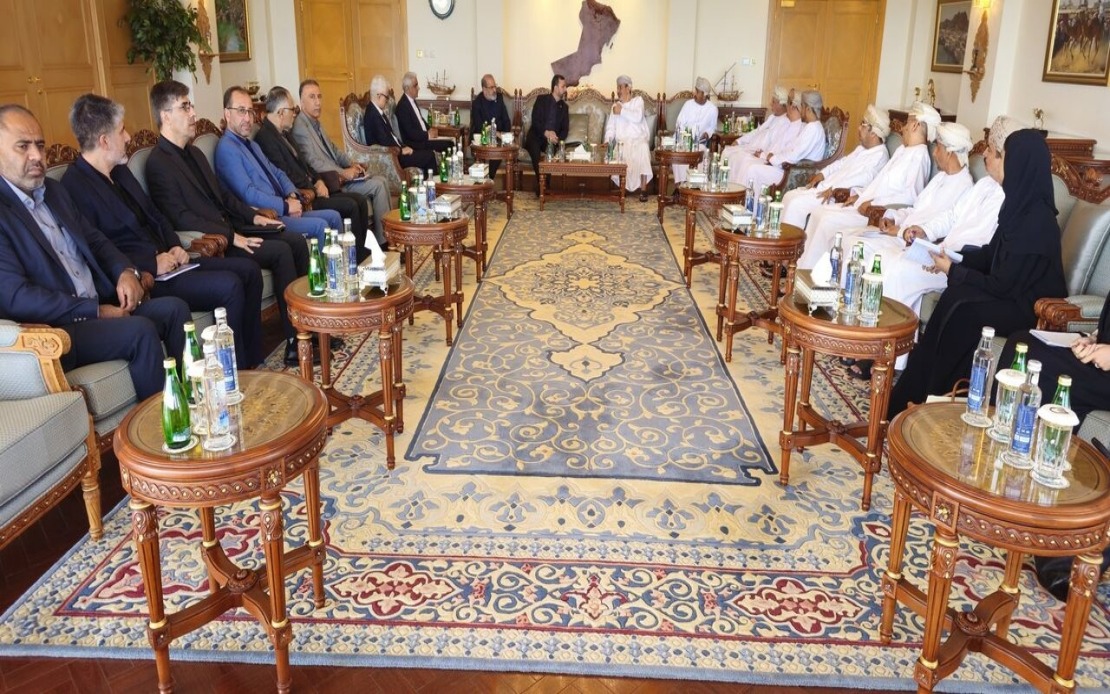
Iran and Oman have taken a significant diplomatic step by convening the inaugural session of their Joint Hormuz Committee, signalling renewed commitment to bilateral cooperation on one of the world's most strategically important maritime passages. Iranian Deputy Foreign Minister for Legal and International Affairs Kazem Gharibabadi announced the meeting, which brought together officials to examine governance frameworks and current challenges affecting the Strait of Hormuz. The formation of this dedicated committee represents an institutionalisation of dialogue between the two nations on matters directly touching their shared maritime interests and regional stability.
Gharibabadi's visit to Muscat on Monday culminated in formal discussions with Oman's Ambassador-at-Large Abdulaziz Al Hinai, establishing what both governments intend to be an ongoing platform for high-level engagement. The meeting agenda centred on substantive issues pertaining to the Strait's operational environment and prospective arrangements for its administration. By creating a structured mechanism for talks, the two countries acknowledge the necessity of sustained conversation on questions that affect not merely their bilateral relationship but the broader security and economic dimensions of the Persian Gulf region.
The discussions were explicitly framed within the parameters of Paragraph 5 of the Islamabad Memorandum of Understanding, a regional framework that emphasises the primacy of littoral state prerogatives. This invocation underscores both nations' intention to anchor their bilateral dialogue within established international legal instruments while preserving their sovereign authority. The emphasis on respecting the rights of coastal states reflects broader sensitivities in the region regarding maritime authority and control, particularly given the Strait's critical role in global energy transport and commerce.
This first committee meeting builds directly upon a joint statement issued by Tehran and Muscat on June 23, which emerged following Iranian Foreign Minister Abbas Araghchi's visit to Oman and discussions led by Mohammad Bagher Ghalibaf. That earlier communiqué had articulated a shared position affirming that any future arrangements governing the Strait must be structured in full recognition of both nations' sovereignty and established rights. The progression from diplomatic statement to institutionalised committee reflects a willingness to move beyond rhetorical commitments towards concrete mechanisms of cooperation and dispute resolution.
The committee's mandate extends to navigating complex questions surrounding maritime governance, shipping administration, and the provision of ancillary services within the Strait. These are not merely technical matters but involve questions of revenue distribution, operational authority, and strategic positioning. Both Iran and Oman seek to establish mutually acceptable standards that comply with international maritime law whilst accommodating their respective national interests and regional strategic positioning. The focus on achieving consensus through structured deliberation suggests both parties recognise that unilateral approaches would prove counterproductive.
For Malaysia and Southeast Asian observers, this Iranian-Omani initiative carries implications worth monitoring closely. The Strait of Hormuz remains integral to regional trade flows and energy security, with substantial quantities of global oil and liquefied natural gas transiting these waters. Any arrangements governing the Strait's administration could potentially establish precedents affecting other strategically important sea passages in Southeast Asia, including the Straits of Malacca and Singapore. Furthermore, models of bilateral maritime cooperation developed between Tehran and Muscat might inform approaches to managing contested waters elsewhere in the region.
Oman's role as a trusted interlocutor between Iran and its neighbours positions the sultanate as a crucial mediator in regional diplomacy. By establishing this committee with Iran, Oman reinforces its reputation as a bridge-builder committed to dialogue-based solutions. The Omani approach—emphasising mutual respect for sovereignty whilst pursuing practical cooperation—resonates with principles that guide ASEAN engagement in maritime disputes. Southeast Asian nations attempting to navigate complex relationships between major powers may find instructive elements in how Oman balances partnership with Iran whilst maintaining regional connectivity and trust.
The committee's focus on aligning governance arrangements with international standards represents a commitment to legitimacy rooted in recognised norms rather than assertions of raw power. This orientation towards rules-based frameworks, whilst acknowledging sovereign prerogatives, suggests both governments wish to position their maritime cooperation as consistent with broader international maritime law. For a region where competing claims over waters occasionally threaten stability, such commitment to standards-based approaches offers constructive precedent.
The establishment of this joint committee also reflects deeper strategic calculations within both capitals. For Iran, structured bilateral engagement with neighbouring states serves to counterbalance isolation and demonstrate capacity for cooperative regional diplomacy. For Oman, maintaining balanced relationships with all regional actors whilst promoting stability represents core strategic doctrine. This committee thus serves multiple purposes simultaneously: advancing bilateral interests, enhancing regional stability, and positioning both nations as responsible maritime actors committed to predictable governance.
As the committee proceeds with further discussions on shipping governance, service provision, and associated costs, its effectiveness will depend on both governments' political commitment and ability to reconcile competing interests through negotiation. The Strait's strategic importance ensures that decisions emerging from this forum will attract international attention. For Malaysian policymakers engaged with maritime security and regional cooperation, observing how Iran and Oman navigate these governance questions provides valuable insight into emerging patterns of diplomatic problem-solving in the broader Asian maritime domain.

