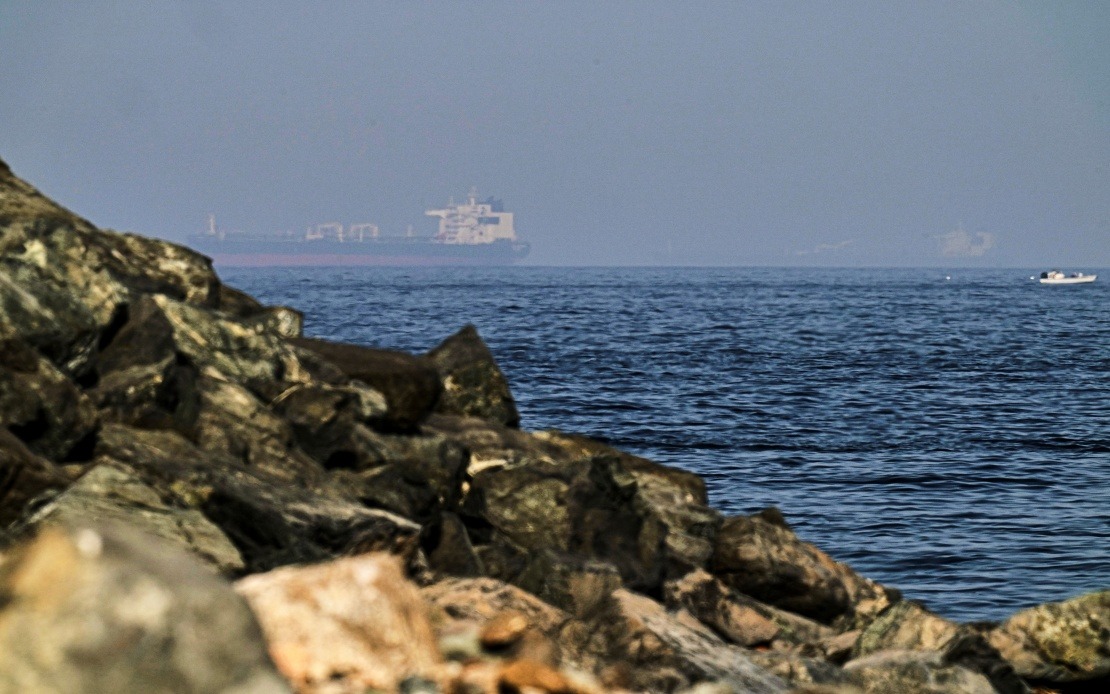
Iran and Oman have reached an agreement to open a temporary shipping corridor through the strategically vital Strait of Hormuz, according to Major General Mohsen Rezaei, secretary of Iran's Supreme National Security Council. The development marks a significant step in managing maritime traffic through one of the world's most critical waterways, though its permanence hinges on broader geopolitical negotiations between Tehran and Washington. Rezaei made the announcement during an exclusive interview with Al-Manar TV on Thursday, addressing mounting tensions surrounding regional security and the corridor's strategic implications for international commerce.
The corridor arrangement reflects a carefully negotiated compromise between the two neighbouring nations, with the passageway straddling both Iranian and Omani territorial waters. This joint management structure demonstrates the delicate balance required to maintain stability in the region's most congested shipping lane. According to Rezaei, the precise boundaries and operational procedures for the corridor have been formally established, providing clarity for maritime operators navigating through the waterway. The corridor is positioned centrally through the strait, avoiding the exclusive zones of either nation and creating a neutral passage for international shipping traffic.
Crucially, Rezaei explicitly linked the full and permanent reopening of the Strait of Hormuz to American compliance with a comprehensive list of Iranian conditions. These demands extend beyond maritime issues into the broader regional security landscape, reflecting Tehran's approach of treating the strait's status as inseparable from wider Middle Eastern conflicts. The primary conditions center on halting wars throughout West Asia, with particular emphasis on ending hostilities in Lebanon and Gaza, withdrawing Israeli forces from seized Lebanese territory, and preventing further Israeli military operations in Syria. This interconnected approach signals that Iran views maritime stability as contingent upon resolving the region's multiple conflicts simultaneously.
The temporary nature of the current corridor underscores the fragility of maritime arrangements amid ongoing regional tensions. Rezaei emphasized that the current passage represents a limited measure implemented pending resolution of broader diplomatic issues. Iran has prepared detailed conditions for presentation to American policymakers, establishing benchmarks that must be met before any escalation toward permanent normalization occurs. The secretary stressed that Washington must demonstrate concrete commitment to these conditions rather than mere rhetorical gestures, as deep mutual distrust characterizes current bilateral relations. Without substantive American action on these fronts, the temporary corridor could remain a holding pattern indefinitely.
Beyond the immediate corridor agreement, Rezaei addressed Iran's strategic posture regarding potential future conflicts. He articulated that Iran does not seek military confrontation but remains prepared should confrontation resume, characterizing any such engagement as fundamentally different from previous encounters. This measured rhetoric suggests a calibrated approach where Iran maintains both deterrence capabilities and negotiating flexibility. Rezaei's reference to Iran's incremental expansion of military responses in previous phases indicates a strategic preference for graduated escalation, allowing space for diplomatic off-ramps while demonstrating escalating resolve. This approach purportedly aims to maximize regional support for Iranian actions and enhance their international legitimacy.
Resaei's comments on the United States' shift toward economic pressure against Iran reveal Tehran's assessment that military dominance alone has proven insufficient for Washington's regional objectives. Iran explicitly threatens to respond to any American economic escalation with countermeasures targeting US economic interests throughout the region. This mutual economic coercion threat introduces another dimension to negotiations, suggesting that any corridor agreement exists within a broader competitive landscape extending beyond maritime commerce. The secretary's willingness to articulate these conditions suggests Iranian confidence in the sustainability of its economic resilience despite international sanctions.
Turkey's role in Iranian strategy received explicit mention during Rezaei's remarks, with the Iranian official emphasizing deep bilateral trade relationships and dismissing any possibility of Ankara imposing economic pressure on Tehran. Rezaei recalled Turkey's historical function as a crucial trade corridor during the Iran-Iraq War of the 1980s, implying continued reliance on this relationship. For Malaysian observers, this dynamic underscores how regional powers maintain diverse economic partnerships despite broader geopolitical competition. The Turkish angle demonstrates that regional alignments remain fluid and driven by practical commercial interests alongside political considerations.
Rezaei characterized West Asia as an increasingly interconnected network where deterioration in one nation's security inevitably impacts investment flows and development prospects across the region. This systems-level analysis suggests Iranian policymakers recognize how maritime disruptions in the Strait of Hormuz propagate economic consequences throughout global supply chains. For Southeast Asian economies dependent on stable Middle Eastern oil supplies and shipping routes, Iran's acknowledgment of interconnected regional dynamics carries significant implications. Disruptions threatening the Strait of Hormuz ultimately affect fuel prices and shipping costs across Asia-Pacific markets.
On Lebanon specifically, Rezaei emphasized Iran's historic connections with the nation, tracing relationships between Jabal Amel scholars and Iranian institutions back centuries. This rhetorical emphasis on deep historical roots serves to justify Iran's continued military and political support for Lebanese groups like Hezbollah. Rezaei asserted that Tehran would maintain support using all available capabilities, signaling unwavering commitment to Lebanon regardless of external pressure. The secretary cited Hezbollah's military effectiveness against Israeli forces over recent months as evidence that the Iranian threat remains credible and deterrent in value.
The military assessment Rezaei provided regarding Israeli capabilities in Lebanon introduced another layer to the corridor announcement. By claiming that Israeli forces can no longer advance toward Beirut or southern suburbs, and attributing this to Hezbollah effectiveness and Iranian deterrence, Rezaei positioned the corridor agreement within a broader strategic context of Iranian strength. This framing suggests that Iran negotiates from a position of confidence rather than desperation, potentially strengthening Tehran's hand in discussions regarding permanent arrangements. However, such claims require verification against independent military assessments.
For Malaysia and Southeast Asian nations, the Strait of Hormuz corridor development carries direct economic implications. Approximately one-third of global maritime oil trade transits through these waters, making any disruption immediately consequential for regional energy security and manufacturing costs. The temporary nature of the current arrangement reflects underlying instability that could resurface if regional conflicts intensify. Malaysian policymakers should monitor developments closely, as further deterioration could disrupt shipping routes and elevate energy costs throughout the region.
The broader significance of this agreement extends to international law and maritime governance. The joint Iranian-Omani management structure, while pragmatic, exists outside formal international maritime frameworks, potentially creating precedents for how regional powers manage strategically critical waters. This arrangement could influence maritime norms throughout the Indian Ocean region and beyond. The fundamental tension remains between Iran's linkage of the corridor to regional political demands and the international community's desire for stable, predictable shipping routes independent of geopolitical disputes.
Moving forward, the corridor arrangement appears designed to purchase time for diplomatic negotiations while maintaining sufficient maritime functionality to prevent economic crisis. Both Iran and regional powers like Oman benefit from continued commerce through the strait, creating shared incentives for stability. However, the conditional nature of permanent reopening means the arrangement remains vulnerable to renewed conflict in Lebanon, Gaza, or other regional hotspots. For international shipping companies and energy markets, this uncertainty will likely persist unless the underlying conflicts receive substantive resolution.

