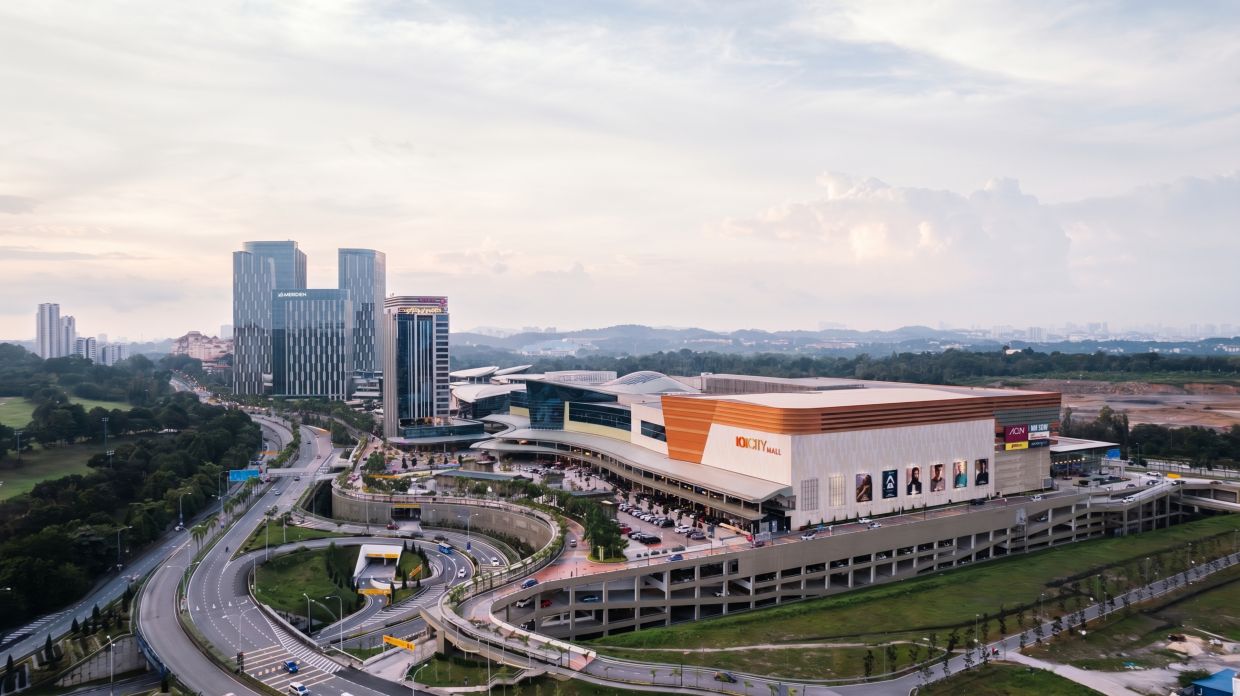
IOI Properties Group (IOIPG) has successfully cleared a major regulatory hurdle toward launching one of Malaysia's largest real estate investment trusts, with the Securities Commission granting formal approval for the RM7.58 billion offering. The decision marks a watershed moment for the property developer, transforming ownership of its most valuable assets into publicly tradeable securities and creating fresh avenues for institutional and retail investors to gain stakes in Malaysia's landmark commercial real estate portfolio.
The REIT will commence operations with an initial capitalisation of 5.5 billion units, underpinned by a carefully curated collection of properties that represent some of the nation's most recognisable commercial and hospitality landmarks. The asset base encompasses the two phases of IOI City Mall, the IOI City Towers complex, PFCC Towers, and a premium hotel portfolio featuring marquee international brands. The hotel component includes the Putrajaya Marriott, Le Méridien Putrajaya, Moxy Putrajaya, Four Points by Sheraton Puchong, W Kuala Lumpur, and Courtyard by Marriott Penang, collectively representing significant income-generating properties across the Klang Valley and beyond.
Financing the acquisition of these assets will occur through a dual mechanism designed to balance equity dilution with debt efficiency. IOIPG plans to issue 5.5 billion consideration units priced at 90 sen per unit, generating approximately RM4.95 billion in equity capital. The remaining capital requirements of RM2.65 billion will be met through Sukuk financing, a structure aligned with Islamic finance principles that has become increasingly common among major Malaysian corporations seeking to diversify their funding sources.
The listing itself has been structured with careful attention to market accessibility and regulatory compliance. A retail tranche comprising 715.6 million units will be distributed through multiple channels, including a restricted offer extended to existing IOIPG shareholders, allocations reserved for eligible persons under Malaysian regulations, and a broader public offering segment. Within the public component, 55 million units have been specifically earmarked for Bumiputera investors, reflecting regulatory expectations around wealth participation by Malaysia's indigenous communities.
Parallel to the retail offering, institutional investors will have access to an institutional tranche of up to 1.48 billion units. This bifurcated approach aims to balance demand from large institutional players—both those with Bumiputera credentials and those without—whilst ensuring sufficient retail participation to create a meaningful public float and shareholder base. The institutional segment is expected to attract significant interest from pension funds, insurance companies, and foreign investors seeking exposure to Malaysia's stable property income streams.
The Securities Commission's conditional approval underscores the regulator's commitment to ensuring both market integrity and equitable participation in major capital markets transactions. The principal conditions imposed include a requirement that Bumiputera investors maintain at least 12.5 per cent equity participation in the REIT, a measure designed to ensure sustained indigenous community involvement in wealth creation. Additionally, the company will be subject to operational audits following the listing, a standard safeguard intended to verify compliance with management agreements and ensure assets perform in line with investor expectations.
This REIT launch carries significant implications for Malaysia's capital markets architecture. REITs have emerged as crucial vehicles for unlocking capital trapped in physical real estate, enabling property owners to access public market funding whilst allowing investors to diversify beyond direct property ownership. For IOIPG, the listing transforms a portfolio of productive assets into liquid securities, freeing capital for expansion, debt reduction, or shareholder returns. The transaction demonstrates investor appetite for yield-bearing Malaysian property assets even amid broader economic uncertainties.
The composition of assets selected for the REIT offers intriguing insights into IOIPG's strategic priorities. Rather than including all company properties, the selection focuses on revenue-generating commercial assets with established tenant bases and market positioning. The inclusion of premier hotel brands signals confidence in Malaysia's recovery in business and leisure travel, whilst the retail mall components reflect belief in the staying power of physical retail in the Klang Valley despite e-commerce competition. Office towers, by contrast, reflect a more nuanced bet on the hybrid working environment, where quality properties in prime locations continue commanding rental demand.
The Bumiputera equity participation requirement warrants particular attention for Malaysian investors. The 12.5 per cent floor ensures that indigenous investors hold meaningful ownership rather than symbolic allocations, creating accountability mechanisms within corporate governance and potentially influencing dividend distribution policies. This threshold also signals to Bumiputera-focused funds and family offices that they will retain meaningful influence over REIT operations and direction.
For Southeast Asian capital markets more broadly, the REIT represents Malaysia's continued evolution as a sophisticated property financing hub. Neighbouring jurisdictions including Singapore, Thailand, and Indonesia have established mature REIT markets, and Malaysia's capacity to execute large, well-structured listings helps position the country as a credible player in the region's property securitisation space. The transaction may catalyse additional REIT launches from other major Malaysian developers seeking to unlock value from maturing property portfolios.
Investor reception to the listing will likely hinge on several factors including the initial unit price discovery, the distribution yield relative to competing investments, and broader investor sentiment regarding Malaysian consumer spending and commercial property values. The 90 sen consideration units pricing establishes an important baseline, though the actual IPO pricing may differ substantially depending on demand during the subscription period.
The timing of the listing also warrants consideration. The Malaysian property market has shown resilience despite pandemic-related disruptions, with retail foot traffic recovering and corporate office demand stabilising in premium locations. The decision to proceed now suggests IOIPG management believes market conditions favour the transaction, with institutional investors sufficiently confident in Malaysia's property fundamentals to subscribe at meaningful levels.

