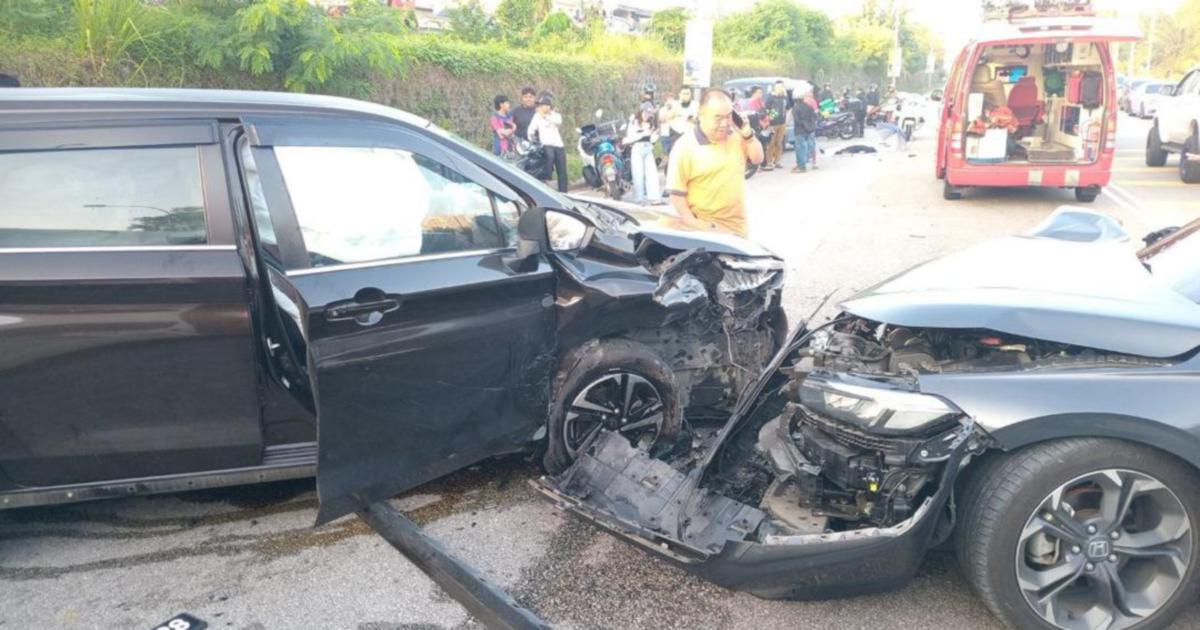
A factory operator lost her life in a multi-vehicle collision on Jalan Permas Utama in Johor Baru this morning, leaving authorities to conduct a comprehensive investigation into the circumstances surrounding the tragedy. The fatal crash unfolded when the woman was thrown from a van during the impact and subsequently crushed beneath the overturned vehicle, marking yet another severe incident on Malaysian roads. Police have pledged to examine every aspect of the collision involving four vehicles to determine the sequence of events and assign responsibility.
The incident drew immediate response from Johor Baru authorities who secured the scene and documented evidence. Preliminary observations suggest the collision involved multiple vehicles, though investigators will need to establish the precise moment of impact and the forces involved. The fact that a father and three children were also present at the scene underscores the severity and randomness of such accidents. Eye-witness accounts and vehicle damage assessment will form crucial components of the police inquiry.
This incident reflects broader concerns about road safety across Malaysia, where multi-vehicle collisions continue to pose significant risks to motorists and passengers. The circumstances of the crash—resulting in the ejection and fatal crushing of a passenger—highlight the unpredictable nature of vehicular accidents despite modern safety features. Investigations into such complex incidents typically examine brake functionality, vehicle conditions, driver responsiveness, and environmental factors that may have contributed to the collision chain.
The presence of a father and his three children in one of the vehicles adds an emotional dimension to this tragedy, raising questions about what happened immediately before the crash and whether any preventive measures might have altered the outcome. Johor Baru sees significant traffic volumes, and intersections along busy routes like Jalan Permas Utama frequently experience congestion during peak hours. Investigators will consider whether traffic conditions, visibility, or vehicle speed played determinative roles in initiating the sequence of collisions.
Fatalities resulting from multi-vehicle crashes often trigger broader examinations of vehicle safety standards and driver training in Malaysia. The factory operator's death underscores the vulnerability of vehicle occupants even when travelling in enclosed vehicles. Modern vans are equipped with restraint systems and structural components designed to contain occupants, yet the fatal ejection suggests the impact forces were extraordinarily violent or that safety equipment failed to function as intended. Forensic examination of the van will reveal whether mechanical failure, improper usage, or manufacturing defect contributed to the outcome.
The investigation timeline will typically span several weeks, with police coordinating with traffic forensic specialists to reconstruct the collision. Authorities will obtain statements from the driver of the fatal van, occupants of the other three vehicles, and any witnesses who observed the incident. CCTV footage from nearby establishments may provide objective documentation of how the accident unfolded. Insurance companies will likely conduct parallel investigations to assess liability and process claims.
For the affected family of the deceased factory operator, this incident represents a sudden and traumatic loss. Her employer and colleagues will be grappling with the unexpected nature of workplace-related road fatalities, which claim numerous lives annually in Malaysia. The broader community in Johor Baru will inevitably reflect on road safety consciousness, particularly regarding proper seatbelt usage and the unpredictable dangers that materialise despite drivers' best efforts.
The investigation will ultimately aim to identify actionable conclusions that may inform traffic safety improvements at the location. Should defective road signage, poor street lighting, or inadequate road markings be identified, authorities may implement corrective measures. If driver behaviour emerges as contributory, educational campaigns may intensify. The multi-vehicle nature of this crash suggests a cascading failure point, where the initial collision triggered secondary impacts that magnified the tragedy.
Royal Malaysian Police will utilise their accident investigation protocols to determine whether criminal negligence charges are warranted, and whether any driver behaviour constituted dangerous or reckless conduct. The examination of all four vehicles' mechanical systems will proceed methodically, ensuring no potential causal factor remains unexplored. For Malaysian motorists, this tragic incident serves as a sobering reminder that even routine journeys carry inherent risks that demand constant vigilance and adherence to safety protocols.

