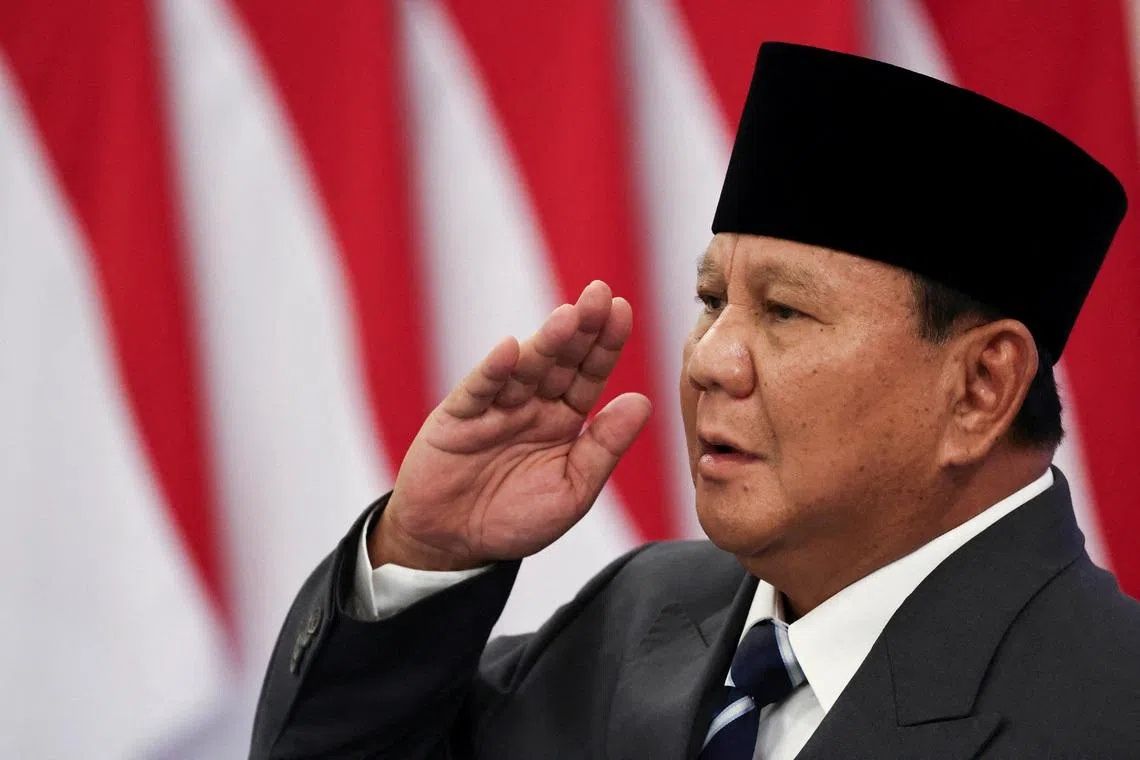
Indonesia's national human rights commission delivered a forceful rebuke to the government on Sunday, calling for an immediate suspension of mandatory military training required for prospective managers enrolled in President Prabowo Subianto's signature village cooperative initiative, after five participants died just ten days into a 45-day programme. The deaths, which occurred between June 17 and June 26 during training that commenced on June 14, have ignited scrutiny over whether paramilitary instruction is appropriate for what are fundamentally intended as economic institutions.
The Red and White Cooperatives programme, which launched in July of the previous year, represents a central pillar of the administration's economic strategy. The government aims to establish approximately 80,000 village cooperatives nationwide, positioning them as job-creation vehicles and contributors to the broader economic growth target of 8% by 2029. These cooperatives are designed to distribute essential consumer goods, subsidised cooking gas, and agricultural fertiliser to rural communities, serving primarily as distribution networks rather than entities requiring military discipline or combat readiness.
Approximately 35,000 prospective cooperative managers must complete the military training component as a prerequisite for their roles. The training is being conducted across multiple regional military training facilities, extending through July 31. This requirement has become increasingly controversial as details of the programme emerge, with critics questioning the relevance of military instruction to cooperative management and governance. The sheer scale of the programme—affecting tens of thousands of civilian participants—amplifies concerns about whether adequate safeguards and medical oversight are in place.
Pramono Ubaid Tantowi, an official at the rights commission, articulated the fundamental mismatch between the training methodology and the actual purpose of the cooperatives. He emphasised that since these are economic institutions fundamentally oriented toward business management, member services, and organisational governance, the commissioning of military training fundamentally misaligns with their objectives. The commission's recommendation pointedly identifies that capacity-building for cooperative managers should instead concentrate on strengthening managerial competence, developing leadership capabilities, and enhancing financial literacy—domains entirely distinct from military instruction.
The defence ministry, which is overseeing the training programme, acknowledged the fatalities on Saturday, attributing the deaths to diverse medical causes. Major General Ketut Gede Wetan, heading the ministry's human resource development division, stated that the five participants had experienced cardiac arrest, heat stroke, tuberculosis, and pneumonia. He maintained that all participants had undergone pre-training medical examinations and received clearance before commencing the programme, and he stressed that those who died had received medical treatment conforming to standard protocols. However, the diversity of reported causes raises questions about whether pre-screening adequately identified at-risk individuals or whether the training environment itself contributed to medical deterioration.
Wetan's assertion that the training does not emphasise combat skills and involves no strenuous physical activity presents a significant credibility challenge, given that five deaths occurred within days of commencement. The statement appears designed to deflect criticism, yet the scale and speed of the fatalities suggest either that the training intensity was mischaracterised or that the medical pre-screening process failed to identify vulnerable participants. For a programme intended to build civilian economic capacity, the occurrence of even one death would warrant scrutiny; five deaths within ten days constitutes a public health crisis.
The defence ministry indicated it would undertake a comprehensive evaluation of the training framework, pledging to enhance health monitoring mechanisms, implement early detection systems for participants with medical vulnerabilities, and adjust activity intensity accordingly. Additionally, the ministry stated the health ministry would be integrated into the training structure going forward. These measures suggest tacit acknowledgment that existing protocols were inadequate, though critics argue that the fundamental architecture of requiring military training for cooperative managers remains problematic regardless of execution improvements.
The human rights commission has escalated its demands beyond programme suspension, calling for a formal government investigation into the deaths and urging police to request forensic autopsies to establish definitive cause of death. The commission's emphasis on forensic investigation and criminal inquiry implies suspicion that the defence ministry's characterisation of causes may be incomplete or that systemic failures in the training programme itself bear responsibility. This investigative pathway could expose whether adequate medical supervision was maintained, whether training protocols were properly calibrated, or whether negligence contributed to the deaths.
The episode reflects broader tensions within Prabowo's administration regarding the militarisation of civilian governance structures. Since assuming the presidency in 2024, the former general has consistently expanded military involvement in civilian programmes and initiatives, embedding military oversight and instruction into economic and social development schemes. The cooperative programme exemplifies this tendency—what might have been designed and implemented by civilian development specialists and business experts instead incorporates mandatory military training, reflecting an administrative preference for military-led governance approaches.
For Malaysia and other Southeast Asian nations observing Indonesian developments, the controversy carries significant implications. It illustrates tensions between security-oriented and development-focused governance models, raising questions about whether militarisation of economic programmes enhances or undermines their effectiveness. Malaysia's own approach to rural development through schemes such as the Federal Land Development Authority (FELDA) or smallholder programmes has emphasised business training rather than military instruction, suggesting an alternative model that emphasises economic competence over paramilitary discipline.
The international dimension also merits attention. Indonesia's human rights commission has demonstrated institutional independence in critiquing a flagship presidential initiative, indicating that constitutional checks on executive power remain partially functional despite centralising tendencies. However, whether the government will substantively respond to the commission's recommendations remains uncertain. The coming weeks will reveal whether the administration moderates its approach to the cooperative programme or whether it continues on its current trajectory of military integration into civilian affairs, potentially reshaping Indonesia's development model in ways that extend far beyond cooperatives into broader governance structures.

