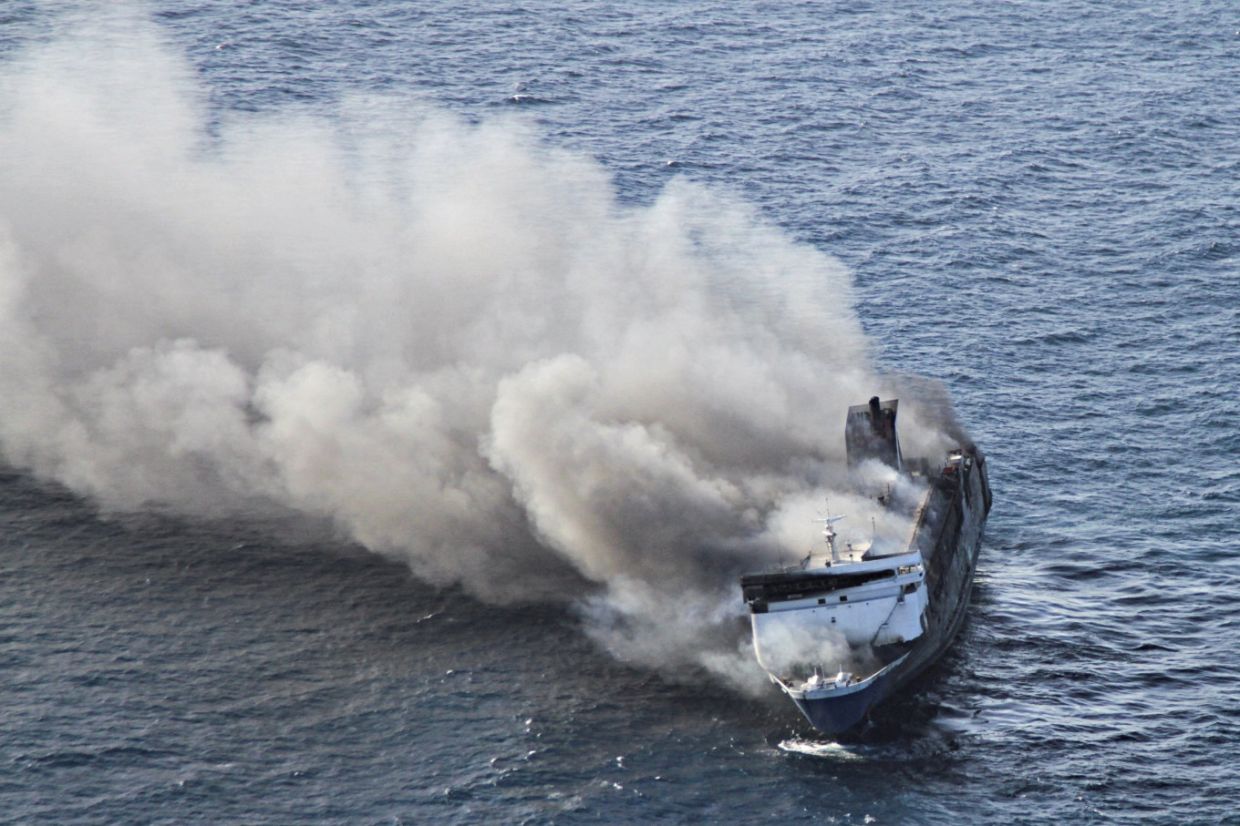
Indonesia's maritime safety framework faces mounting pressure following the catastrophic fire aboard the passenger ferry KMP Mutiara Sentosa II, which erupted off the coast of Madura in East Java on Sunday, 2 August, claiming at least five lives and leaving two passengers unaccounted for. The vessel, operating the commercially vital Surabaya to Makassar route, carried 236 passengers—predominantly logistics and truck drivers—alongside 39 crew members when the blaze broke out around 6am. The incident has crystallized longstanding anxieties about the effectiveness of national maritime regulations and the oversight mechanisms intended to enforce them across Indonesia's sprawling archipelagic shipping industry.
The immediate circumstances of the evacuation underscore profound operational failings that extend far beyond the technical cause of the fire itself. According to Udin Karo Karo, chairman of the Makassar–Surabaya Truck Drivers Association, crew members abandoned their fundamental duty to shepherd passengers to safety during the emergency, leaving individual occupants to fend for themselves as the 160-meter vessel filled with smoke. Approximately 40 percent of drivers managed to evacuate independently, a figure Karo emphasized as grossly inadequate against the standards mandated by existing maritime law. Compounding this chaos, many passengers were forced to leap from the vessel into the sea, equipped only with life jackets and with no visible lifeboats or inflatable rescue rafts deployed during the evacuation sequence—a stark indication that basic life-saving equipment either malfunctioned or was not properly maintained.
The repeated involvement of the same shipping operator in serious maritime incidents reveals systemic institutional weaknesses rather than isolated accidents. PT Atosim Lampung Pelayaran (ALP), which operates the KMP Mutiara Sentosa II, previously owned another vessel of identical nomenclature, the KMP Mutiara Sentosa I, which caught fire near identical waters on 19 May 2017, also resulting in five fatalities. Transportation Minister Dudy Purwagandhi confirmed that PT ALP has been implicated in at least two prior maritime accidents, yet the company apparently continued operating without substantive corrective intervention. This pattern suggests that regulatory authorities failed to implement sufficiently stringent sanctions or enhanced oversight following the 2017 tragedy, allowing comparable risks to persist unchecked within the same operational structure.
Deputy Chairman Edi Priyanto of the East Java Occupational Safety and Health Council articulated a critical analytical framework that moves beyond mechanical explanations. Rather than treating the fire as a standalone technical malfunction, Priyanto emphasized the deeper organizational deficiencies—inadequate safety culture, organizational learning failures, and deficient risk management systems—that permitted or enabled such catastrophic outcomes. He underscored that genuine maritime safety advances require systematic learning from incidents, with successful companies implementing comprehensive improvements across their entire operational apparatus following accidents. When similar incidents recur within the same organization, the absence of meaningful change becomes irrefutable evidence that lessons from previous disasters never genuinely permeated the company's practices or decision-making processes.
The investigation framework itself requires careful examination to ensure it captures the full scope of causation rather than merely identifying the ignition point. Priyanto stressed that authorities must investigate not only what initiated the fire but why it propagated so rapidly through the vessel and whether emergency response systems and safety procedures functioned as designed. This broader investigative approach acknowledges that maritime disasters typically involve cascading failures across multiple systems—maintenance protocols, crew training, equipment functionality, and procedural execution—rather than single-point failures. A comprehensive investigation into the KMP Mutiara Sentosa II incident would necessarily examine the adequacy of fire suppression systems, ventilation arrangements, compartmentalization integrity, and the effectiveness of crew briefings on emergency procedures.
Regulatory capacity and political will emerge as fundamental challenges within Indonesia's maritime safety architecture. Abdul Hadi, a House of Representatives Commission V member overseeing transportation and infrastructure, characterized the recurring ferry disasters as a systemic warning rather than isolated coincidence. He pointedly cautioned that safety inspections and certification processes have degraded into administrative routines devoid of substantive verification, transforming rigorous safety evaluation into perfunctory bureaucratic box-checking. The issuance of seaworthiness certificates appears increasingly divorced from genuine assessment of whether vessels can reliably transport passengers without unreasonable risk. Hadi's observations suggest that corruption, resource constraints, or organizational inertia within maritime authorities have eroded the credibility of the certification process itself.
The compressed timeline of major maritime incidents throughout 2017 and 2024 amplifies concerns about the adequacy of current safety oversight mechanisms. Just one month before the KMP Mutiara Sentosa II fire, a separate ferry carrying over 70 passengers sank near Selayar island off South Sulawesi, resulting in at least four confirmed deaths and fourteen missing persons before authorities concluded search operations. Multiple fatal maritime incidents occurring within such brief intervals across different regions and operators suggests pervasive systemic deficiencies rather than operator-specific problems. This clustering pattern indicates that the underlying safety culture, inspection quality, and enforcement mechanisms affecting the entire Indonesian maritime sector require fundamental remediation rather than isolated corrective actions targeting individual companies.
The government's stated response, led by Transportation Minister Purwagandhi, appears cautiously deliberate yet potentially insufficient in scope. While authorities committed to conducting comprehensive evaluation of PT ALP following the National Transportation Safety Committee's investigation findings, the timeline and specific criteria for such evaluation remain undefined. Historical precedent suggests that regulatory responses often emerge slowly after maritime disasters, with companies potentially continuing operations during extended investigation periods. The minister's emphasis on establishing the accident cause through formal investigation procedures, while procedurally appropriate, may inadvertently delay preventive interventions that could be implemented based on available evidence regarding operational deficiencies at PT ALP.
For Malaysian stakeholders and the broader Southeast Asian maritime community, the Indonesian incident carries significant implications regarding regional shipping safety standards. Malaysia's busy maritime corridors intersect substantially with Indonesian waters and Indonesian-flagged vessels frequently operate in Malaysian ports. Substandard safety practices, inadequately trained crews, and deficient emergency procedures aboard Indonesian ferries represent potential hazards not only to Indonesian citizens but to any passengers or crew members aboard affected vessels. Regional maritime authorities benefit from coordinated oversight mechanisms and mutual recognition agreements that ensure consistent safety standards across Southeast Asian shipping networks. The KMP Mutiara Sentosa II disaster illustrates the importance of maintaining robust independent verification mechanisms rather than relying solely on flag state oversight.
The fundamental challenge underlying Indonesia's maritime safety crisis involves reconciling regulatory modernization with operational implementation within a vast, economically diverse maritime sector. Indonesia operates one of the world's most extensive maritime networks, encompassing thousands of vessels ranging from major cargo ships to small inter-island ferries serving remote communities. Effective safety governance across this heterogeneous sector requires sustained political commitment, adequate budgetary allocation for inspection and enforcement activities, capacity building among maritime officials, and organizational cultures within shipping companies that genuinely prioritize safety over cost minimization. Without addressing these foundational institutional requirements, successive maritime disasters will likely continue punctuating Indonesia's shipping history, each tragedy generating temporary regulatory attention before systemic pressures reassert themselves.
Moving forward, genuine maritime safety advancement demands that Indonesia's authorities move beyond reactive crisis management toward systematic, evidence-based regulatory reform. This transformation requires establishing transparent, measurable safety performance metrics for individual operators, implementing periodic unannounced inspections to verify genuine compliance rather than reliance on scheduled certification ceremonies, and establishing credible consequences for safety violations that deter continued non-compliance. International maritime organizations and bilateral partnerships with countries like Malaysia or Singapore possessing stronger maritime oversight capacity could contribute valuable expertise and technical assistance toward strengthening Indonesian regulatory institutions. Most critically, political leaders must recognize that maritime safety represents a fundamental public health issue comparable to aviation safety, warranting equivalent levels of scrutiny, resource allocation, and institutional commitment.

