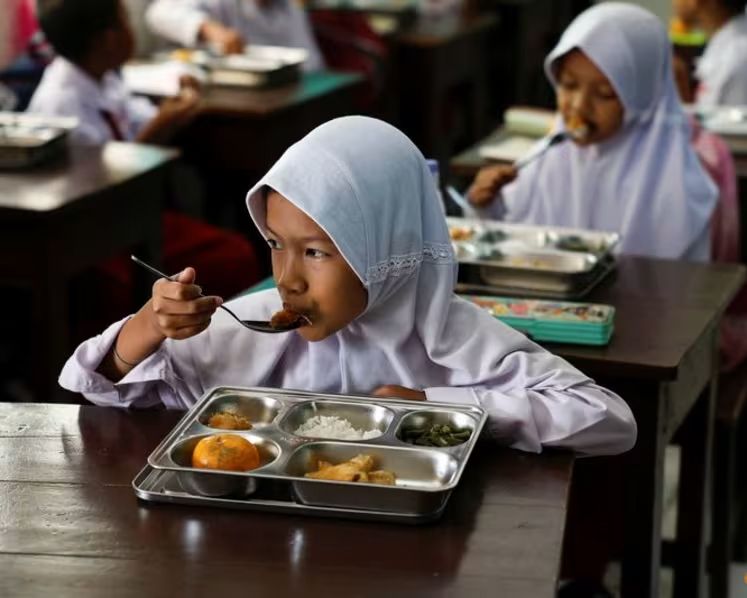
Indonesia's free meals initiative, positioned as the centrepiece of President Prabowo Subianto's election promises, has been dealt another blow to its credibility with the resignation of National Nutrition Agency chief Nanik Sudaryati Deyang. Her departure on Wednesday represents the second senior leadership change at the struggling agency within six weeks, compounding concerns about the ambitious programme's ability to deliver on its expansive mandate amid resource constraints and administrative turbulence.
Nanik, who assumed charge of the agency only four months earlier in June, attributed her decision to step down to personal health circumstances requiring overseas treatment. In a Facebook statement, she disclosed that her physicians had cautioned her about arterial blockage brought on by extreme occupational stress, prompting medical advice to seek immediate intervention. President Prabowo reportedly consented to her resignation, and according to Nanik's announcement, has proposed her leadership of a newly-envisaged oversight board that would presumably add an additional layer of institutional governance to the beleaguered agency.
The timing of Nanik's exit is particularly significant given the programme's turbulent operational history since its January 2025 launch. The initiative has been plagued by logistical bottlenecks, inconsistent meal quality, and several alarming incidents of mass food poisoning that have damaged public confidence. These challenges occur against a backdrop of broader scrutiny regarding the programme's fiscal sustainability and whether such an expansive social commitment aligns with Indonesia's macroeconomic priorities at a time of budgetary constraints.
Nanik's predecessor faced a far grimmer fate, having been summarily dismissed by Prabowo last month and subsequently arrested on corruption allegations linked to the multibillion-dollar operation. That leadership upheaval followed a raid on the agency's headquarters, signalling serious governance failures and potential malfeasance within the institutional apparatus managing one of Southeast Asia's largest social welfare schemes. The arrest underscored vulnerabilities in oversight mechanisms and raised uncomfortable questions about accountability structures within presidential flagship programmes.
Budgetary pressures have intensified considerably, with cuts now reaching critical levels that constrain operational capacity. The 2026 allocation has been slashed twice in rapid succession, first to 268 trillion rupiah and subsequently to 229 trillion rupiah—a figure that equates to approximately $12.79 billion. This represents more than a one-third reduction from the original budgetary framework of 335 trillion rupiah, creating mounting pressure on the agency's ability to sustain its promised service delivery across its target population.
The scale of that target population itself underscores the programme's ambition. Originally envisioned to provide meals to 83 million Indonesians—encompassing schoolchildren, pregnant women, and other vulnerable demographics—the scheme represents an extraordinarily expensive commitment. Before the latest budgetary reduction, the agency reported having delivered meals to 62.5 million beneficiaries, suggesting significant operational momentum despite logistical hurdles. However, persistent budget reductions threaten the feasibility of maintaining even current coverage levels.
Nanik's defence of the initiative against mounting criticism reveals the political sensitivity surrounding the programme. She explicitly rejected characterisations of the scheme as merely a political instrument, instead framing it as a targeted nutritional intervention for children and other vulnerable groups. This rhetorical positioning reflects awareness that the programme has become entangled in broader debate about government priorities, fiscal responsibility, and whether such expansive welfare commitments represent sound policy or unsustainable populism. The distinction matters significantly in Indonesia's increasingly polarised political environment.
The immediate institutional consequence of Nanik's resignation remains uncertain. While she indicated her successor represents a junior-ranked official within the agency itself, no formal announcement has been made regarding the succession process. The National Nutrition Agency's muted response to inquiries about leadership transition suggests either ongoing deliberation within the presidency or reluctance to draw further public attention to recurring institutional instability. For Malaysian observers, the situation demonstrates how presidential flagship programmes can become liabilities when plagued by operational and governance challenges.
The prospect of additional budget reductions looms, with the agency itself acknowledging that further reviews may yield additional cuts. This contingency represents a sword of Damocles over programme implementation, as administrators cannot reliably plan operations without knowing final resource allocations. Such uncertainty typically impairs service delivery quality and increases operational inefficiency—precisely the problems the programme has already encountered since its January launch.
For policymakers across Southeast Asia, Indonesia's experience offers instructive lessons about the perils of launching exceptionally ambitious, fiscally demanding social programmes without robust institutional frameworks, adequate implementation capacity, or realistic fiscal planning. The convergence of leadership instability, budgetary pressures, and operational challenges has transformed what was meant to demonstrate governmental responsiveness into an object lesson in implementation difficulties. As Indonesia attempts to stabilise the programme's operations and restore institutional credibility, neighbouring nations considering similarly scaled welfare initiatives would be wise to examine the structural weaknesses that have undermined one of the region's most high-profile social policy commitments.

