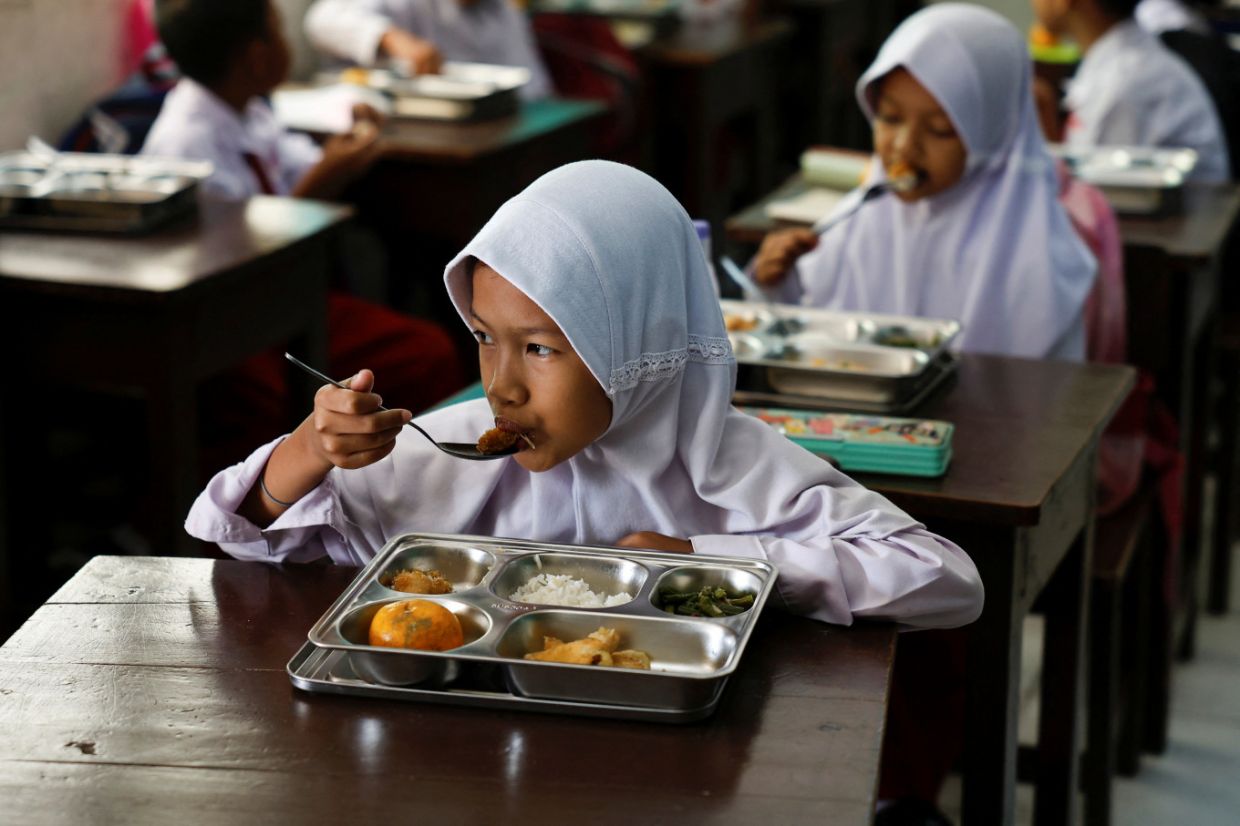
Proposed amendments to Indonesia's education system law have triggered alarm among teacher unions and civil society groups, who fear the revisions contain loopholes that could resurrect funding for President Prabowo Subianto's free nutritious meal programme from the education budget. This concern emerges directly from a July Constitutional Court ruling that explicitly prohibited such financing, establishing a legal boundary that advocates worry the new legislation could erode through carefully worded provisions.
The Indonesian Teachers Association (P2G) has flagged particular anxiety about language in the bill currently under consideration by the House of Representatives. A clause dated July 8 proposes that government and educational institutions should "provide health services, including those concerning mental health, at educational institutions in a manner that is integrated with the national health policies as well as the national education goals." P2G national coordinator Satriwan Salim contends this formulation is sufficiently vague to permit the free meals scheme to be reclassified as a health service embedded within education operations, thereby justifying its continued draw from education allocations.
The backdrop to these concerns involves substantial sums and constitutional principle. This year, Rp 223 trillion out of the Rp 769 trillion education budget—approximately one-third of mandatory education spending—funded the free meals programme. Indonesia's Constitution requires that no fewer than 20 percent of annual state expenditure support education. The Constitutional Court's July 30 verdict determined that nutritional provision, while important for national health policy, does not constitute an education expense and therefore violates the constitutional prescription when drawn from education funds designated for teaching, learning infrastructure, and teacher compensation.
Court observers and constitutional lawyers have cautioned that the ruling's reach extends beyond the immediate budget context. Feri Amsari, a constitutional law specialist, argues that the norms established by the decision apply across all legislation, not merely the current state budget law. Under this interpretation, no legislative manoeuvre—whether renaming the programme, altering its classification, or embedding it within education as a subsidiary service—could legitimately redirect education funds to meal provision. The ruling thus represents a constitutional ceiling that supersedes any subsequent legislative construction.
Civil society organisations active in the budget oversight space have similarly voiced sharp scepticism about potential regulatory circumvention. The MBG Watch coalition, which supported the original petitioners, and Transparency International Indonesia have warned that any reformulation of budget nomenclature, budget engineering devices, or regulatory adjustments designed to preserve education funding for the meals programme would constitute a denial of the court's judgment. Such actions, they contend, would represent a deliberate evasion of binding constitutional authority.
The concern gains weight given Indonesia's track record with implementing Constitutional Court rulings. Earlier instances reveal delays and incomplete adherence to binding decisions. A December ruling prohibiting active-duty police officers from holding concurrent government positions illustrates how courts' determinations sometimes encounter resistance or procrastination in execution. This historical pattern strengthens teacher groups' argument that legislative ambiguity, once enacted, could become a vehicle for indefinite postponement of compliance with the July verdict.
Government officials overseeing the education bill revision have pushed back against suggestions of intentional evasion. Hetifah Sjaifudian, the Golkar Party lawmaker chairing House Commission X on education and leading deliberations on the Sisdiknas amendment, stated that the bill remains under development and has not yet reached formal publication. She pledged that every provision would be carefully drafted to preclude multiple interpretations and to align with constitutional values. The commission, she indicated, is committed to ensuring education budgets serve the sector's primary functions—enhancing learning quality, improving teacher welfare, and strengthening educational services—rather than funding programmes beyond education's core scope.
Saifudian's remarks underscore an important tension within Indonesian governance. The education sector does face genuine structural challenges that competing budgetary claims exacerbate. Teacher salaries and allowances require strengthening, student protection from violence demands systematic attention, and learning quality improvement remains elusive across much of the archipelago. The revised law aims to address these issues through explicit mandates. Yet these objectives must be pursued within constitutional constraints, and the free meals programme, despite its social value, cannot serve as a justification for eroding those constraints through legislative indirection.
The deliberation process itself presents an opportunity for stakeholder input and course correction. Sjaifudian noted that the commission welcomes public participation and that the bill remains subject to substantive revision throughout deliberation. This openness suggests that the warnings from teachers, civil society, and constitutional scholars may yet shape the final language. The question is whether such input will prove sufficient to eliminate ambiguity or whether draft provisions containing latent interpretive flexibility will advance toward passage.
For Malaysian observers, the Indonesian experience offers instructive precedent. Tensions between social welfare ambitions and constitutional budget provisions appear across Southeast Asia, and mechanisms for financing expanded health, nutrition, or social services often invite creative legislative formulations that skirt statutory boundaries. The Indonesian case demonstrates the importance of precise statutory language, robust civil society oversight, and judicial vigilance against regulatory manoeuvres designed to circumvent binding court decisions. As Indonesia's House Commission continues deliberating the education law revision, the outcome will signal whether such safeguards can withstand institutional pressure to achieve desired policy outcomes through constitutionally dubious means.
The broader implication extends to public trust in judicial independence and constitutional order. If the legislature successfully rewrites rules to reverse a court decision without formally overturning it, the practical authority of courts diminishes even as their formal status remains intact. This dynamic affects not only education funding but the entire framework of separated powers and constitutional constraint that underpins democratic governance. The commission's commitment to careful drafting and constitutional fidelity will be tested as the bill advances through parliamentary processes.

