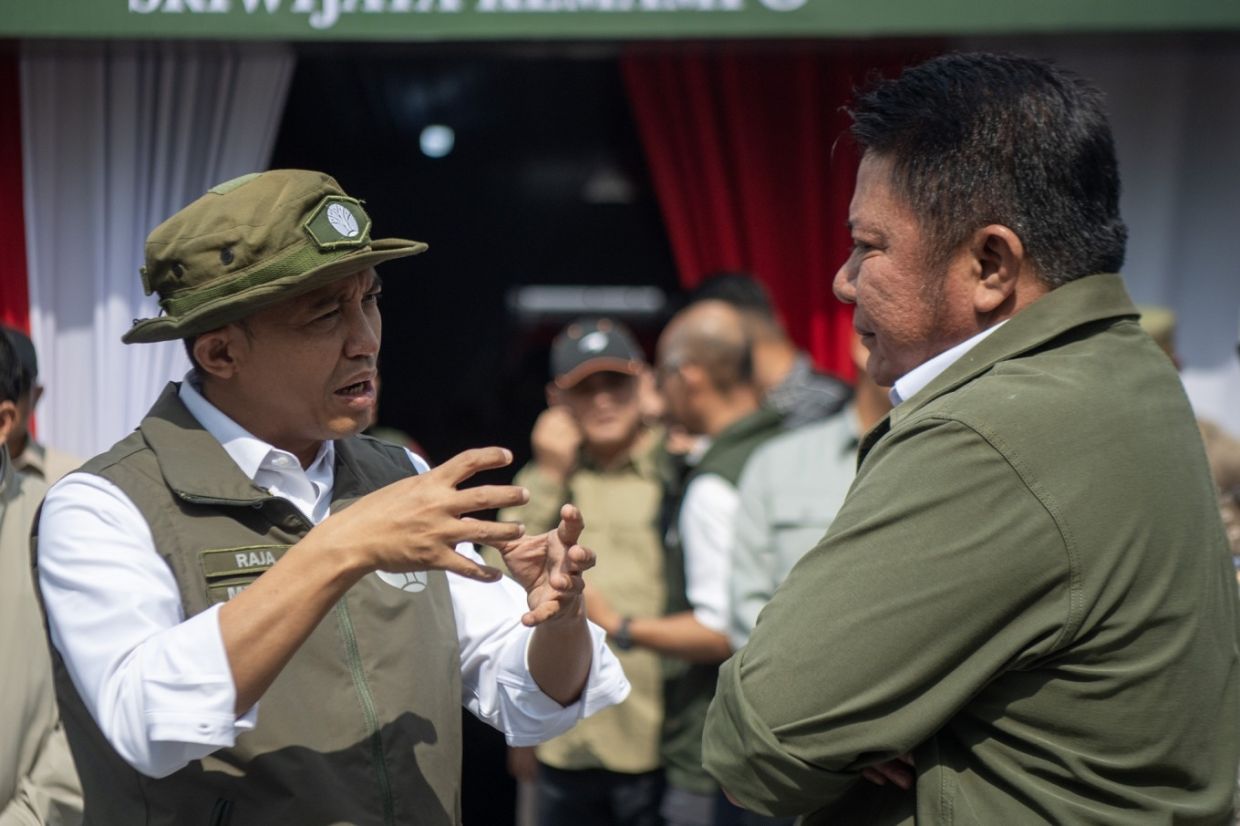
Indonesia's Corruption Eradication Commission (KPK) has reopened an investigation into Forestry Minister Raja Juli Antoni over suspicions that he did not completely return illicit funds allegedly offered by Suhardiman Amby, the regent of Kuantan Singingi in Riau province. The development signals deepening scrutiny of the minister's handling of what authorities believe was an improper gift, with investigators now examining inconsistencies between the sums the minister reported receiving and the amounts he claims to have returned.
According to KPK spokesperson Budi Prasetyo, graft investigators remain focused on discrepancies between the volume of tainted money that Raja Juli initially reported and the total he allegedly received from Suhardiman during a June 2 meeting at the ministry. The gathering brought together officials from the Forestry Ministry and the Kuantan Singingi administration to discuss matters of mutual concern. Following that encounter, the regent purportedly handed the minister an envelope filled with Singaporean currency, which the KPK has assessed contained S$14,000 (US$10,919). The investigation has also uncovered evidence that other ministry personnel allegedly received kickbacks totalling S$12,500 from different officials representing Kuantan Singingi.
The timeline of events raises critical questions about ministerial conduct and compliance with Indonesia's strict gift-reporting protocols. Raja Juli reported the alleged bribery attempt to the KPK on July 3, asserting that he had declined the envelope and subsequently returned it on June 12—a ten-day gap following the initial meeting—by depositing it at Kuantan Singingi Police headquarters. However, current investigations focus on whether this account aligns with documentary evidence and witness testimony regarding what transpired. Indonesian law mandates that public officials report improper gifts connected to their official position to the KPK, not local police, within 30 days of receipt. Failure to comply with this requirement can expose officials to criminal liability. Those convicted of accepting illicit gifts while holding public office face maximum sentences of 20 years' imprisonment plus fines reaching Rp 1 billion (US$55,867).
The underlying context involves forest reclassification proposals that have drawn the KPK's attention to potential corruption linkages. Kuantan Singingi's administration had requested that the ministry reclassify over 1,800 hectares of limited production forest (HPT) in their region. This category of forest exists under Indonesian law specifically for controlled timber extraction to support settlement or industrial activity. Investigators are now examining whether the alleged payments formed part of a coordinated effort to secure favorable ministry decisions on these reclassification requests, thereby establishing the requisite quid pro quo arrangement that would constitute formal bribery under Indonesian statutes.
Budi disclosed that Raja Juli's interactions with Suhardiman extended well beyond the single June 2 meeting that prompted the alleged gift. The minister and regent held at least three separate meetings across April, May, and June, though investigators have not yet publicly clarified whether these engagements shared common purposes or evolved sequentially as part of a broader negotiation framework. This frequency of contact strengthens the prosecution narrative that systematic cultivation was underway, rather than isolated spontaneous behavior. The expanding pattern of engagement between ministry leadership and provincial administration officials now forms a critical element of the broader inquiry.
Suhardiman himself faces serious legal jeopardy. The Gerindra Party politician—the same political vehicle championed by President Prabowo Subianto—was arrested and designated a suspect by the KPK in late June on allegations of dispensing kickbacks to his own regency secretary, Zulkarnain, in exchange for administrative promotion. That initial probe subsequently broadened dramatically when investigators uncovered the alleged flow of payments to the Forestry Ministry regarding the forest conversion authorization. The expansion transformed what appeared a localized patronage arrangement into a multi-directional corruption scheme potentially spanning provincial and national bureaucratic levels.
Raja Juli's position as secretary-general of the Indonesian Solidarity Party (PSI) has intensified political fallout from the allegations. Members of the House of Representatives Commission IV, which oversees forestry planning and policy, moved to summon the minister for in-camera questioning. However, Raja Juli declined to appear at a July 14 session, with Commission IV deputy chair Alex Indra Lukman from the Indonesian Democratic Party of Struggle (PDI-P) attributing the absence to the minister's participation in umrah—the Islamic minor pilgrimage. The boycott angered lawmakers seeking direct testimony and has fueled speculation about whether the minister was avoiding uncomfortable questioning during a delicate investigative phase.
The Forestry Ministry has adopted a cautious public posture regarding the unfolding controversy. In a formal statement, the ministry reiterated its commitment to cooperate fully with the KPK investigation and pledged to furnish any documents or information the anti-corruption body deems necessary. Significantly, ministry spokespeople emphasized that no forest reclassification decisions affecting Kuantan Singingi have been finalized to date. The three most recent proposals submitted by the regency administration remain either formally rejected or suspended pending completion of verification procedures. This assertion appears designed to insulate the ministry from charges that corrupt consideration of proposals proceeded to actual policy implementation, though it does not address whether improper communications or preliminary favorable signals transpired prior to formal decision-making stages.
The case carries important implications for Jakarta's broader anti-corruption messaging and the credibility of President Prabowo's administration, which has publicly committed to strengthening institutional accountability mechanisms. The involvement of a Gerindra Party member and a senior minister from a government coalition party complicates the optics substantially. For Southeast Asian observers, the incident underscores how natural resource governance remains vulnerable to systematic abuse, with forest conversion authorities particularly exposed to rent-seeking behavior. The KPK's willingness to expand investigative scope and examine high-ranking officials suggests institutional independence persists despite political pressures, though the outcome of Raja Juli's case will offer crucial signals about whether such independence extends to protecting ministers aligned with the ruling coalition.

