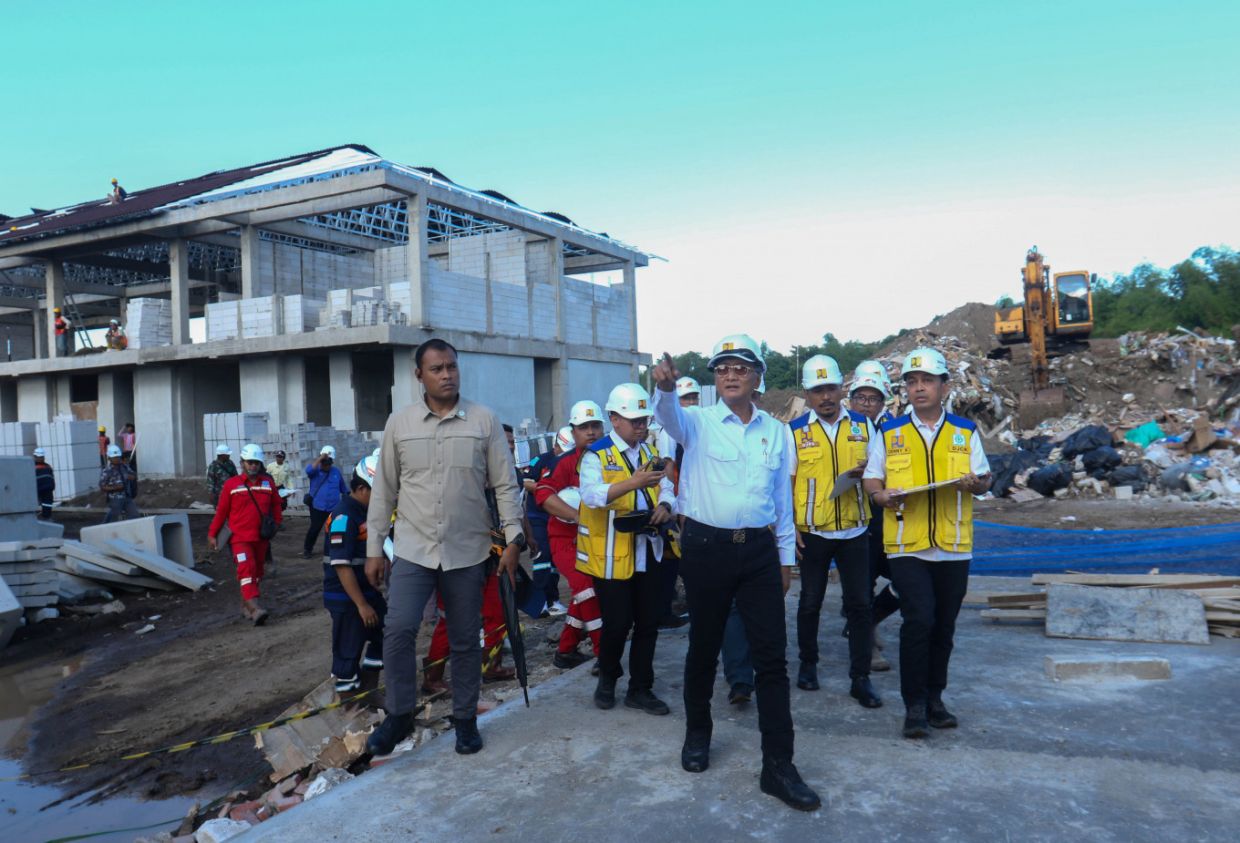
Indonesia's Public Works Minister Dody Hanggodo has found himself at the centre of a controversy involving transparency and proper use of state resources after an official ministry document included his wife and daughter in a planned delegation to the United States. The discovery has raised concerns from the Indonesian Ombudsman and the public alike about whether such arrangements comply with the government's stated commitment to fiscal responsibility and ethical governance.
The issue came to light when a letter from the Public Works Ministry circulated widely across social media platforms. Signed by Ministry Secretary-General Apri Artoto on June 29, the correspondence detailed plans for an eight-member delegation to travel to New York between July 13 and 19. Among those listed were Dody's wife, Irma Hermawati, and his daughter, Aurellia Tsabitha Meidirama. The document specified that Irma would travel on a diplomatic passport, a designation typically reserved for government officials, while Aurellia would use a regular passport.
The delegation's stated purpose is to participate in the High-level Meeting on the Midterm Review of the New Urban Agenda, a United Nations General Assembly event organised by the UN Human Settlements Programme, also known as UN-Habitat. The meeting is scheduled for mid-July in New York, representing an opportunity for Indonesia to engage with international partners on urban development policy. However, the inclusion of the minister's family members in official travel documentation has overshadowed the legitimate policy objectives of the mission.
Public reaction to the revelation has been decidedly critical, with many Indonesians questioning the necessity of including family members in an official government delegation. The timing of the controversy is particularly sensitive given that President Prabowo Subianto has made fiscal austerity a cornerstone of his administration's agenda, promising to eliminate wasteful spending and demonstrate responsible stewardship of public resources. For many observers, the appearance of ministerial family members on official trip rosters sits uncomfortably with such messaging, regardless of the stated source of their funding.
Attempting to defuse the situation, the ministry has moved quickly to clarify its position. Apri stated that no state budget would be allocated to cover the expenses of Dody's wife and daughter, emphasising that any personal costs would be borne entirely by the individuals themselves. He further explained that the inclusion of family members in the travel documentation was primarily a procedural matter, necessary to facilitate visa applications through the Foreign Ministry. Apri also stressed that the issuance of a diplomatic passport for Irma was consistent with existing regulations, suggesting that the arrangement had no basis in irregularity.
Yet these explanations have done little to settle public disquiet or satisfy institutional oversight bodies. Maneger Nasution, a member of the Indonesian Ombudsman, has called for substantially greater transparency from the ministry. His concerns extend beyond the simple question of who bears financial responsibility for the trip. Nasution has demanded that the ministry provide detailed justification for why the minister's spouse and child are listed as delegation members, and has urged comprehensive assurances that no state facilities, services, or implicit subsidies will be made available to them during their travel.
The Ombudsman representative has also flagged a broader set of governance concerns. Nasution emphasised that the ministry must demonstrate that the participation of family members is not only lawful but also legitimate and free from any conflict of interest. He underscored the importance of ensuring that no government authority is exploited to confer personal advantage or privilege upon the minister or his relatives. Such warnings highlight the significance that Indonesian anti-corruption bodies place on maintaining clear boundaries between official duties and private interests, particularly in the context of international travel and diplomatic engagements.
The minister's background adds additional layers of complexity to the current controversy. Before transitioning to electoral politics through the Democratic Party, Dody maintained business relationships with South Kalimantan entrepreneur Andi "Haji Isam" Syamsuddin Arsyad, whose commercial interests encompass enterprises connected to President Prabowo's ambitious food estate development project in Merauke, South Papua. Such historical connections, while not inherently problematic, tend to invite closer scrutiny of ministerial decisions when they appear to blur the line between public duty and private interest.
Dody, now 60 years old, has previously asserted that a "deep state" conspiracy exists within government circles aimed at destabilising his position. These claims emerged following the leak of an internal audit document from his ministry that allegedly referenced attempts by influential actors to involve him in a corruption investigation. The minister's earlier assertions of institutional hostility create a complex backdrop for the current controversy, as observers attempt to distinguish between legitimate oversight concerns and potential political manoeuvring.
For Malaysian and broader Southeast Asian observers, the Dody Hanggodo affair serves as a instructive case study in how issues of ministerial accountability and transparent governance play out in neighbouring jurisdictions. The incident demonstrates both the value of active public scrutiny and the persistent challenges that oversight institutions face in holding powerful officials accountable, particularly when explanations can be offered that, while technically plausible, fail to address underlying concerns about propriety and the appropriate exercise of ministerial authority.
The controversy also highlights the persistent tension between letter-of-the-law compliance and spirit-of-the-law adherence in governance. While the ministry's assertion that state funds will not be used may well be accurate, the appearance of impropriety—the very fact that a minister's family members are formally listed in official delegation documents—raises questions about judgment and the messaging sent by such decisions to the broader civil service and the Indonesian public about standards of conduct expected from senior government officials.

