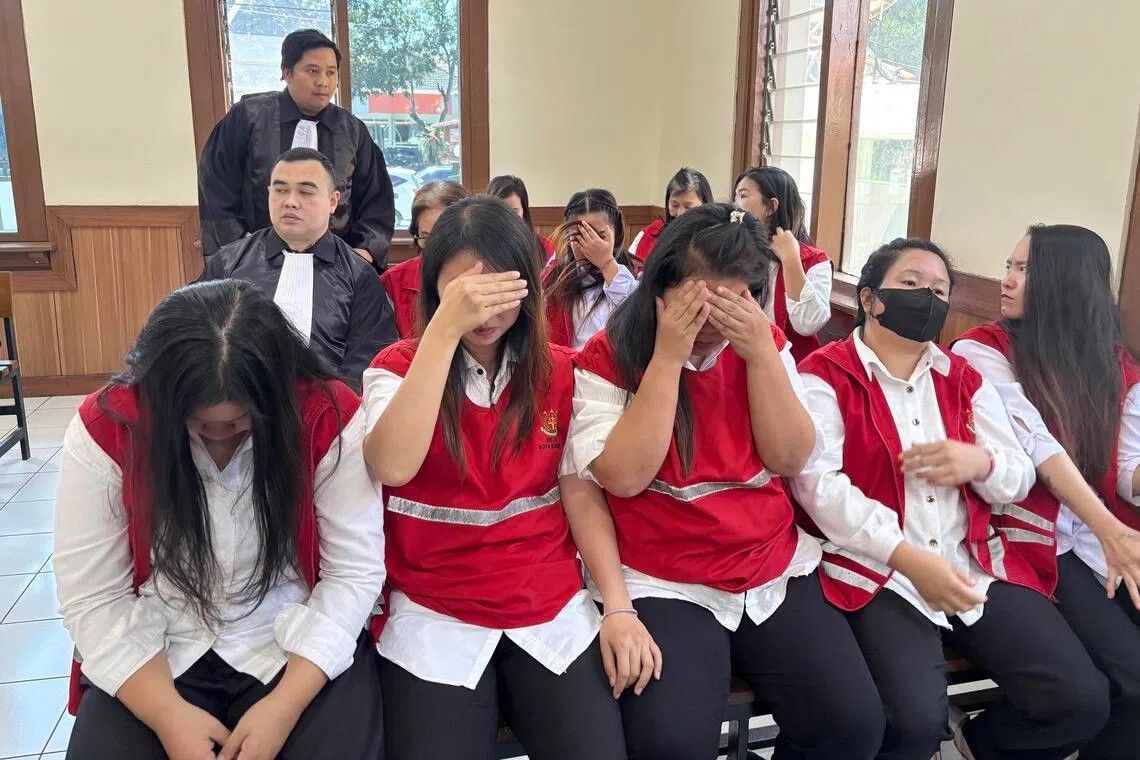
A major human trafficking operation based in Indonesia has been dismantled following the conviction of all 19 members by the Bandung District Court in West Java on July 21. The syndicate, which operated between 2023 and 2025, had orchestrated the illegal trafficking of at least 34 infants, with at least 12 destined for Singapore. The comprehensive prosecution represents a significant enforcement victory against cross-border child trafficking in Southeast Asia, a region where such crimes often exploit porous borders and weak regulatory oversight in adoption and childcare sectors.
Lie Siu Luan, a 70-year-old who operated under the aliases Popo and Lily, served as the syndicate's orchestrator and received a seven-year prison sentence. Presiding Judge Gatot Ardian Agustriono formally declared Lie guilty of recruiting, harbouring, transferring, and receiving persons for exploitation purposes within Indonesia's territory. The sentence fell short of the prosecution's request for a decade-long term, a common pattern in Southeast Asian trafficking cases where courts often impose sentences below prosecution recommendations. Lie's central role involved coordinating the recruitment of vulnerable infants, fabricating adoption documentation, and arranging their transportation across borders through logistical networks that exploited existing gaps in international childcare regulations.
The trafficking operation functioned as a coordinated network with clearly delineated roles among its female participants. Astri Fitrinika, identified as the syndicate's principal recruiter, received a sentence of six years and seven months, matching the punishment handed to two other recruiters, Djaka Hamdani and Elin Marlina. These individuals bore direct responsibility for identifying and approaching families willing to part with their infants, a process that prosecutors suggested exploited economic desperation and inadequate social protection systems for vulnerable populations in Indonesia's rural regions. The recruitment phase represented the supply side of the trafficking operation, identifying vulnerable children and facilitating their initial removal from family custody through deceptive or coercive means.
Documentation fraud formed another critical component of the operation's infrastructure. Lai Su Hua received an identical sentence of six years and seven months for falsifying state documents connected to adoption requirements, enabling the infants to clear bureaucratic checkpoints that normally protect children from trafficking. The sophistication of forged documentation suggests the syndicate possessed insider knowledge of administrative procedures, possibly through connections within government offices or adoption agencies. This dimension of the operation enabled the legal disguise of illegal trafficking as legitimate intercountry adoption, a vulnerability in Southeast Asian administrative systems that regulators increasingly recognize requires urgent attention.
The majority of the syndicate's 14 remaining defendants, convicted as caregivers for the trafficked infants, received substantially shorter sentences of three years and four months imprisonment. These individuals provided temporary housing and care for the infants before their transfer, creating crucial nodes in the trafficking pipeline. The differentiation in sentencing reflected their presumed lesser culpability compared to organizers and recruiters, though their participation remained integral to the operation's functionality. The caregivers' involvement underscores how trafficking networks distribute responsibility across multiple participants, complicating enforcement efforts and allowing some actors to minimize their perceived complicity.
Each infant in the operation commanded a price of between 200 to 250 million rupiah, equivalent to approximately S$18,110, representing substantial sums within the Indonesian economic context. This pricing structure positioned the infants as commodities within a transnational market, generating revenue that incentivized network members across the supply chain. The financial calculations underlying the trafficking operation reveal how economic desperation intersects with inadequate child welfare infrastructure to create conditions enabling organized trafficking. Buyers in receiving countries like Singapore, where adoption regulations may be perceived as less stringent by traffickers, provided the demand pull driving the operation's expansion.
During proceedings, both Lie and Astri acknowledged most charges levelled against them, though they maintained crucial disputed claims regarding the infants' origins. Both defendants insisted that none of the children were abducted but rather voluntarily surrendered by parents facing economic hardship or social pressure. They further asserted that all infants received appropriate care and experienced no abuse within the trafficking network. These claims, whether credible or merely tactical legal positioning, highlight the difficulty distinguishing between consensual informal adoption arrangements and genuine trafficking in contexts marked by extreme poverty and inadequate child protection frameworks. The defendants' narratives suggest they framed their actions as facilitating family separation agreements rather than criminal exploitation, a perspective that complicates investigation and prosecution in trafficking cases involving infants too young to provide testimony.
The magnitude of the investigation and trial demonstrated enhanced regional capacity to prosecute complex human trafficking networks spanning multiple jurisdictions. The case involved 19 defendants whose roles created an intricate organizational structure requiring sustained investigative work to uncover and document. The April trial commencement and July conviction timeline reflects the intensive judicial resources allocated to the prosecution, unusual in Southeast Asian contexts where trafficking cases frequently languish in courts for years. However, the gap between prosecution recommendations and actual sentencing suggests lingering reluctance among some judges to impose the maximum penalties available under Indonesian law for trafficking offences.
For Singapore and other destination countries, the conviction underscores the reality that traffickers actively target Southeast Asian judicial systems perceived as offering less rigorous screening than developed nation adoption processes. The discovery of at least 12 infants destined for Singapore indicates that traffickers view the island-state as a lucrative market, likely because of its economic development and demand among wealthy families navigating adoption restrictions. The case necessitates coordinated response from receiving countries' immigration, adoption, and law enforcement agencies to implement enhanced vetting protocols and cooperation with source-country authorities investigating trafficking networks.
Indonesia's successful prosecution reflects growing political will to address human trafficking, bolstered by international pressure and cooperation frameworks emphasizing enforcement priorities. However, the case also exposes systemic vulnerabilities in child protection, adoption regulation, and social welfare that allowed the syndicate to operate undetected for an extended period. Tackling the root causes requires investment in poverty alleviation, family support services, and adoption regulatory modernization across Southeast Asia, alongside criminal prosecution of trafficking perpetrators. The conviction provides temporary disruption to one network but addresses neither the demand from receiving countries nor the supply pressures pushing Indonesian families to contemplate surrendering infants, suggesting future trafficking operations will likely emerge unless underlying structural factors receive sustained policy attention.

