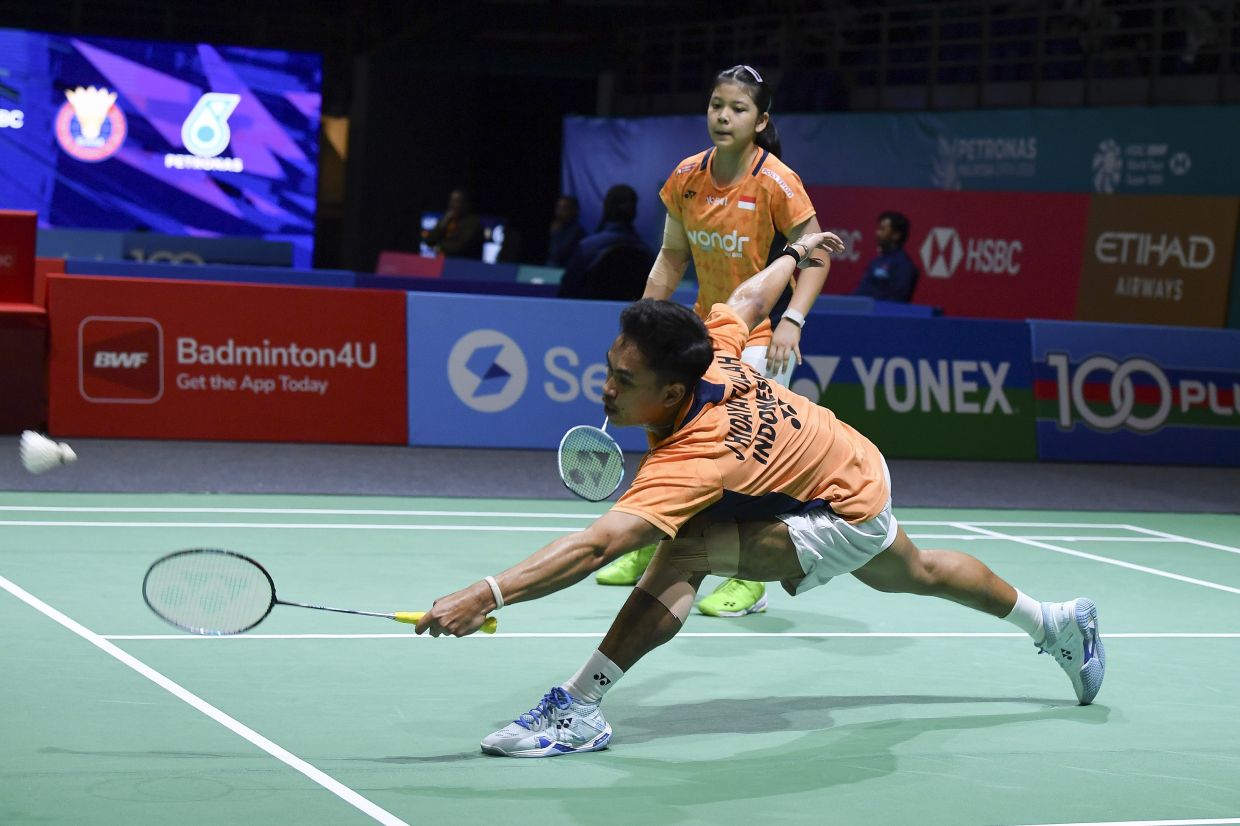
Indonesia's badminton contingent faces fresh scrutiny after two prominent mixed doubles pairs withdrew from the World Championships, casting a shadow over the sport's integrity in Southeast Asia's badminton powerhouse. The withdrawals of Jafar Hidayatullah-Felisha Pasaribu, ranked 13th globally, and Adnan Maulana-Indah Cahya Sari Jamil came as the Badminton World Federation pursues independent judicial proceedings investigating alleged integrity breaches by several Indonesian players. While neither pair has been publicly named as targets of the investigation, the timing and nature of their departures have triggered widespread speculation about the scope and severity of the allegations.
The Indonesian Badminton Association's announcement, delivered through secretary-general Ricky Soebagdja, framed the withdrawals as routine squad adjustments rather than disciplinary measures. The statement emphasised that the PBSI's decision reflected a commitment to ensuring all administrative processes and athlete participation meet international regulatory standards. However, this measured language struggled to mask the underlying gravity of the situation. The association deliberately avoided disclosing specific reasons for removing the pairs, choosing instead to reference compliance with applicable regulations and procedures—a diplomatic approach that left observers to draw their own conclusions about the connection between the withdrawals and the ongoing match-fixing inquiry.
The Badminton World Federation's independent proceedings represent a significant enforcement action within the sport, signalling that concerns about match-fixing extend beyond isolated incidents. The investigation's existence and the fact that multiple Indonesian players are under scrutiny indicates systemic vulnerabilities that the sport's global governing body considers serious enough to warrant formal judicial intervention. For a nation that has consistently produced world-class badminton talent and multiple Olympic medallists, this development represents a reputational challenge that could affect Indonesia's standing within international badminton circles. The prominence of Indonesian players on the world circuit makes any integrity issues particularly consequential for the sport's credibility.
Adnan Maulana and Indah Cahya Sari Jamil initiated their withdrawal on July 13, with Jafar Hidayatullah and Felisha Pasaribu following suit sixteen days later on July 29. The staggered nature of these departures suggests either independent decision-making by the pairs or a staged process of squad finalisation by the federation. Both couples represented competitive options for Indonesia's World Championships campaign, and their removal necessarily altered the team's composition and strategic planning. The timing of these withdrawals, occurring during the final preparation phase before a major international tournament, would have complicated Indonesia's squad optimisation and raised questions about the availability and readiness of replacement athletes.
Despite the departures, Indonesia will maintain a presence in the mixed doubles event through alternative pairings. Amri Syahnawi and Nita Violina Marwah will carry Indonesia's primary hopes in this category, while Rehan Kusharjanto and Gloria Widjaja have been elevated from the reserve roster to provide additional representation. This replacement strategy allows Indonesia to preserve its competitive profile at the World Championships while navigating the administrative challenges created by the withdrawals. The promotion of reserve-list athletes reflects standard practice in international sports, though it potentially means the federation was unable to prevent the loss of higher-ranked pairings through the judicial process.
The PBSI's public positioning demonstrates careful management of a sensitive situation. By emphasising respect for the BWF's independent mechanisms and refraining from further commentary pending the Independent Hearing Panel's decision, the association attempted to establish procedural legitimacy while avoiding premature judgement. This approach also serves to insulate the PBSI from accusations of either cover-up or excessive punishment, positioning Indonesia's governing body as a cooperative participant in international sporting governance. Simultaneously, the federation explicitly urged all stakeholders to refrain from speculation until formal findings emerge, a request that acknowledged the likelihood of continued media and public interest while attempting to constrain discourse.
For Malaysian readers and broader Southeast Asian observers, this development carries implications beyond badminton's internal mechanics. Indonesia's status as a regional badminton leader means that integrity breaches by its players reflect on the sport across Southeast Asia and affect the competitive environment for athletes from neighbouring nations. Match-fixing investigations in any sport undermine the fundamental principle that competitions determine outcomes through athletic merit, not predetermined results influenced by financial manipulation. The case demonstrates that even established badminton nations with strong institutional frameworks face challenges in preventing or detecting corruption, a sobering reality for other associations working to protect their sports from similar threats.
The investigation's ongoing status creates uncertainty about final outcomes and potential consequences for implicated athletes. The BWF Independent Hearing Panel's eventual decision will determine whether the withdrawals represent precautionary measures, formal sanctions, or voluntary departures unrelated to the investigation. This uncertainty complicates efforts to assess the investigation's scope and the nature of alleged integrity breaches. Malaysian observers and other Southeast Asian badminton communities will watch these proceedings closely, as the findings and subsequent penalties will establish precedents for how international badminton governance addresses corruption and institutional accountability.
Broader context suggests that match-fixing concerns within badminton have surfaced intermittently across different regions and levels of competition. The sport's structure—with numerous tournaments, varying prize money, and complex betting markets in some jurisdictions—creates financial incentives that can motivate manipulation. The fact that the BWF has initiated formal proceedings signals organisational commitment to enforcement, yet the involvement of multiple Indonesian players raises questions about whether current detection and prevention mechanisms adequately protect competitive integrity. This investigation may catalyse further reforms in player education, betting surveillance, and investigative capacity across international badminton.
The Indonesian Badminton Association now faces the challenge of rebuilding confidence in its oversight while the judicial process unfolds. The federation's cooperation with BWF inquiries and transparent acknowledgment of the proceedings suggest institutional maturity, yet questions will persist about how the association's own oversight systems failed to prevent or detect the alleged breaches. Whether the PBSI implements additional safeguards, enhanced education programmes, or structural reforms may determine whether this episode represents an isolated incident or symptom of deeper governance vulnerabilities.

