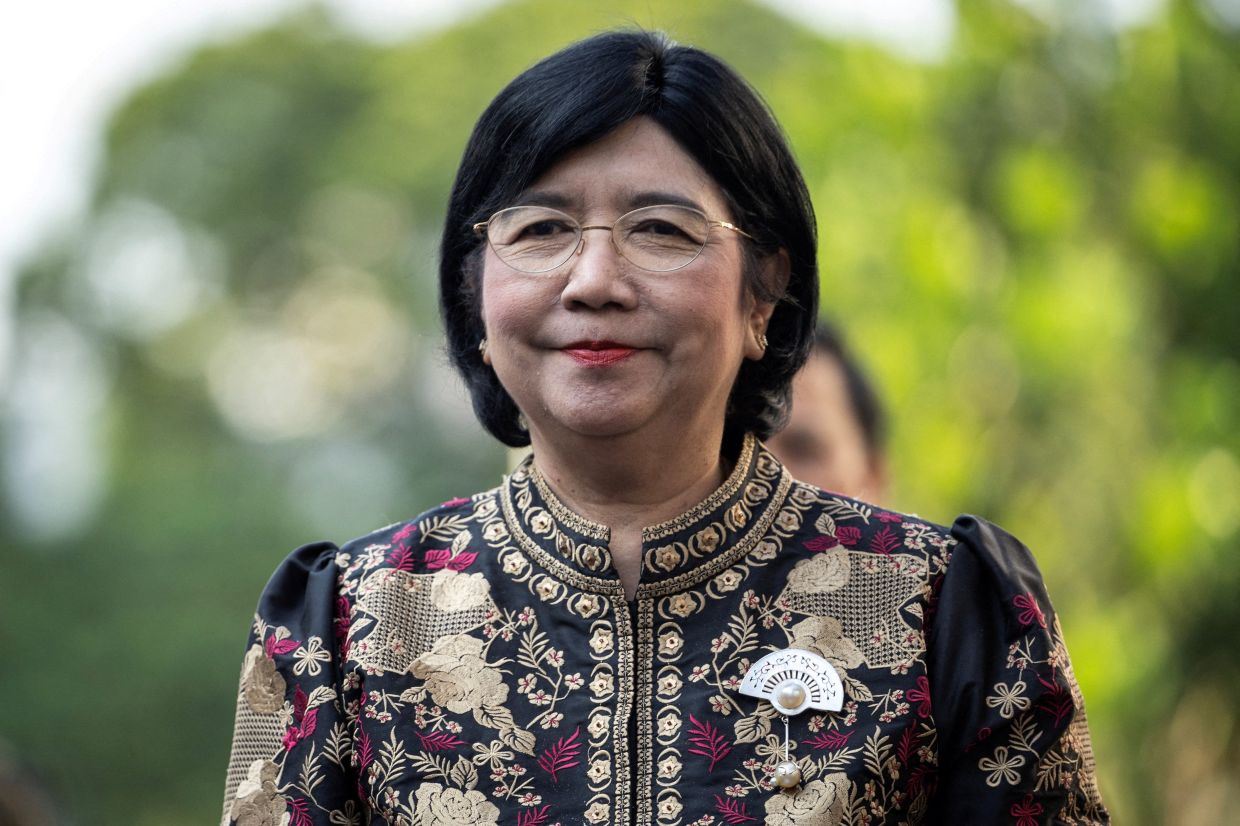
President Prabowo Subianto has selected Destry Damayanti as his exclusive nominee for the position of Indonesia's central bank governor, according to an announcement from the presidential office on Monday. The move marks a critical juncture for Southeast Asia's largest economy, coming roughly a month after the unexpected resignation of incumbent Perry Warjiyo, who cited personal circumstances for stepping down from the influential post. Damayanti, who has held the title of senior deputy governor since 2019 and has been steering the institution as interim leader, represents a continuity choice that appears designed to reassure both domestic and international stakeholders amid economic uncertainties.
The selection triggered an immediate positive response from currency traders, with the rupiah rallying to its firmest position against the American dollar since mid-June. This market reaction underscores investor relief that the leadership succession will occur without extended institutional drift or political turmoil at Bank Indonesia. Financial participants have been keenly observing the nomination process, recognizing that the central bank governor wields considerable influence over monetary policy decisions that directly shape the investment climate across the archipelago and broader Southeast Asia.
Damayanti's promotion from within represents a pragmatic approach by Prabowo, consolidating power within a government coalition that commands parliamentary majorities across both chambers. The legislature will have thirty days to either endorse or reject the nomination, though historical precedent suggests approval is virtually assured—parliament has not blocked a sitting president's gubernatorial candidate since 2008. This institutional reality grants the nomination a strong presumption of success, provided no unforeseen controversies emerge during the brief review period.
The departure of Warjiyo had reanimated investor concerns about Indonesia's economic trajectory and governance quality. Confidence in the G20 member has eroded amid multiple headwinds, including questions about fiscal discipline at the national and regional levels, worries that the central bank may compromise its independence to serve political objectives, opacity surrounding equity market operations, and spillover risks from escalating Middle Eastern tensions affecting oil prices and global supply chains. Market participants have questioned whether the central bank can maintain its traditional mandate of price stability and currency management while simultaneously facing pressure to engineer rapid growth acceleration.
Bank Indonesia has confronted mounting expectations to catalyze expansion toward Prabowo's ambitious eight percent growth target, a dramatic acceleration from the current pace of roughly five percent. These demands have placed the institution in a delicate position, requiring it to navigate between supporting the administration's economic agenda and fulfilling its core responsibilities for inflation control and rupiah stability. The tension between growth aspirations and orthodox monetary management has become a defining challenge for Indonesian policymakers as they attempt to navigate an increasingly complex global environment.
Under Warjiyo's tenure, Bank Indonesia deployed several tactical measures to defend the rupiah and attract foreign capital. The central bank raised its benchmark interest rate by one hundred basis points throughout the current year, introduced incentive schemes encouraging rupiah hedging among international investors, and utilized high-yielding shorter-dated securities issued by the bank itself to lure inflows. These interventions reflected the institution's effort to stabilize the currency and rebuild reserves without completely subordinating growth considerations, though debate continues about whether such measures represent sustainable policy or temporary expedients that mask underlying economic imbalances.
Damayanti's appointment signals that Prabowo intends to maintain institutional stability at the monetary authority rather than orchestrate a dramatic policy shift. Her background as a career central banker and her familiarity with existing operations suggest continuity in approach, though her actual performance in the top role remains unknown. The question of whether she will prove able to resist political pressure for looser monetary conditions while managing legitimate developmental aspirations represents one of the critical unknowns for Indonesia's economic performance over coming years.
The central bank leadership change arrives during a particularly delicate moment for Indonesian macroeconomics. The rupiah has experienced persistent weakness relative to the dollar, capital outflows have accelerated during periods of uncertainty, and inflation, though moderating, remains elevated compared to regional peers. Additionally, the equity market transparency concerns cited by investors suggest deeper governance challenges extending beyond the central bank into broader institutional frameworks governing financial markets and corporate disclosure.
For Malaysia and other Southeast Asian economies, Indonesia's central bank decisions carry spillover implications given the region's integrated supply chains, currency interactions, and capital flows. A Bank Indonesia that maintains orthodox monetary discipline while carefully calibrating growth support would provide regional stability, whereas one subordinated to political pressure for unsustainable expansion could trigger contagion effects across neighboring markets. Damayanti's nomination thus carries significance extending well beyond Jakarta, affecting the broader regional economic architecture that Malaysian businesses, investors, and policymakers navigate daily.
The parliamentary approval process over the coming month will likely proceed smoothly given coalition control, but the real test will arrive once Damayanti assumes office and confronts the practical dilemmas of contemporary Indonesian monetary policymaking. Her success in balancing multiple, sometimes contradictory objectives—supporting growth, controlling inflation, stabilizing the currency, and maintaining institutional independence—will substantially determine Indonesia's economic resilience and its role as a regional anchor economy throughout Prabowo's presidency.

