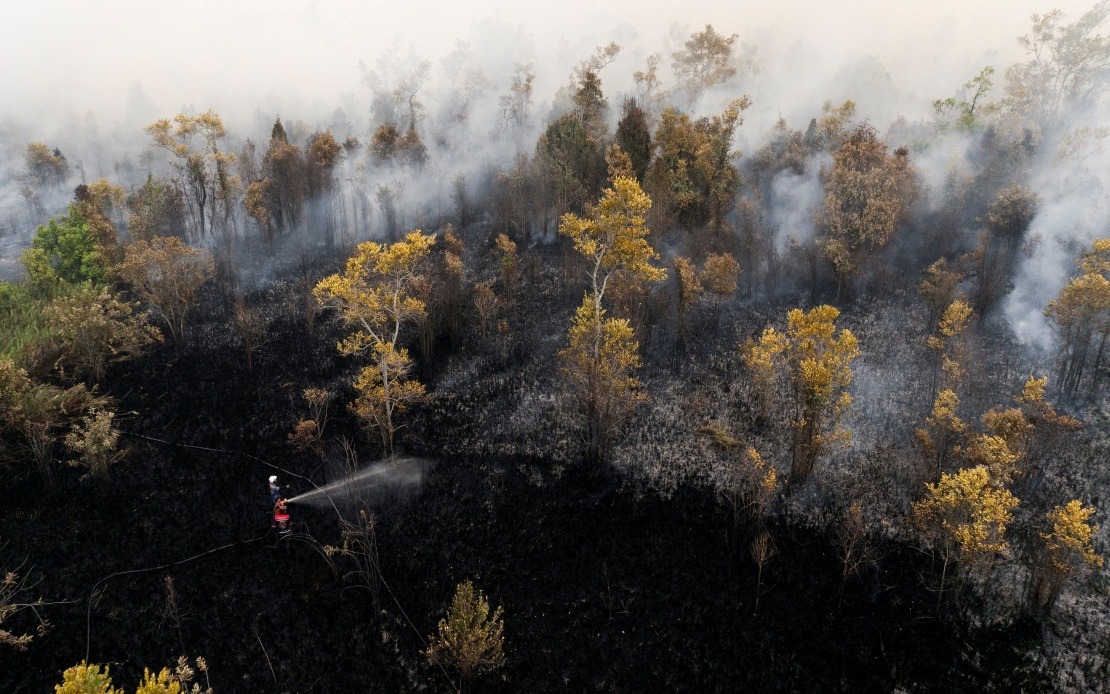
The recurring haze crisis that periodically disrupts air travel across Southeast Asia returned with force this week as Indonesian authorities were forced to ground all operations at Singkawang Airport in West Kalimantan province on Saturday. The decision to halt flights, announced through the airport's official social media channels, reflects the severity of visibility conditions created by active forest and land fires burning across multiple regions of Indonesian Borneo. Airport management advised passengers to reach out directly to their airlines regarding rescheduling options, underlining the scale of disruption facing travellers in the region.
Singkawang, situated approximately 145 kilometres north of Pontianak, the West Kalimantan provincial capital, functions as a crucial domestic aviation hub for the wider region. The airport's closure represents a significant constraint on connectivity for communities and businesses dependent on air transport to reach the provincial interior and connect with Indonesia's broader transport network. For Malaysian readers, the situation carries particular relevance given the cross-border nature of transboundary haze pollution, which frequently affects air quality in Peninsular Malaysia and the Malaysian states of Sabah and Sarawak during peak fire seasons.
Indonesia's Transport Ministry has maintained heightened vigilance over the unfolding situation, with officials publicly reiterating that aviation safety constitutes the non-negotiable foundation of all operational decisions. Director-General of Civil Aviation Lukman F. Laisa articulated this position in formal statements, emphasising that atmospheric visibility represents a critical safety parameter. When conditions deteriorate below established thresholds, regulatory frameworks compel airlines to implement corrective measures ranging from flight delays and route diversions through to complete cancellations. The ministry's coordinated monitoring approach involves continuous liaison with airport operators, meteorological agencies, and commercial carriers to ensure rapid information flow and unified response protocols.
Satellite monitoring systems operated by the United States National Aeronautics and Space Administration provided hard data on the extent of fire activity across the three worst-affected Kalimantan provinces as of Friday evening. Central Kalimantan recorded 56 high-confidence hotspots detected by NASA's Terra and Aqua satellites, whilst West Kalimantan registered 51 such locations and South Kalimantan identified 19. These figures represent cumulative observations that translate into extensive smouldering vegetation and active combustion zones distributed across vast geographical areas. The Indonesian Meteorology, Climatology and Geophysics Agency concurrently reported that substantial portions of West and Central Kalimantan were experiencing air quality categorised as very unhealthy, a designation indicating serious risks to human respiratory and cardiovascular health.
The Indonesian government has mobilised an impressive array of firefighting resources to combat the spreading fires. Ground-based firefighting teams work in concert with aerial operations, including water-bombing runs conducted from helicopters and fixed-wing aircraft. Beyond conventional suppression methods, Indonesia has also positioned weather modification equipment, commonly referred to as cloud-seeding technology, as a tactical tool to be deployed when meteorological conditions prove suitable. This multi-layered response strategy reflects lessons learned from previous fire seasons and demonstrates the commitment of Indonesian authorities to contain and extinguish blazes before they expand further or persist into months when weather patterns typically worsen air quality across the broader region.
The criminal investigation dimensions of these fires have also received systematic attention from law enforcement agencies. Central Kalimantan police leadership, under Inspector-General Iwan Kurniawan's direction, initiated formal investigations into the origins and causation of detected fires. By mid-August, investigators had named approximately twelve suspects across various forest and land fire cases, signalling that some blazes may have resulted from deliberate or negligent human actions rather than natural causes. This investigative pathway remains important for policy and enforcement purposes, as identifying patterns of intentional fire-setting or regulatory violations helps authorities target preventive measures more effectively in subsequent fire seasons.
The broader pattern of recurring transboundary haze episodes originating from Indonesian forest fires has repeatedly disrupted regional commerce, disrupted aviation networks, and degraded air quality affecting millions of people across Southeast Asia. Malaysia, Singapore, and Brunei have all experienced significant haze impacts during previous fire seasons, necessitating the imposition of public health warnings and business continuity challenges. The current situation serves as a reminder of the interconnected environmental vulnerabilities that bind together the region's economies and populations. Policymakers across Malaysia and other neighbouring nations monitor Indonesian fire conditions closely, understanding that inadequate suppression efforts or delayed responses in Kalimantan can rapidly translate into air quality crises affecting their own populations within days.
For airline operators and the broader aviation industry operating across Southeast Asia, haze-induced flight cancellations represent a recurring operational and financial challenge. Beyond the immediate disruption to scheduled services, prolonged visibility restrictions create cascading delays throughout regional flight networks as aircraft and crew cannot reach intended destinations and must be repositioned. The cumulative economic impact on airlines, airports, businesses reliant on air cargo services, and passengers contemplating connections through affected regions accumulates rapidly during extended haze episodes. Insurance implications, passenger compensation obligations, and reputational considerations add further complexity to decisions regarding flight operations during marginal visibility conditions.
The meteorological factors driving current conditions deserve consideration alongside the immediate fire response efforts. The specific atmospheric configurations that concentrate smoke over particular regions—typically determined by wind patterns, pressure systems, and seasonal weather rhythms—will significantly influence whether haze concentrations improve or intensify in coming days. Indonesian meteorological agencies continuously update forecasts to provide advance warning of conditions likely to further degrade visibility or, conversely, to permit dispersal of accumulated smoke. These forecasts directly inform decisions by aviation authorities regarding flight operation resumption and help guide planning for ground-based firefighting operations and cloud-seeding deployment.
The situation at Singkawang Airport exemplifies the ongoing tension between economic imperatives for maintaining transport connectivity and the absolute safety requirements that govern aviation operations. Whilst the closure inevitably imposes costs on affected passengers, airlines, and regional commerce, the regulatory frameworks that mandate such decisions reflect hard-won lessons from aviation history. Visibility conditions that materially impair pilots' ability to navigate safely, particularly during take-off and landing phases of flight when operational margins are narrowest, represent unacceptable risks that no economic pressure can justify overriding. As haze conditions persist across Kalimantan, observers across Southeast Asia will closely monitor whether suppression efforts gain momentum and whether atmospheric conditions evolve to permit resumption of normal aviation services in the affected region.

