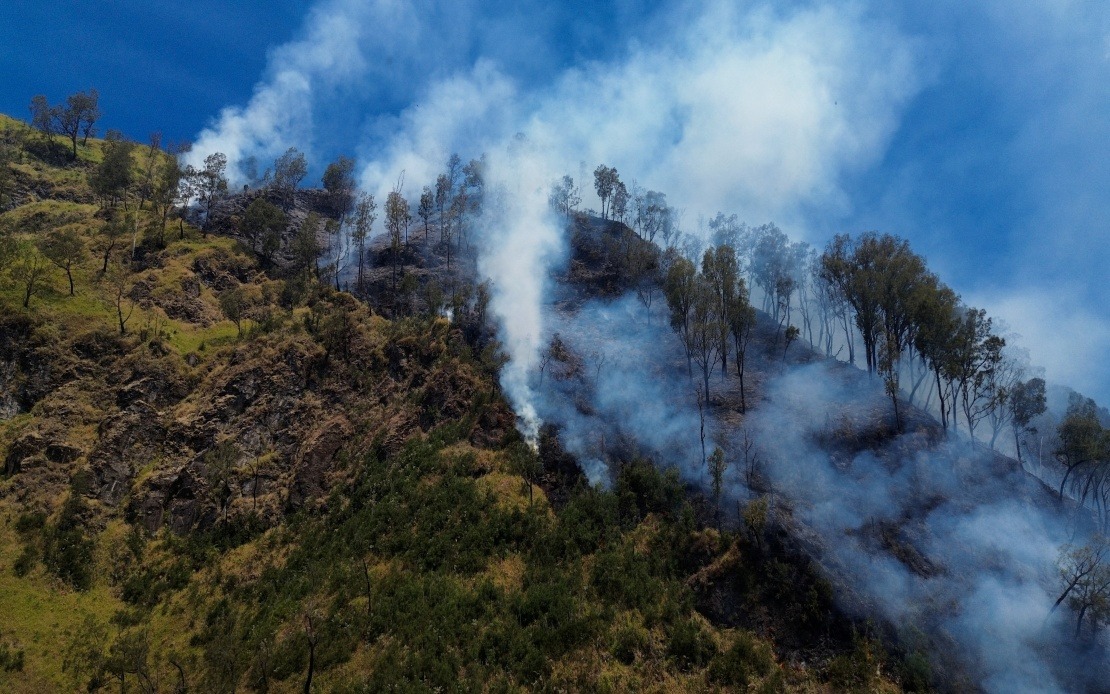
Indonesia's iconic Mount Bromo has been sealed off to all visitors as a destructive forest fire continues to advance across the volcanic landscape of East Java's Bromo Caldera. The Bromo Tengger Semeru National Park authority implemented the comprehensive closure at 10pm on Saturday evening, bringing tourism at one of the country's most visited natural attractions to a standstill. The decision reflects the escalating danger posed by the wildfire and the urgent operational requirements of ongoing firefighting efforts in the region.
The closure encompasses all five major entry points that normally facilitate visitor access to the mountainous park. These include the Cemorolawang entrance serving Probolinggo Regency, the Wonokitri gateway in Pasuruan Regency, and three access routes—Jemplang, Coban Trisula, and Senduro—distributed across Malang and Lumajang regencies respectively. This multi-point approach ensures that no visitors inadvertently venture into the affected area, where rapidly spreading flames and unpredictable wind patterns pose genuine hazards to safety. The park authority has committed to maintaining this closure until conditions stabilize and firefighting operations conclude.
The wildfire that prompted this drastic action ignited on Monday and has since consumed an estimated 176.20 hectares across portions of Probolinggo and Malang regencies. According to Abdul Muhari, the head of Indonesia's National Disaster Management Agency's Disaster Data, Information, and Communication Centre, the fire remained active as of Saturday evening with visible hotspots continuing to emit smoke. The persistence of the blaze despite firefighting efforts underscores the challenging conditions responders face, including moderate wind patterns that spread embers and accelerate the flames' progression across the volcanic terrain.
Responding to the scale of the emergency, Indonesian authorities have committed significant aerial resources to combat the fire. Two helicopters capable of each carrying 1,000 litres of water have been deployed to the affected zone, providing critical support to ground-based firefighting teams who would otherwise struggle to reach the remote, elevated areas where the fire is most active. These aircraft represent a substantial commitment of resources, reflecting the government's recognition that conventional ground-based responses alone prove insufficient for managing a wildfire of this magnitude across mountainous and inaccessible terrain.
For tourists who had already purchased online access to Mount Bromo during the closure period, park authorities are offering two options to minimize financial loss. Visitors may reschedule their visits to a future date when the park reopens, or they may request full refunds of their ticket purchases. This accommodation recognizes the significant number of both domestic and international travelers who had planned excursions to the volcano and may have made ancillary arrangements including accommodation and transportation. The flexibility in rebooking policies aims to maintain goodwill among the tourism sector while prioritizing safety concerns.
The Mount Bromo incident is not an isolated occurrence within East Java's national park system. A separate forest and land fire affected approximately 30 hectares in the Sembalun Resort area of Mount Rinjani National Park, located in East Lombok Regency. This fire emerged Friday evening around 8pm and burned through the night before being brought under control at approximately 1:30am on Saturday. Though this incident was contained more rapidly than the Bromo situation, it demonstrates the region-wide vulnerability to wildfire during this season and suggests broader environmental stress factors across East Java's volcanic and forested landscapes.
Investigators have not yet determined the underlying causes of either the Bromo or Rinjani fires. This uncertainty is significant because understanding whether these blazes resulted from natural triggers such as spontaneous combustion or human-caused factors like abandoned campfires, unextinguished cigarettes, or agricultural burning will inform prevention strategies moving forward. The timing of both fires during the same period raises questions about whether seasonal or meteorological conditions predisposed the region to ignition, or whether preventive measures require strengthening.
The closure of Mount Bromo carries substantial economic implications for East Java's tourism sector, which depends significantly on visitor revenues flowing from this natural attraction. Mount Bromo typically draws thousands of domestic and international visitors monthly, supporting hotel operations, transportation services, guide enterprises, and related hospitality businesses throughout the surrounding regions. An extended closure disrupts income streams for communities reliant on tourism revenue and creates uncertainty for tour operators and booking platforms that must manage cancellations and reschedulings.
For Malaysian travelers and Southeast Asian tourism planners, the Mount Bromo closure represents a temporary but important disruption to regional tourism patterns. Many Malaysian tour groups regularly visit Mount Bromo as part of longer East Java itineraries that may include other attractions. The closure also illustrates broader challenges that Southeast Asian nations face regarding wildfire management during vulnerable seasons, a concern directly relevant to Malaysia given the transboundary haze issues that periodically affect the region. The incident underscores how climate patterns and land-use practices in neighboring countries can substantially impact the tourism landscape and air quality affecting multiple nations.

