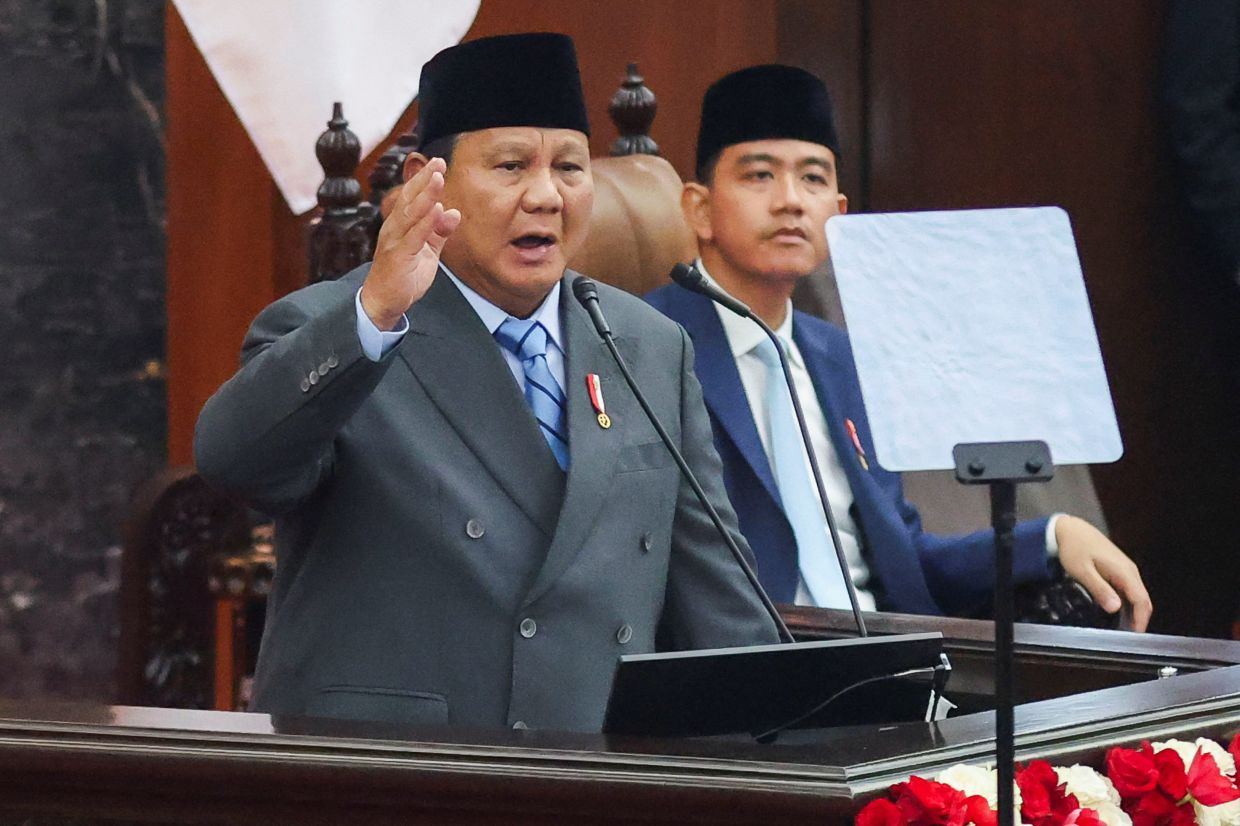
Indonesian President Prabowo Subianto has set his sights on one of the country's most ambitious structural reforms: dismantling more than 750 state-owned enterprises that he characterises as financially inefficient and institutionally corrupt. Speaking during his state of the nation address to parliament on Friday, the president unveiled plans to reduce Indonesia's sprawling portfolio of public companies from 1,074 entities to just 300 by the end of 2025, a restructuring effort he claims may rank among the largest corporate overhauls globally. The announcement underscores mounting government frustration with state-owned firms that reportedly mask operational failures through fictitious accounting and provide little tangible benefit to the nation's 275 million citizens.
The sheer scale of Indonesia's state enterprise sector came as a shock to the administration itself. Prabowo revealed that he initially believed the country operated between 300 and 400 state-owned companies, only to discover through the Danantara sovereign wealth fund—established last year to consolidate state asset management—that the actual figure approached 1,100. This discovery exposed what government officials view as a systemic governance problem: scores of entities operating with minimal accountability, generating losses that they then disguise as profits through creative accounting practices. The president's characterisation of these firms as operating "as they please, with no sense of responsibility to the nation, to the state" reflects deep frustration within the Prabowo administration about the opacity and inefficiency plaguing Indonesia's public sector.
The initiative has already delivered tangible financial results. According to Prabowo, 290 enterprises have been shuttered to date, with a further 460-plus targeted for closure in the coming months. This pruning has reportedly recovered approximately 50 trillion rupiah—equivalent to more than US$2.8 billion—in annual overhead savings by eliminating redundant executive salaries, property leases, and executive transport budgets. The government projects this year's total savings will exceed 70 trillion rupiah. These figures, if accurate, suggest that inefficiency and corporate waste have consumed a substantial portion of state resources that could otherwise support infrastructure, healthcare, or education.
Paradoxically, Prabowo also announced that profitability among the remaining state-owned enterprises surged by more than 75 percent to 326 trillion rupiah last year. This apparent contradiction—losses masked as profits—illustrates the accounting irregularities plaguing the sector. The jump in reported profitability following cost-cutting measures lends credence to the president's assertions about widespread financial manipulation. For Malaysian observers, Indonesia's struggle with state enterprise governance offers a cautionary tale about the perils of allowing public companies to operate without robust external scrutiny.
Combating corruption within state institutions represents a cornerstone of Prabowo's early presidency. To address years of suspected financial malfeasance, he proposed establishing a special ad hoc court with authority to investigate state enterprise management spanning the past three decades. Such a tribunal would mark an unprecedented move, potentially exposing systemic fraud across multiple administrations. However, Prabowo tempered the enforcement approach by also suggesting a conditional amnesty for officials willing to confess wrongdoing—a carrot-and-stick strategy aimed at securing cooperation while maintaining credibility with reform-minded constituencies.
Indonesia's broader struggle with corruption remains stark. The nation scored only 34 out of 100 on Transparency International's 2025 Corruption Perceptions Index, reflecting persistent institutional weaknesses despite previous anti-graft initiatives, special investigative bodies, and high-profile prosecutions. Corruption allegations have intensified public discontent alongside rising living costs, which protesters have linked to Middle East-driven oil price volatility and government spending inefficiencies. The state enterprise purge thus carries political significance beyond mere fiscal consolidation—it represents a visible attempt to demonstrate responsiveness to citizen anger over institutional decay.
One initiative drawing particular scrutiny is Prabowo's signature free school meals programme, which critics argue has been plagued by cost overruns and implementation failures. During his address, the president acknowledged these concerns while reaffirming commitment to the scheme, pledging to deliver it "with improvements and efficiency." This statement underscores a broader tension in his governance approach: balancing ambitious social ambitions against fiscal discipline. With one in four Indonesian children experiencing stunting—a marker of chronic malnutrition—the stakes extend far beyond budgetary considerations into questions of child development and long-term human capital.
Economic growth projections have become another focal point of Prabowo's policy messaging. Despite inflation and external headwinds, the president expressed confidence that gross domestic product will expand at 6.0 percent by end-2026, following second-quarter growth of 5.3 percent and first-quarter expansion of 5.6 percent. However, international analysts have repeatedly questioned the reliability of Indonesia's official growth statistics, suggesting actual economic performance may diverge from reported figures. For regional investors and policymakers watching Southeast Asia's largest economy, these measurement concerns add another layer of uncertainty to assessing Indonesia's medium-term trajectory.
Prabowo's framing of economic priorities reflects a philosophical shift in how the administration measures success. Rather than treating growth rates as ultimate objectives, he reoriented public discourse toward what he termed "prosperity of our people," emphasising that "every rupiah of investment must create jobs and improve the quality of life of our people, especially those at the bottom." This rhetoric acknowledges that GDP expansion divorced from employment generation or wage growth fails to address underlying inequality—a concern increasingly salient across Southeast Asia as globalisation and automation reshape labour markets.
The enterprise consolidation initiative carries implications extending beyond Indonesia's borders. As Southeast Asia's economic powerhouse undergoes structural adjustment, regional supply chains, investment flows, and competitive dynamics may shift considerably. Malaysian firms with partnerships in Indonesian state enterprises, for instance, may face operational disruptions or renegotiation pressures. Additionally, the precedent of aggressive state sector restructuring could influence governance discussions across the region, particularly in countries grappling with similarly bloated public enterprise portfolios.
Prabowo's willingness to confront state enterprise dysfunction also reflects pressure from a new generation of technology-savvy, reform-minded officials who view legacy institutions as obstacles to economic modernisation. The Danantara sovereignty fund itself represents this technocratic turn—centralising oversight of scattered assets rather than allowing them to operate as personal fiefdoms. Yet implementing such sweeping changes requires not merely political will but sustained institutional capacity, transparent selection criteria for determining which enterprises survive, and mechanisms preventing the recycled assets from accumulating in alternative bureaucratic sinecures.
The looming question is whether the current reform momentum can be sustained beyond Prabowo's initial months in office. State enterprises often enjoy powerful political constituencies—their leadership positions constitute patronage opportunities, and closure threatens entrenched interests. Public sector unions may resist workforce reductions accompanying consolidation. Local governments dependent on revenue from regional state enterprises might mobilise against closures. How effectively the administration navigates these political obstacles will determine whether this initiative becomes a genuine watershed in Indonesian governance or another incomplete reform attempt ultimately absorbed by the machinery of rent-seeking.

