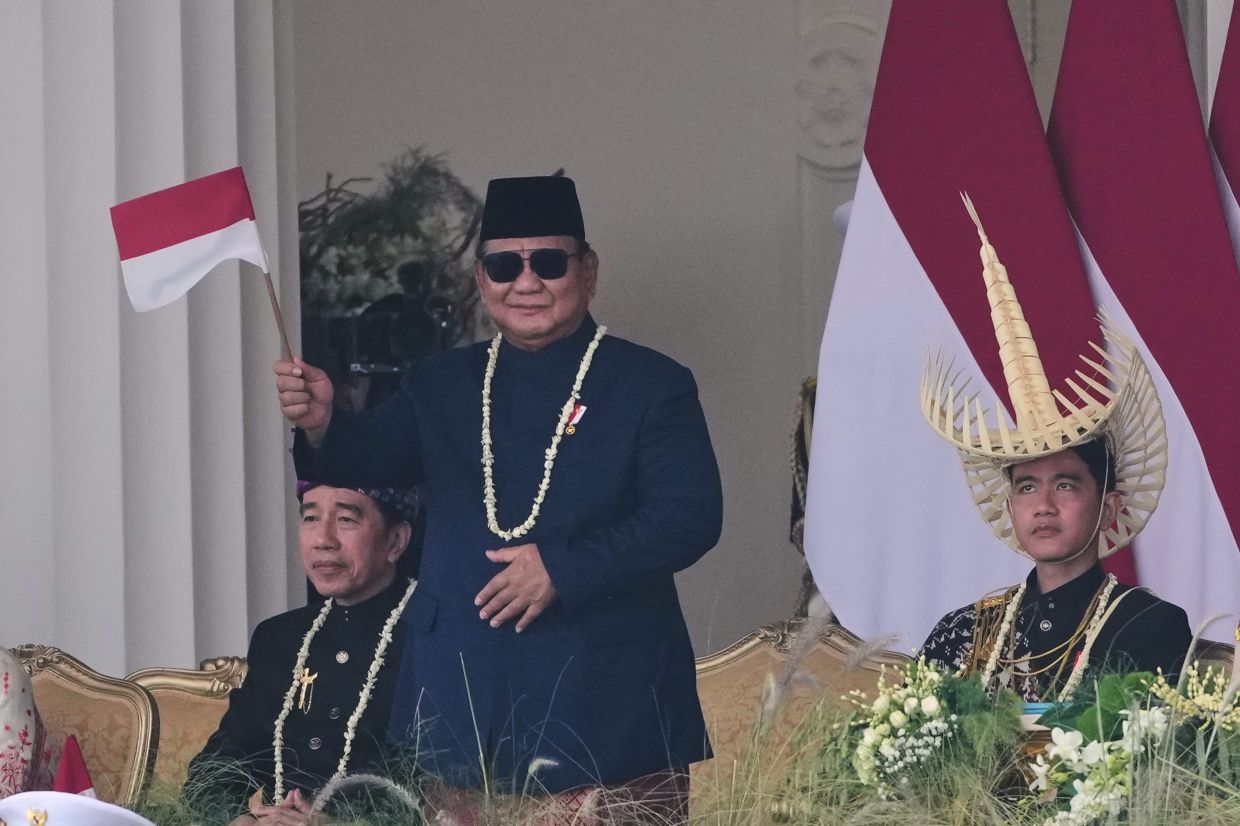
President Prabowo Subianto took centre stage at Indonesia's 81st Independence Day commemoration in Jakarta on Monday, conducting the flag-hoisting ceremony at Merdeka Palace while the nation grappled with one of its most significant natural disasters in recent months. The timing underscored the dual challenge facing Indonesia's newly inaugurated leadership: honouring the country's independence legacy whilst responding to an unfolding humanitarian crisis affecting thousands in East Nusa Tenggara.
Prabowo, dressed in formal traditional attire—a navy beskap paired with a black peci and a fragrant jasmine garland—oversaw an elaborate ceremonial programme that included artistic performances, a military parade, and a gilded carriage bearing replicas of the national flag and the original independence proclamation document. The procession from the National Monument to the palace was escorted by 114 cavalry troops and 45 motorcycle-mounted security personnel, reflecting the grandeur typically associated with Indonesia's most important civic observance. Yet the solemnity of proceedings was heightened by Prabowo's decision to lead attendees in a moment of silence honouring national heroes and those affected by ongoing disasters, signalling the government's awareness of the gravity of the situation unfolding to the east.
The contrast between celebration and crisis became starkly apparent when considering the scale of destruction on Flores. A devastating 7.7-magnitude earthquake struck the island early Saturday morning, killing at least 53 people and leaving hundreds of buildings and homes in ruins. The initial tremor was followed by nearly 1,000 aftershocks of varying intensities, transforming an already traumatised population into a state of perpetual fear and displacement. Official figures indicated that approximately 5,400 residents had abandoned their homes, whilst over 130 people sustained injuries, many involving serious fractures and trauma that would require sustained medical attention. The sheer volume of aftershocks—nearly 1,000 in the days following the main event—created a psychological dimension to the disaster, preventing residents from returning to their homes or conducting normal rescue operations with any sense of security.
The instability continued into Monday itself, when another significant 5.8-magnitude earthquake struck offshore, approximately 39 kilometres north of NTT, with its epicentre situated just 10 kilometres below the ocean surface. The Meteorology, Climatology and Geophysics Agency confirmed these specifications, underscoring that seismic activity remained at dangerous levels. This ongoing tremor activity complicated disaster response efforts, as rescue teams operated under constant threat of building collapses and new structural damage. For Malaysian observers, the situation carries particular relevance given the similar seismic vulnerability affecting parts of Southeast Asia and the importance of regional cooperation in disaster management and humanitarian response.
The government's response strategy became apparent through the notable absences at the Jakarta ceremony. State Secretary Prasetyo Hadi explained that several cabinet ministers had foregone attendance to travel directly to NTT and coordinate relief operations on the ground. Coordinating Human Development Minister Pratikno, Home Minister Tito Karnavian, Public Works Minister Dody Hanggodo, and Deputy Health Minister Benjamin Paulus Octavianus were all deployed to the affected region to oversee implementation of disaster response protocols and monitor the delivery of assistance to affected communities. This deployment indicated that the Prabowo administration, despite being newly in office, had moved swiftly to mobilise institutional resources toward the crisis.
Prasetyo's public statement at the ceremony conveyed a message of dual commitment: the nation would observe its independence traditions whilst ensuring that citizens affected by the earthquake received appropriate care and support. This framing reflected an attempt to balance national pride and ceremonial obligation with the immediate humanitarian imperatives demanding government attention. The underlying message suggested that true independence meant extending protective capacity and resources to all citizens, particularly those in their most vulnerable moments. For a government barely weeks into its term, the earthquake presented both a challenge to its credibility and an opportunity to demonstrate competence in crisis management.
When questioned about whether President Prabowo himself intended to visit Flores to inspect conditions and meet with affected residents—a common gesture in presidential disaster response protocols across the region—Prasetyo declined to confirm any definitive plans. Instead, he indicated that the administration would assess the evolving situation and decide on a presidential visit based on conditions on the ground and the advice of ministers already deployed there. This cautious approach avoided committing the president to a specific timeline whilst leaving space for a potential visit once rescue and stabilisation operations had progressed to a stage where presidential engagement would add value rather than complicating logistics. The response reflected administrative pragmatism, though it also left open questions about the timing and nature of high-level engagement with survivors.
The earthquake's occurrence during a significant national observance raised broader questions about disaster preparedness and building standards in Indonesia's eastern regions. Flores lies within Indonesia's seismic arc, a zone of known and frequent tectonic activity, yet the death toll and scale of structural damage suggested that resilience measures, early warning systems, and enforcement of earthquake-resistant construction codes may require strengthening. For Malaysia and other ASEAN nations in similar geological positions, the Flores earthquake served as a potent reminder of the ongoing vulnerability to natural hazards and the necessity of continuous investment in disaster mitigation infrastructure and community preparedness programmes.
The conjunction of ceremonial commemoration and crisis response also highlighted the complex realities of governing in Indonesia, where symbolic and performative dimensions of statecraft must coexist with immediate operational demands. Prabowo's presence at the Jakarta ceremony fulfilled constitutional and national expectations, whilst his cabinet's strategic deployment to NTT signalled that government resources were being mobilised toward tangible emergency response. This division of labour reflected institutional maturity, even as it raised questions about whether a more visible presidential engagement with survivors might have strengthened public confidence in the administration's commitment to affected regions.
Looking ahead, the integration of disaster recovery into broader national development conversations would likely become significant. The earthquake occurred amid ongoing discussions about Indonesia's infrastructure resilience, regional disparities in development, and the fiscal capacity to rebuild and reinforce vulnerable communities. For Malaysia, particularly given its own experience with major earthquakes and its role in Southeast Asian disaster response networks, the Flores situation underscored the importance of maintaining robust bilateral and multilateral frameworks for emergency assistance, technical expertise sharing, and coordinated regional approaches to seismic risk reduction. The independence day ceremony thus served as a backdrop not merely to national pride, but to the very practical challenges of building a more resilient and equitable Indonesia capable of protecting all its citizens from the forces of nature.

