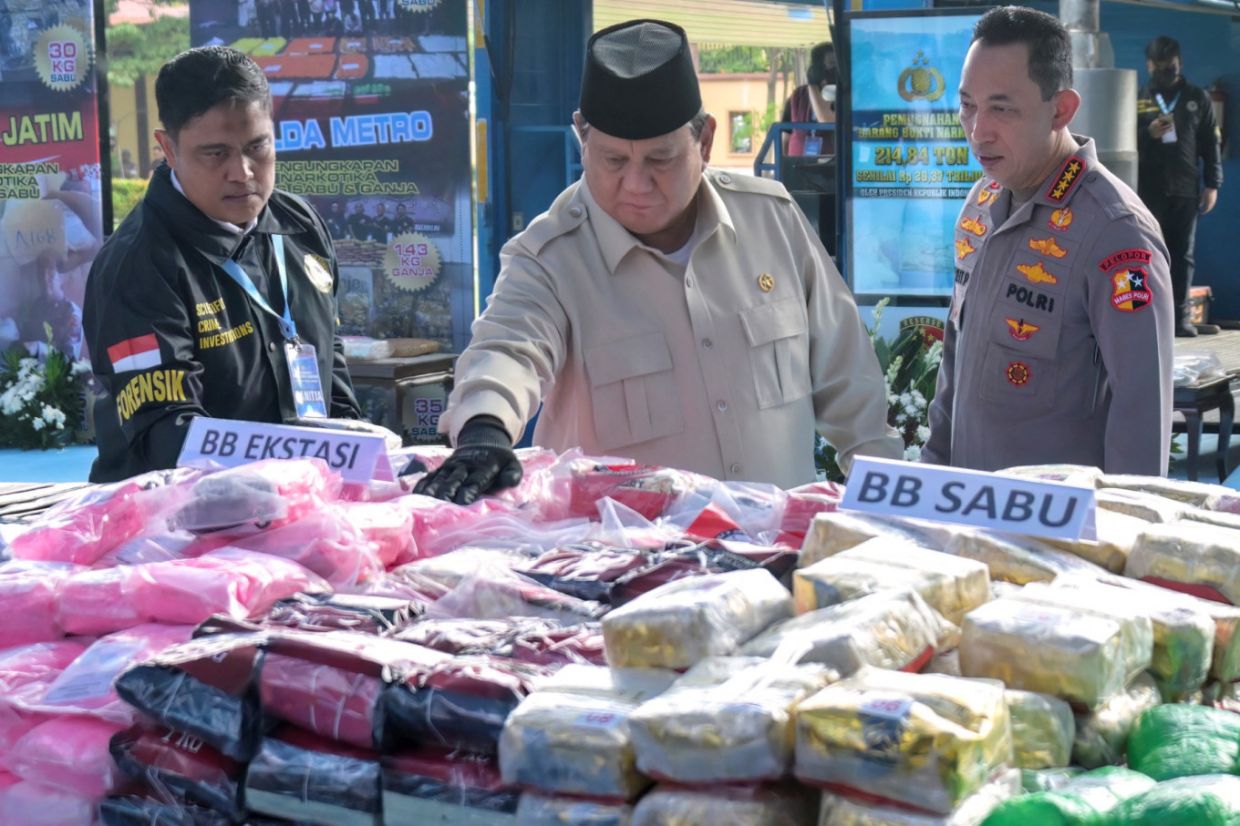
Indonesia's anti-narcotics authorities have scored a significant victory in their ongoing battle against international drug trafficking, dismantling what appears to be a sophisticated smuggling operation that was attempting to move liquid methamphetamine through Southeast Asian waters. The National Narcotics Agency announced on Tuesday that it had successfully intercepted a vessel carrying 2.6 tonnes of the illegal substance, representing one of Indonesia's most substantial drug seizures to date and underscoring the scale of trafficking networks operating throughout the region.
The operation commenced after intelligence gathered by the National Narcotics Agency indicated that a ship departing from Sarawak, Malaysia, and traversing the Andaman Sea was likely transporting narcotics destined for Indonesian markets. Working in coordination with customs authorities, the narcotics team launched an interdiction mission targeting the suspicious vessel. What they discovered during a late-night search near Bengkalis in Riau province would validate their intelligence-gathering efforts and result in the confiscation of materials with substantial street value.
The MV Rain Maker, which was operating under a false identity, proved to be the target of the operation. Upon boarding and inspection, authorities located the contraband concealed within eight water barrels and a separate water tank—a concealment method suggesting the smuggling operation had invested effort into disguising the cargo as innocuous maritime supplies. The liquid methamphetamine form represents a particular trafficking concern, as such formulations can be more challenging to detect and allow for more flexible smuggling routes and methods compared to crystalline preparations.
Roy Hardi Siahaan, a senior official with the narcotics agency, confirmed the nature and quantity of the seizure, emphasizing the thoroughness of the inspection process. Beyond the primary target substance, canine detection units deployed to the vessel identified additional contraband in the form of more than 1.5 million illegal cigarettes. This discovery suggests the vessel may have been engaged in broader smuggling activities, diversifying its illicit operations across multiple product categories to maximize profit potential from each voyage.
All ten individuals found aboard the vessel were taken into custody, and authorities identified them as nationals of Myanmar. The involvement of Myanmar nationals in this trafficking operation reflects patterns observed repeatedly across Southeast Asia, where criminal networks often recruit crew members and operatives from countries with significant economic vulnerabilities and established diaspora networks throughout the region. Myanmar's geographic position and porous borders have positioned it as both a transit point and source country for various narcotics destined for regional markets.
This latest seizure occurs within the context of escalating maritime interdictions in Indonesian waters. The success achieved near Bengkalis represents the second major operation within a single month involving a Tanzanian-registered vessel. Earlier in August, on the eighth of the month, Indonesian authorities confiscated 1.3 tonnes of ketamine from another ship operating in the waters surrounding the Riau Islands, which lie in strategic proximity to Singapore. That operation resulted in the arrest of eight individuals—seven from Myanmar and one from Taiwan—highlighting how these trafficking networks draw upon multinational recruitment to execute their operations.
The geographic pattern emerging from these recent busts demonstrates that international trafficking syndicates have identified Indonesian waters, particularly the Riau archipelago region, as a critical transshipment corridor. The waters surrounding these islands offer advantages to smugglers due to their proximity to major ports, complex geography that can complicate enforcement efforts, and the volume of legitimate maritime traffic through which illicit operations can blend. These factors combine to create what criminals perceive as a relatively permeable border zone despite Indonesian efforts to strengthen maritime security.
Indonesia has developed one of the world's most stringent drug control regimes, incorporating capital punishment for major traffickers within its legal framework. However, the nation has observed a de facto moratorium on executions for several years, even as it maintains the statutory authority to impose such sentences. This policy approach reflects both international human rights considerations and evolving domestic political calculations regarding the utility of maximum penalties as crime deterrents. The tension between maintaining tough-on-crime credentials and international norms remains an ongoing consideration for Indonesian policymakers.
For Malaysian authorities and regional security officials, the seizure reinforces concerns about trafficking networks utilizing Malaysian territory as a staging point for operations downstream in Indonesian waters. The fact that the vessel originated from Sarawak, Malaysia, before proceeding through the Andaman Sea to reach its final destination suggests these criminal enterprises view the broader region as an integrated operational theater. Cooperation between Malaysian and Indonesian authorities remains essential, though challenges persist in terms of information sharing, coordinated enforcement, and jurisdictional clarity in contested maritime zones.
The methamphetamine market within Indonesia and across Southeast Asia has proven remarkably resilient despite consistent law enforcement efforts. Supply chain disruptions achieved through major seizures typically produce only temporary market dislocations before trafficking organizations establish alternative routes or suppliers. The persistence of these operations despite severe legal penalties suggests that profit margins remain sufficiently attractive to justify the risks involved. Demand drivers within Indonesia—including the drug's accessibility, affordability relative to other stimulants, and established consumer bases—continue to incentivize smuggling attempts.
Experts monitoring regional security trends note that the scale and frequency of major busts may indicate either enhanced enforcement capability or increased trafficking volumes attempting to satisfy growing demand. The reality likely encompasses both factors. Enhanced cooperation with port authorities, improved intelligence gathering, and technological advances in detection represent genuine law enforcement improvements. Simultaneously, the sheer volume of attempted smuggling suggests that traffickers perceive sufficient profit potential to sustain operations even when factoring in predictable losses to interdiction.
The implications for Malaysian policymakers extend beyond bilateral cooperation frameworks. The use of Malaysian territory as a launching point for trafficking operations destined for Indonesia creates potential reputational costs and complicates Malaysia's own counter-narcotics efforts. Strengthening port security in Sarawak, enhancing information sharing with ASEAN neighbors, and disrupting recruitment networks that facilitate crew assembly for suspected trafficking vessels all represent areas where Malaysia might enhance its contribution to regional security.

