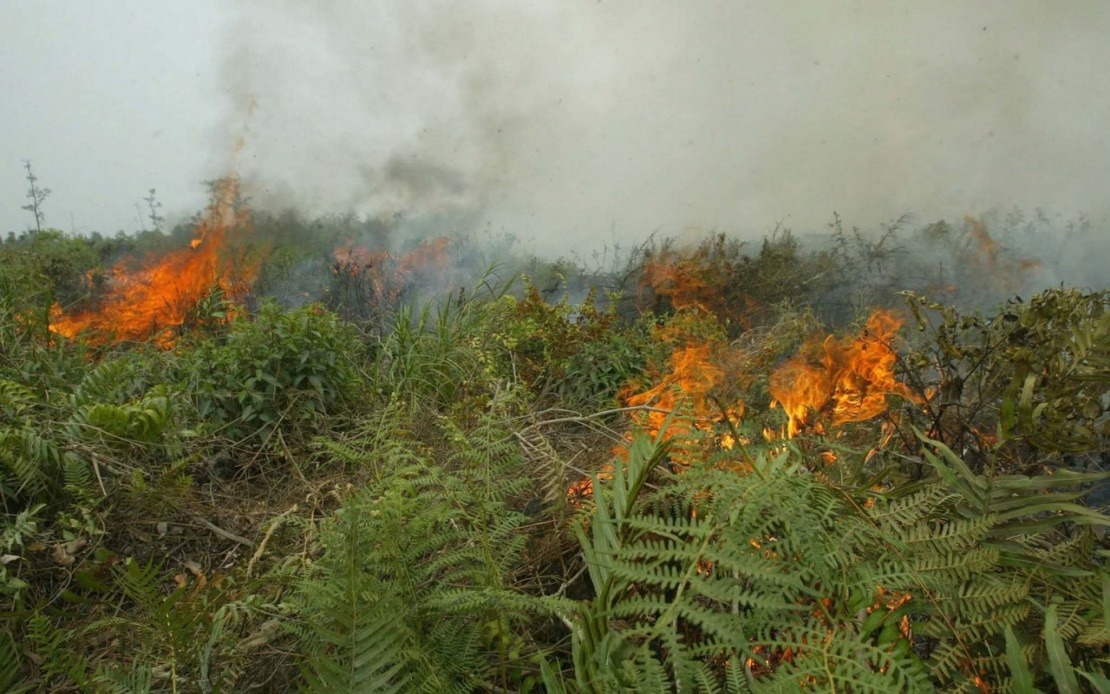
Indonesia faces an intensifying wildfire emergency as forest and land fires rage across Kalimantan and Sumatra, with the situation deteriorating most sharply in West Kalimantan where hotspots surged dramatically to 7,377 by Monday—nearly doubling from previous levels. The trajectory of the crisis underscores the recurring vulnerability of Southeast Asia's largest archipelago to seasonal fire events that threaten millions of people and regularly strain regional relations through transboundary haze pollution.
According to the National Disaster Mitigation Agency (BNPB), West Kalimantan experienced a particularly alarming spike of 3,553 additional hotspots in a single reporting period, while the number of active fire spots climbed to 104. The deteriorating visibility conditions, now falling below one kilometre in affected regions, reflect the severity of smoke concentration and pose serious challenges for transportation, commerce, and daily life. The agency's data reveals a complex and regionally differentiated fire pattern, with Central Kalimantan recording 5,244 hotspots despite a modest 147-unit decline, yet showing a concerning increase in active fire spots to 72. South Kalimantan presents a marginally better picture with hotspots declining to 504, though fire activity still rose to 55 spots.
Sumatra's fire situation reflects more mixed conditions. South Sumatra has emerged as a secondary concern with hotspots climbing by 209 to reach 1,013, indicating a troubling expansion of fire-affected areas. By contrast, the provinces of Riau and Jambi have shown significant improvement with declining hotspot counts, suggesting that fire suppression and prevention efforts in those regions may be yielding tangible results. This regional variance complicates the national response strategy and suggests that distinct approaches may be required across different provinces based on local conditions and fire behaviour patterns.
The humanitarian toll has become undeniable. Approximately 5.5 million people across Sumatra and Kalimantan inhabit areas directly affected by the fires and resulting smoke, creating widespread exposure to hazardous air quality. Deputy Health Minister Prof Dante Saksono Harbuwono has documented cumulative acute respiratory infection (ISPA) cases totalling 13,500 across July and August, with 4,082 individuals still receiving treatment as of Sunday. Critically, health officials have flagged that this year's smoke-related health impacts exceed those recorded in the previous year, suggesting either more intense fire activity, larger affected populations, or both. The respiratory crisis extends beyond acute episodes and threatens vulnerable populations including children, elderly persons, and those with pre-existing lung conditions.
The Environment Ministry has identified corporate accountability as a central element of its response, flagging 42 companies for potential enforcement action based on fire detections within their concession areas. Environmental Law Enforcement Deputy Rizal Irawan explained that the investigation methodology overlays satellite hotspot data with official concession boundary maps, enabling precise geographic correlation. Of these flagged entities, 19 have advanced to field verification stage, whilst the remainder await secondary inspection phases. The ministry's approach reflects a doctrine of strict liability whereby companies face administrative or civil sanctions regardless of whether fires were deliberately set or resulted from accidental ignition—a significant legal position that holds concession holders responsible for fire management within their designated operating areas.
Indonesia's approach to corporate accountability in the context of forest fires carries substantial implications for Southeast Asian investment and environmental governance. The strict liability framework signals to both domestic and international operators that concession holders cannot escape responsibility through claims of accident or external causation. This positions the Indonesian government as increasingly assertive in holding private commercial interests accountable for environmental degradation, a posture that contrasts with historical patterns of limited enforcement. For Malaysian investors and companies operating Indonesian concessions, the enforcement trajectory demands heightened operational standards and robust fire prevention protocols.
Regional cooperation mechanisms have become increasingly central to Indonesia's fire management strategy. Following a ministerial-level meeting in Bali last month attended by Indonesia, Malaysia, and Singapore alongside other ASEAN partners, Indonesia has intensified coordination on transboundary haze through established regional frameworks. The transnational dimension of forest fire smoke means that West Kalimantan fires ultimately affect air quality across Singapore and Malaysia, creating mutual interest in prevention and suppression. This diplomatic coordination layer reflects the political sensitivity of haze pollution in Southeast Asia, where air quality crises have historically triggered public health emergencies and diplomatic tensions.
Preventive infrastructure has expanded considerably. The Fire Care Community (MPA) network comprises 95 groups with 1,425 trained personnel distributed across six high-risk provinces in Sumatra and Kalimantan, with an additional 35 groups slated for establishment during the current year. These community-level units represent an attempt to build local capacity for fire detection, initial response, and public awareness. The initiative acknowledges that large-scale professional firefighting capacity remains constrained, necessitating grassroots mobilisation. Additionally, the ministry issued notices to 2,226 companies last year requiring preparation of personnel and equipment for fire prevention and response, with approximately 80 per cent subsequently reporting readiness. This compliance rate, whilst encouraging, leaves roughly 20 per cent of targeted companies unaccounted for, raising questions about enforcement mechanisms and inspection capacity.
The persistent challenge facing Indonesia reflects both environmental and governance dimensions that resonate throughout Southeast Asia. Indonesia's peatlands and biodiverse forests represent critical carbon sinks and biodiversity repositories of global significance, yet fire suppression competes with plantation conversion pressures and infrastructure development imperatives. For Malaysian readers, the Indonesian fire crisis carries direct relevance through air quality impacts in border regions and broader regional stability considerations. Escalating environmental emergencies in Southeast Asia's largest state create economic disruption, public health crises, and diplomatic friction that inevitably affect the entire region's development trajectory and climate commitments. The question of whether Indonesia can stabilise its fire situation whilst accommodating commercial pressure and agricultural expansion remains fundamentally unresolved.

