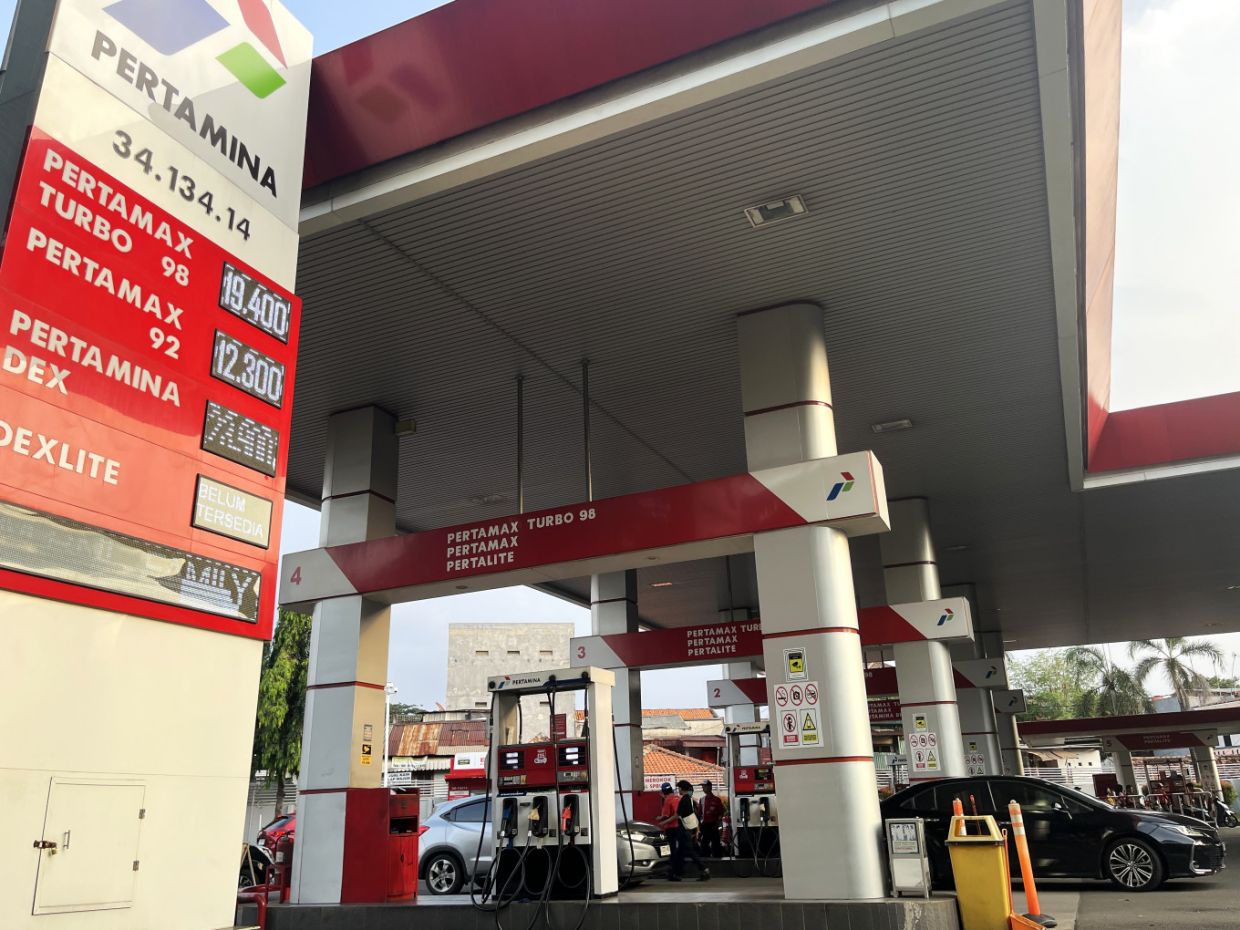
Indonesia's government is exploring a fresh approach to one of its costliest policy challenges: narrowing access to subsidised petrol by examining what people drive. Coordinating Economy Minister Airlangga Hartarto revealed on Friday that officials are weighing vehicle classification as a proxy for determining who qualifies to purchase Pertalite, the nation's cut-price RON 90 fuel, arguing that the car someone owns provides meaningful insight into their financial standing.
The concept rests on a straightforward premise: a person's choice of vehicle—whether a modest sedan, a sport-utility vehicle, or a luxury import—correlates with underlying wealth. Rather than relying solely on income declarations or complex means-testing systems, Jakarta hopes that vehicle registration data, already held by authorities, could serve as an objective sorting mechanism. Yet Airlangga stopped short of naming specific makes, models, or engine sizes that might trigger restrictions, indicating the government remains in early planning stages and has not yet settled on which vehicles would face cutoffs.
This latest iteration of subsidy rationing follows years of mounting pressure on state finances. The 2022 oil shock—driven by Russia's Ukraine invasion, surging global crude prices, and a tumbling rupiah—pushed fuel subsidy spending to ruinous levels, forcing Jakarta to grapple with how to preserve affordability for ordinary Indonesians while limiting the drain on public coffers. Previous attempts to narrow access had included engine-capacity thresholds and smartphone app registration systems, but none gained traction before officials opted to raise prices instead, a decision that has held since then.
Finance Minister Purbaya Yudhi Sadewa has provided more concrete parameters for the current proposal: restricting Pertalite purchases among households classified in deciles 9 and 10 of the National Socioeconomic Single Data (DTSEN) system—essentially the wealthiest fifth of the population. He projected that excluding these top earners could trim subsidy outlays by roughly ten percent. The government framed this not as an outright ban but as a surgical effort to channel limited resources toward those most in need, a distinction that carries weight in Jakarta's political calculations.
Yet the public response has revealed deep scepticism about the government's ability to correctly identify who is wealthy and who is not. When news of the DTSEN-based approach spread across social media, Indonesians rushed to check their own decile classifications, and many discovered jarring mismatches between the data and their lived reality. Citizens who regarded themselves as comfortably middle-class found themselves slotted into decile 10, the pinnacle of the income spectrum, prompting an eruption of online complaint and renewed questions about whether the government actually understands its own population.
This data credibility crisis has forced officials to pause and recalibrate messaging. Airlangga has appealed for patience, pointing to Statistics Indonesia's (BPS) upcoming 2026 national socioeconomic survey (Susenas) and Economic Census as opportunities to refresh the decile classifications and presumably narrow the gap between statistical assignment and reality. The implicit acknowledgment—that current figures are stale or flawed—undercuts confidence in any immediate rollout, yet the government signalled that trial restrictions on decile 10 might begin within months regardless.
From a Malaysian perspective, Indonesia's subsidy dilemma carries particular resonance. Neighbouring countries across Southeast Asia wrestle with similar trade-offs between political durability and fiscal sustainability. Malaysia itself maintains subsidies on diesel and liquefied petroleum gas, incurring annual costs that strain budgets and distort market incentives. Indonesia's trial-and-error approach—whether through vehicle-type screening, socioeconomic proxy-matching, or price adjustments—offers both cautionary lessons and potential templates for policymakers in the region.
The vehicle-based mechanism also touches on broader implementation challenges endemic to large archipelago nations. Verifying car ownership and linking it reliably to subsidy eligibility requires robust databases and enforcement infrastructure, particularly in remote provinces where administrative capacity remains thin. Indonesia's experience will demonstrate whether such a system can function across a sprawling nation of over 270 million people, a question with direct implications for other developing economies contemplating similar reforms.
Pertamina, the state fuel company, has already responded to market pressures by raising prices on non-subsidised products by around 32 percent in June, citing global crude volatility and exchange-rate swings. This bifurcated pricing—cheap Pertalite for designated buyers, steeper rates for premium and diesel grades—has created a two-tier market that sometimes advantages wealthier consumers who can afford unsubsidised fuel, inverting the subsidy's intended benefit.
The timing of these proposals also reflects Indonesia's broader fiscal consolidation agenda. With deficits widening and debt-servicing costs climbing, officials across Jakarta's economic ministries have begun scrutinising long-standing expenditures. Fuel subsidies represent one of the largest and most politically sensitive budget items, making them an attractive target for reform. Vehicle-type restrictions, if implemented, would mark a symbolic shift toward more sophisticated means-testing rather than the blanket approach that has prevailed for decades.
Looking ahead, success will hinge on the government's ability to build public trust in its underlying data and its commitment to fairness. Should the DTSEN decile system remain suspect in popular perception, even a well-designed vehicle-based screening might face evasion or political backlash. Officials will need to demonstrate not only that their classifications are sound but also that the subsidy is reaching intended beneficiaries—a tall order in a country where informal economy activity often leaves official records incomplete.
The government's willingness to test and adjust its approach, rather than impose a sweeping ban, suggests pragmatism. Yet the months ahead will reveal whether vehicle type proves a reliable proxy for wealth, whether data quality improves in time, and whether Indonesians accept restrictions on fuel purchases as a necessary sacrifice to shore up public finances. For the region, the outcome will likely inform thinking on subsidy reform far beyond Jakarta.

