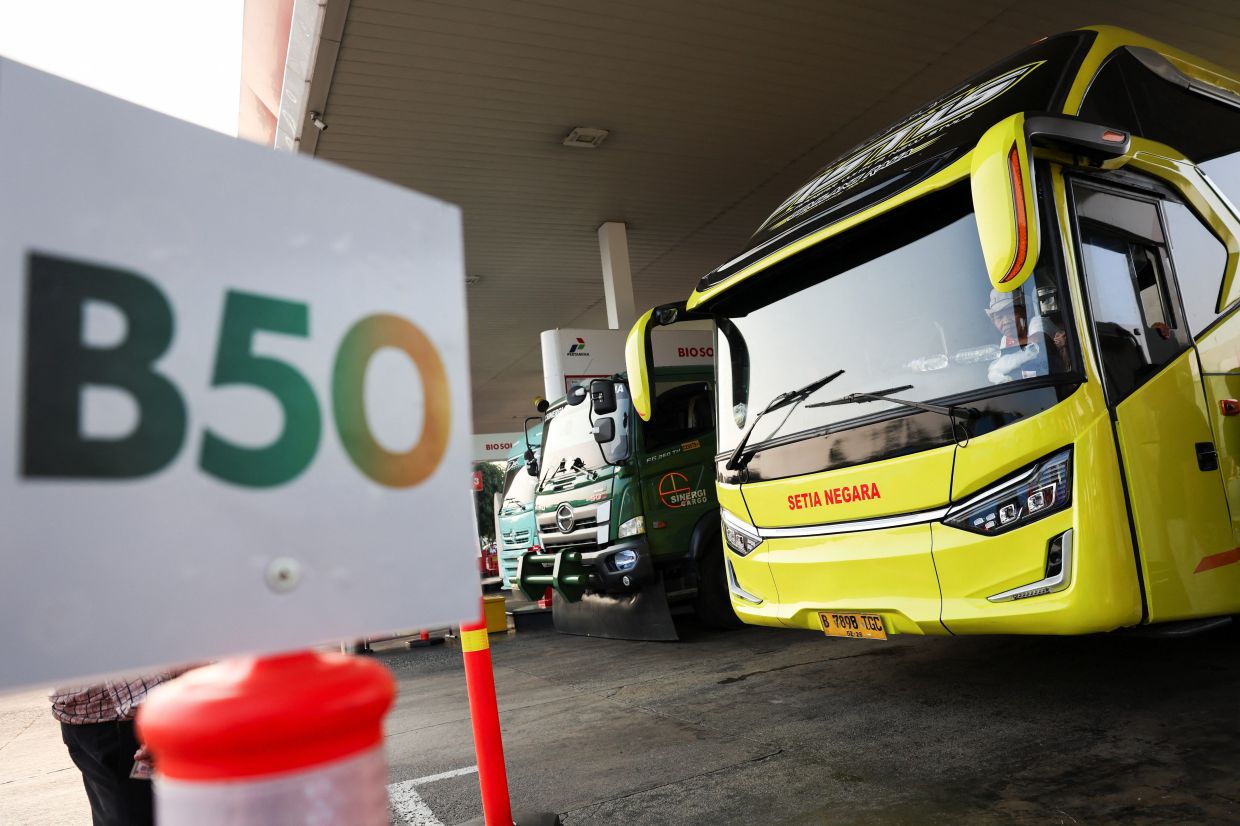
Indonesia has formally initiated its B50 biodiesel programme, a significant escalation in the world's largest palm oil producer's push to harness its dominant commodity sector for energy independence. Energy Minister Bahlil Lahadalia announced at a ceremony in Karawang, West Java, that the mandate to increase the biodiesel blend to 50% palm oil-based fuel will drive crude palm oil consumption upward to between 16.3 million and 17 million metric tons annually, compared with the current 15.2 million tons—a considerable expansion that underscores Jakarta's strategic reliance on its vast plantation estates.
The programme represents one of the world's most ambitious mandatory biodiesel blending schemes, designed explicitly to wean Indonesia off imported diesel fuel and redirect agricultural production toward domestic energy needs. With President Prabowo Subianto present at the Karawang launch, the initiative carries clear presidential backing and signals that boosting palm oil's role in the national energy mix remains a cornerstone policy under the new administration. This political weight suggests the government intends to overcome any implementation obstacles swiftly, despite lingering uncertainty among industry stakeholders regarding final allocation details.
The financial implications are striking. Energy ministry calculations suggest the B50 programme will reduce this year's import bill by 170 trillion rupiah—approximately $9.41 billion—a substantial saving for a government eager to strengthen its fiscal position and foreign exchange reserves. These figures dwarf the projected 133 trillion rupiah savings anticipated for 2025 under the previous B40 regime, revealing how aggressively the blend escalation is expected to compress Indonesia's fuel import requirements. For Malaysian readers and broader Southeast Asian observers, this dynamic highlights Indonesia's determination to leverage its natural resource endowments to reshape its energy economics fundamentally.
President Prabowo has signalled ambitions that extend well beyond the current 50% threshold. He disclosed that he had initially championed a B100 mandate—essentially switching to pure palm oil diesel—but accepted ministerial advice that a 50% blend suffices to eliminate imports entirely. Nevertheless, Prabowo indicated that authorities should pursue a 60% blend, suggesting the B50 programme may represent merely an interim waypoint in a longer trajectory toward even heavier palm oil integration. This forward-looking stance reflects the administration's conviction that Indonesia's vast palm oil production capacity can be progressively redirected from export markets into domestic consumption.
In response to presidential guidance, Energy Minister Bahlil announced the government would initiate research into a 60% blend mix, formalising what could be termed a creeping expansion of the biodiesel mandate. Such research initiatives typically precede regulatory implementation within a two to three-year window, suggesting a B60 programme might materialise during Prabowo's tenure. This incremental approach allows Jakarta to assess infrastructure readiness, refine engine compatibility protocols, and manage palm oil sector responses before advancing further. For regional competitors and trading partners, such trajectory planning complicates long-term projections regarding Indonesian palm oil availability for export markets.
The practical mechanics of the B50 transition reveal the logistical complexity underlying this energy policy. Under the previous B40 programme, Indonesia allocated 15.64 million kilolitres of biodiesel this year, representing a 4.68 per cent increase over 2024's consumption of 14.94 million kilolitres. The new B50 mandate necessitates supply of between 16.7 million and 18 million kilolitres of fatty acid methyl ester (FAME)—the technical term for biodiesel—annually. This requirement substantially outpaces current production and distribution infrastructure, obliging refineries, blending facilities, and logistics networks to scale operations considerably within relatively tight timeframes.
A critical gap remains unresolved: the government has not yet issued the supplementary quotas necessary to operationalise the B50 programme fully. Industry participants continue awaiting formal allocation announcements that will determine how palm oil-derived biodiesel supply increases will be distributed among producers, refineries, and distributors. This administrative lag creates uncertainty for businesses planning capital investments and procurement strategies. Additionally, authorities have stipulated that companies must exhaust remaining B40 inventory by end-September, creating a near-term inventory management challenge for operators holding substantial stocks of the previous blend standard.
The B50 escalation carries significant implications for Malaysia's palm oil sector and broader Southeast Asian trade dynamics. Since Indonesia accounts for approximately 60 per cent of global palm oil production, any sustained increase in domestic consumption reduces volumes available for export markets where Malaysian producers compete. Higher utilisation of Indonesian palm oil for biodiesel production may moderately support global palm oil prices by tightening export supplies, potentially benefiting Malaysian planters, but simultaneously limits Indonesian exports that might otherwise depress regional prices. The net effect depends heavily on whether B50 implementation proceeds smoothly or encounters logistical bottlenecks that constrain actual palm oil processing volumes.
Environmental considerations frame this policy within international climate discussions, though they remain contested. President Prabowo characterised Indonesia's biodiesel expansion as part of broader global efforts to reduce carbon emissions, positioning the country as an environmental leader. However, critics argue that accelerating palm oil cultivation to feed expanded biodiesel consumption risks exacerbating deforestation pressures, carbon release from peatland conversion, and biodiversity loss—concerns that regional and international environmental bodies have repeatedly raised. The sustainability credentials of Indonesian biodiesel remain contentious, with certification schemes attempting to distinguish genuinely low-carbon fuel from products derived from ecologically destructive land-use changes.
For Malaysia, Indonesia's B50 trajectory warrants close monitoring as a potential template. Malaysian policymakers have occasionally considered biodiesel blending mandates to absorb domestic palm oil production and reduce energy import dependence, though no comparable nationwide programme has yet gained regulatory traction. Indonesia's implementation experience, including both successes and implementation challenges, will likely inform future Malaysian policy deliberation regarding energy security strategies centred on palm oil utilisation. Additionally, the trade-offs between export revenue maximisation and import substitution through domestic consumption represent fundamental strategic choices that both major Southeast Asian palm oil producers must continually negotiate.
The B50 programme reflects Indonesia's conviction that its unparalleled palm oil endowment represents a strategic asset capable of solving multiple policy objectives simultaneously—reducing external dependence on fuel imports, strengthening fiscal position through import bill reduction, supporting plantation economies, and generating energy feedstock. Whether this vision materialises depends on execution quality across refining, logistics, and engine compatibility domains. The next months will reveal whether the government's administrative framework can mobilise the necessary capital, coordinate stakeholder actions, and overcome technical obstacles to transform policy aspirations into functioning commodity flows supplying national fuel demand.

